Wadi Rum, Jordan: A Desert That Feels Like Another Planet
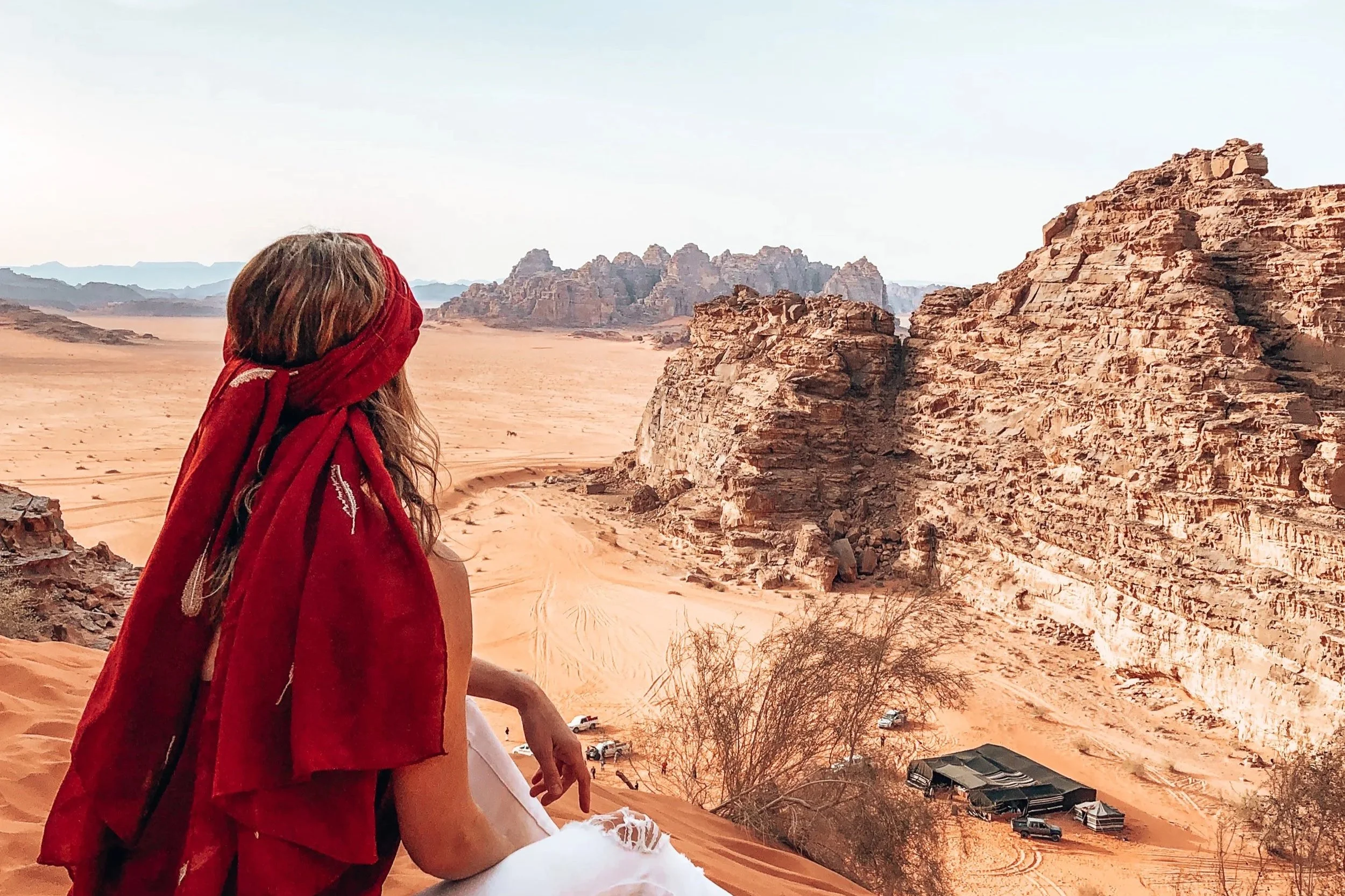
Wadi Rum looks like another planet.
Most travellers come to Jordan with one big-ticket item in mind: Petra. And yes, Petra is extraordinary. But if I’m being honest? Wadi Rum was the place that truly stopped me in my tracks.
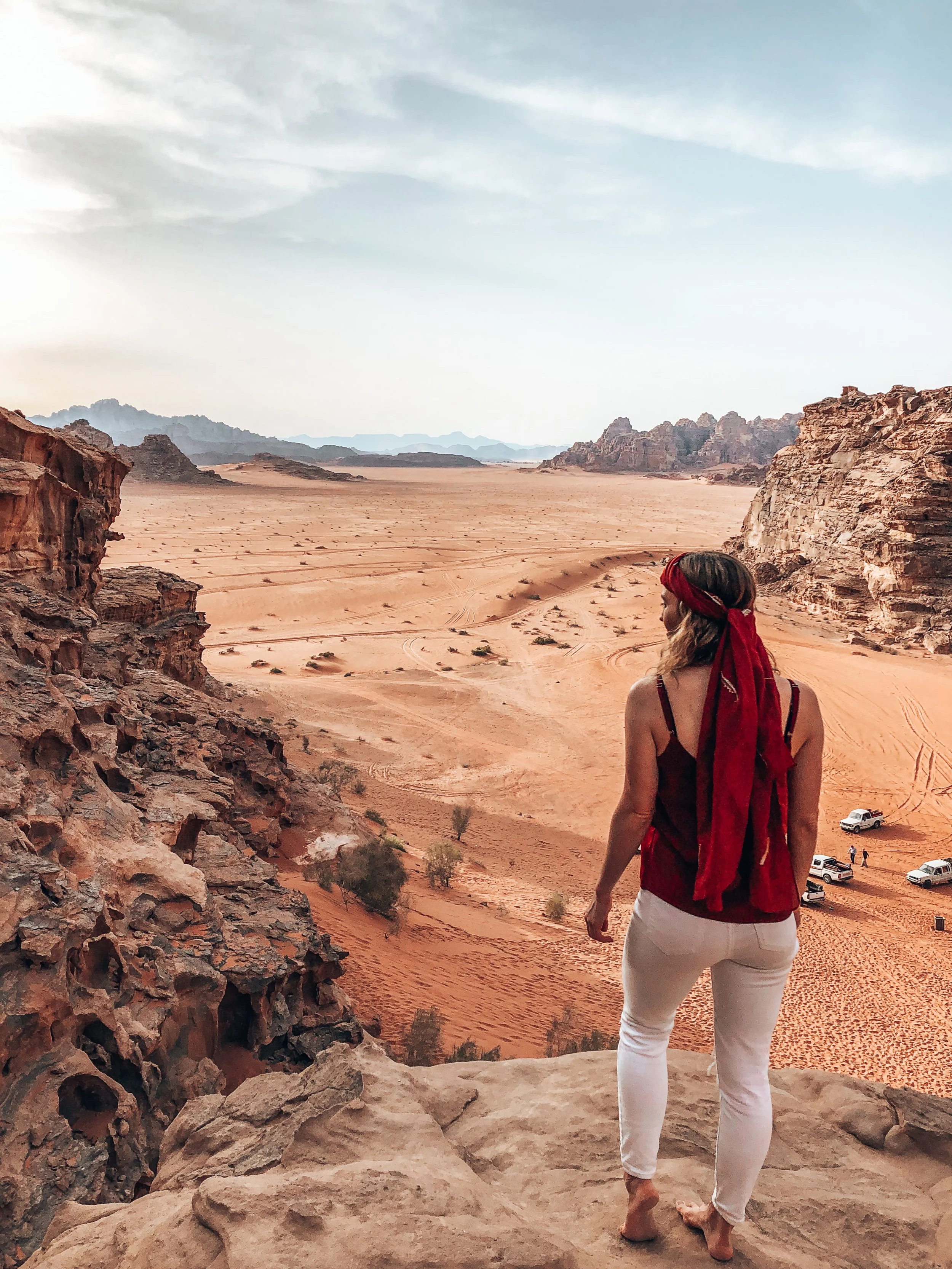
This vast, red desert landscape feels otherworldly… so much so that it’s been used as a stand-in for Mars in films like The Martian and Lawrence of Arabia. Towering sandstone mountains, endless dunes, ancient rock formations, camels moving slowly across the horizon… it’s raw and dramatic.
And staying overnight? Non-negotiable (if you want to fully experience the magic).
Where Is Wadi Rum?
Wadi Rum (also known as the Valley of the Moon) is located in southern Jordan, around:
1 hour from Aqaba
2 hours from Petra
4 hours from Amman
It sits within a protected desert wilderness and is traditionally inhabited by Bedouin communities who still live, work, and guide travellers through this landscape today.
Heading to Petra? Plan your visit with my Petra Guide.
A Little History (and Why It’s So Special)
Wadi Rum has been inhabited by humans for over 12,000 years. Ancient petroglyphs and inscriptions are etched into the rocks, telling stories of traders, nomads, and early civilisations that passed through this land.
But beyond the history books, what makes Wadi Rum special is how untouched it feels.
No cities. No noise. No rush.
Just silence, space, and perspective.
What It’s Like to Experience Wadi Rum
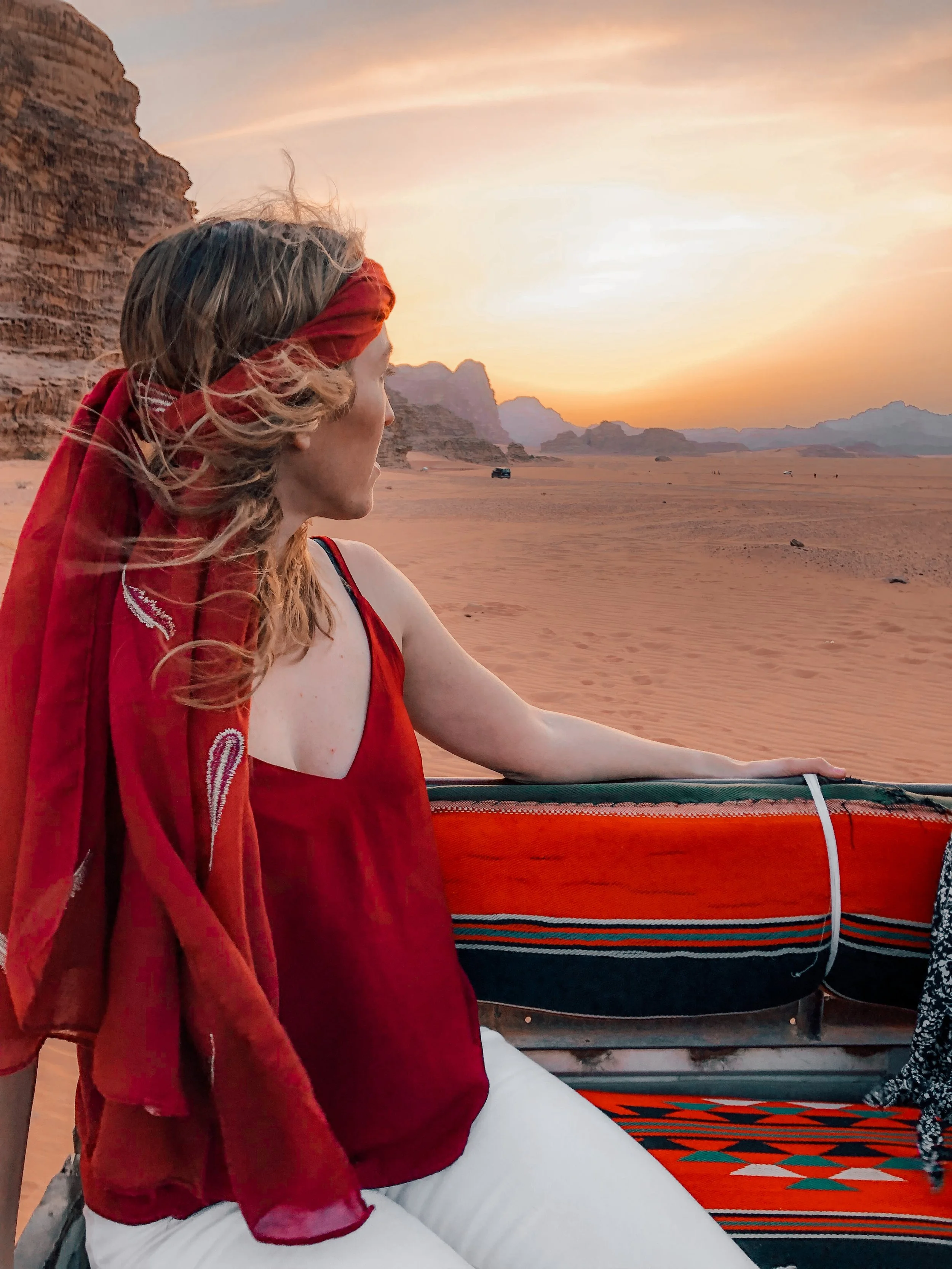
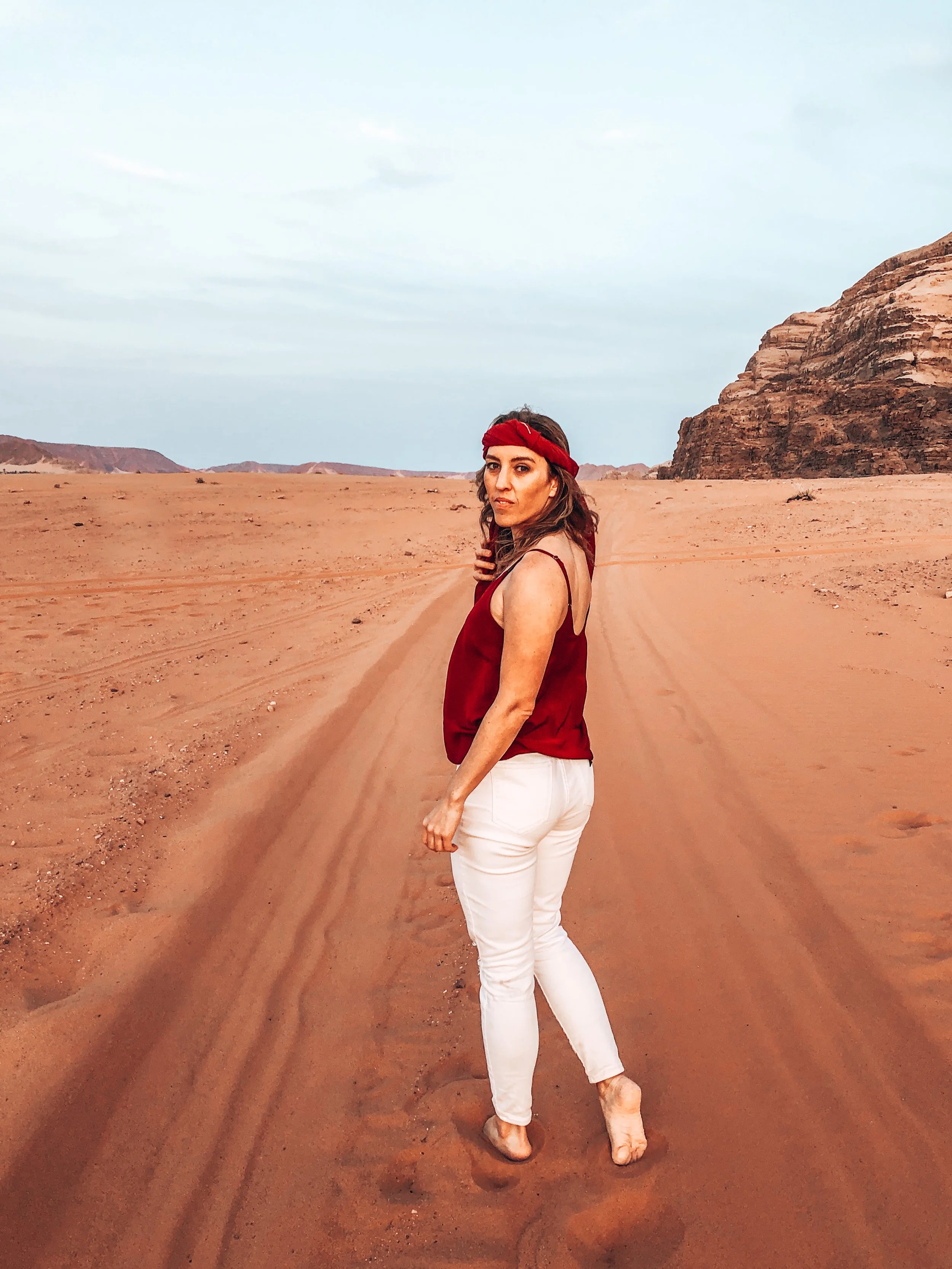
We explored Wadi Rum on a Jeep safari (well… they were technically utes). Sitting in the back of a rugged ute as we bounced through the desert, stopping wherever the landscape demanded attention.
We:
Shared sweet Bedouin mint tea with locals
Climbed massive red sand dunes for panoramic views
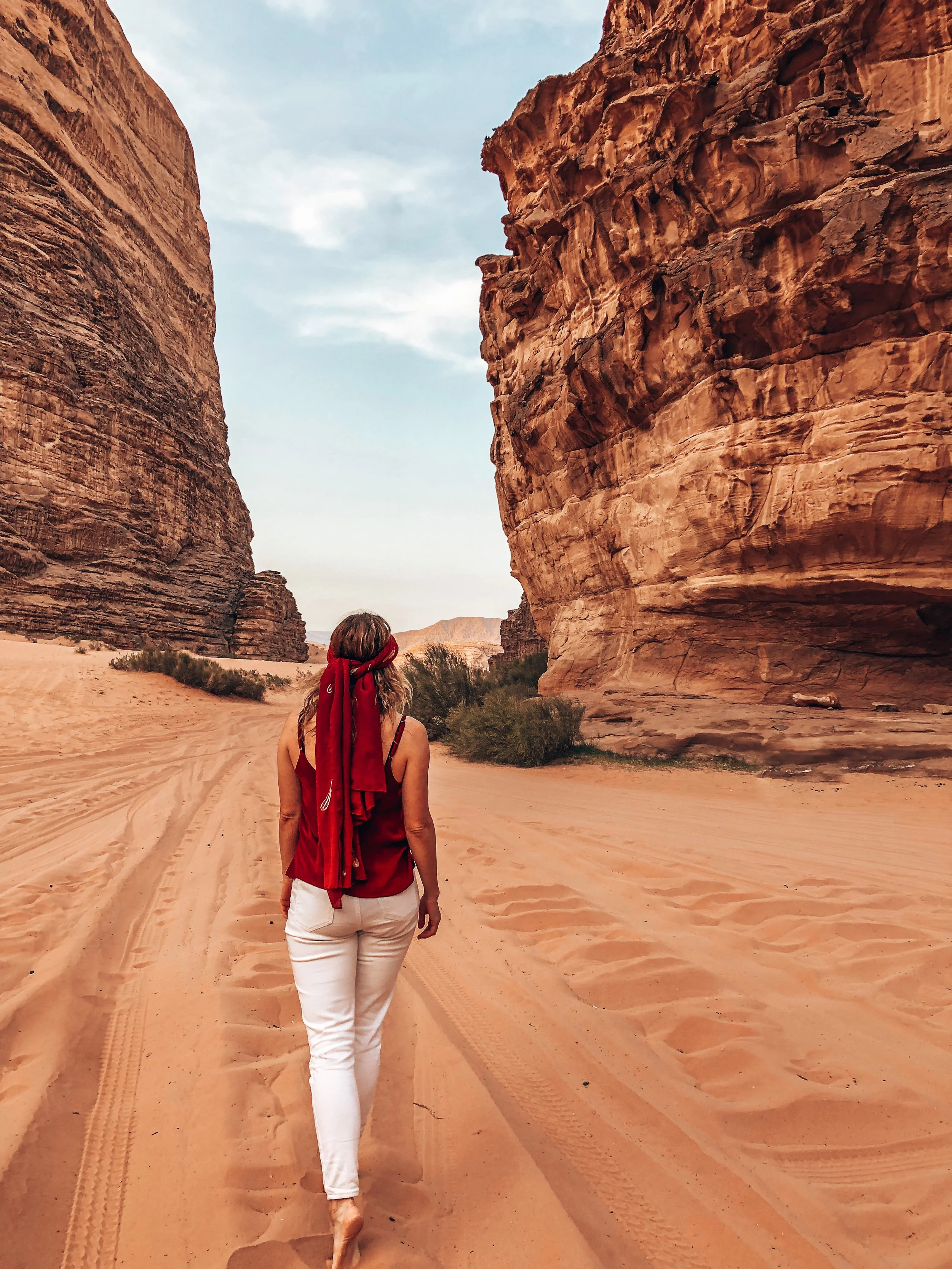
Wandered through narrow canyons
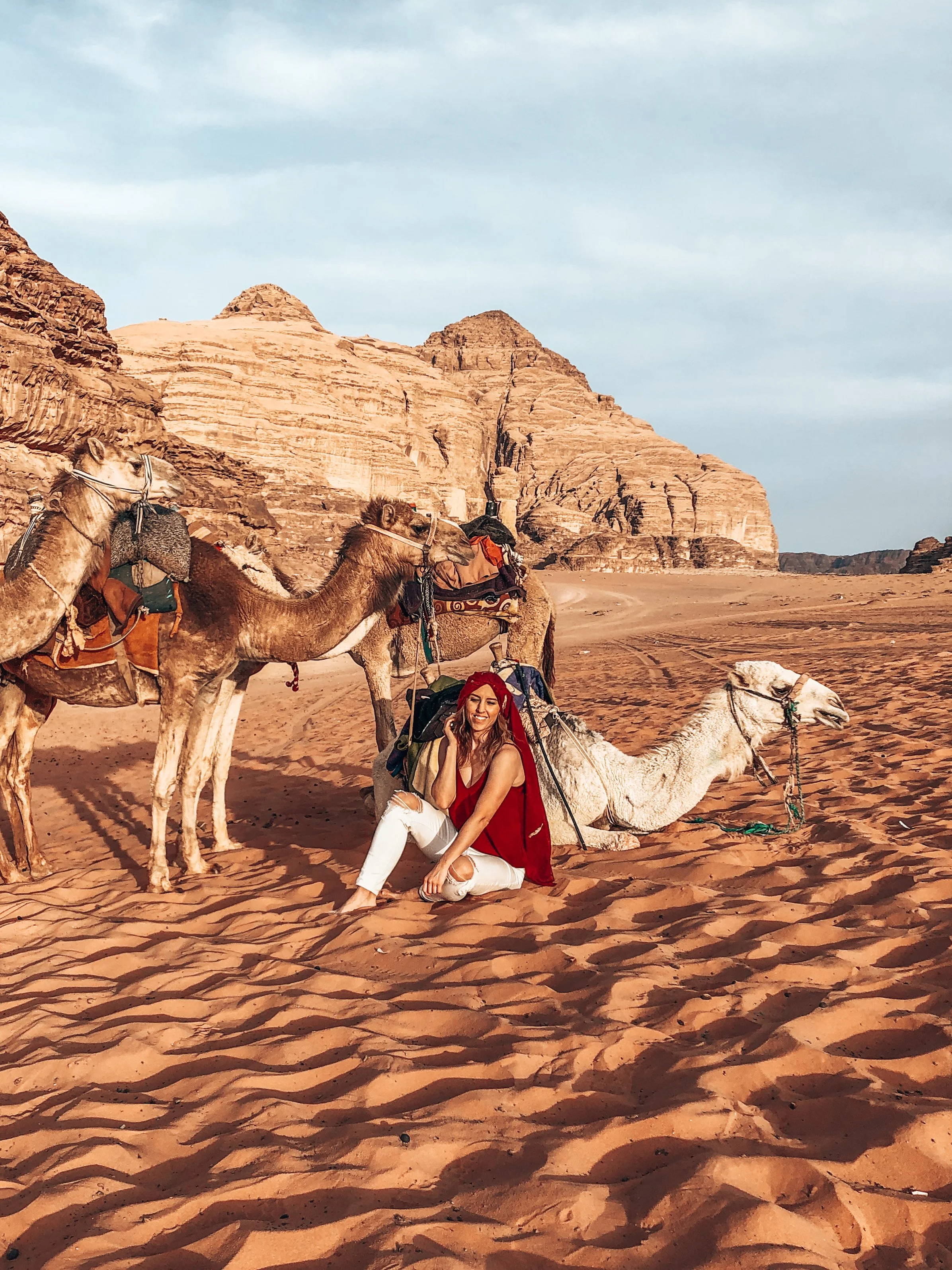
Stood quietly as camels passed by
I’m very conscious about animal tourism, so while camels are present (and riding is offered), we chose to simply interact respectfully… gentle pats only, no rides.
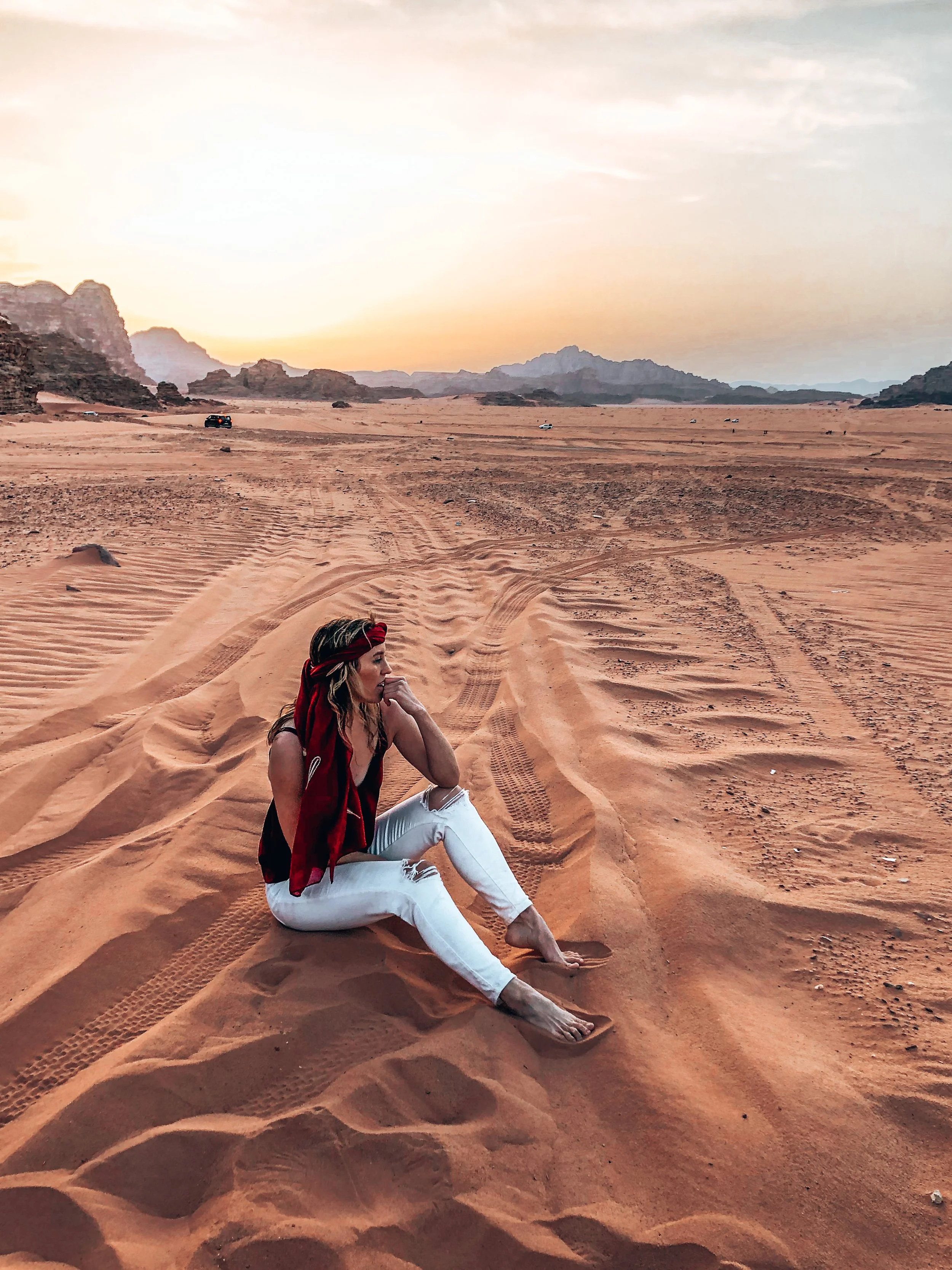
As the sun began to dip, we parked up on a dune and watched the desert transform. Reds turned to gold. Shadows stretched. The temperature dropped. It was one of those moments where no one spoke… because words would have ruined it.
Staying Overnight in Wadi Rum (Do This)
Staying overnight is what takes Wadi Rum from impressive to unforgettable.
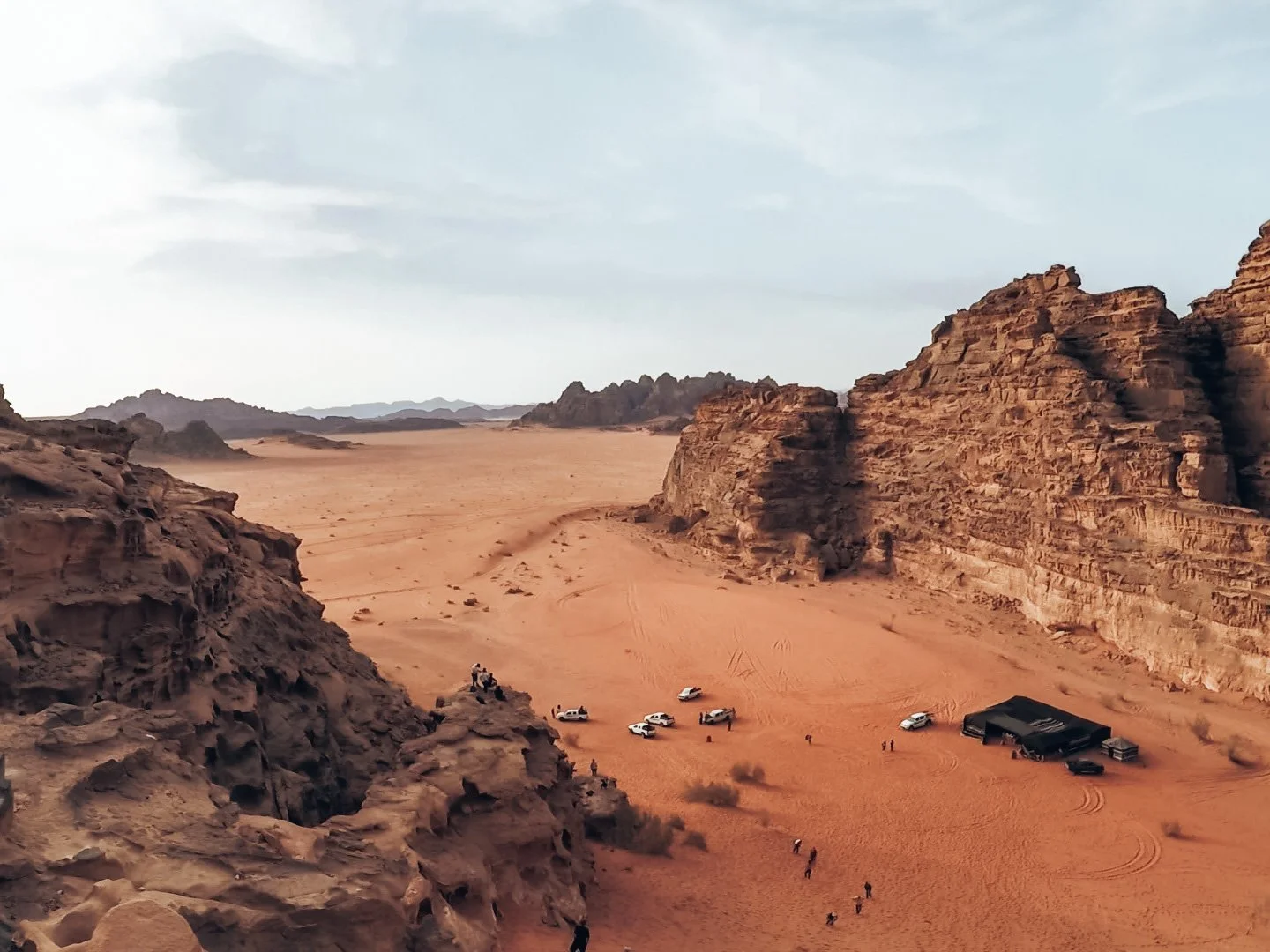
We stayed in a Bedouin desert camp… think glamping, but desert-style:
Permanent tents
Proper beds
Private bathrooms
Electricity (limited)
Ice-cold showers (brace yourself)
There are camps for every budget:
Basic Bedouin camps - authentic, simple, affordable
Mid-range glamping camps - comfort + culture
Luxury bubble tents - incredible views, premium price tag
Where I’d stay if I was to visit again:
Wild Oryx Camp Bubbles - Sleep under the stars in a luxurious bubble tent with panoramic desert views, modern comforts and an unforgettable glamping experience.
Palmera Camp Wadi Rum - A comfortable Bedouin-style camp offering cosy tents, warm hospitality and easy access to Wadi Rum's most iconic landscapes.
Valley Resort - A premium desert retreat featuring stylish accommodation, spectacular mountain views and the perfect balance of comfort and adventure.
Sand Rose Camp - Hillawi Camp - A welcoming Bedouin desert camp with comfortable glamping-style tents, traditional meals and warm hospitality. It's a fantastic mid-range option for an authentic overnight stay in Wadi Rum. (this is where we stayed during our visit)
Dinner & Desert Nights
Dinner was a traditional buffet of local dishes, followed by music, traditional dancing, and storytelling around the fire. BYO alcohol is usually allowed if you purchase it beforehand (Jordan has restrictions).
Afterwards, many people head out into the desert for stargazing… and with almost zero light pollution, it’s phenomenal.
I chose sleep instead… because my priority was sunrise.
Sunrise in Wadi Rum: Worth the Early Alarm
Getting up before dawn was one of the most magical, and unexpectedly intense, experiences of my trip.
We wandered out in the dark, the desert completely silent. No other travellers. No camp staff. Just us and the vastness.
As the sky slowly lit up, camels moved across the horizon, the rocks changed colour, and the stillness felt sacred. It honestly felt like we had the entire desert to ourselves.
It’s moments like this that remind you why you travel.
A moment that stays with us: Always be cautious of wildlife in Wadi Rum. We were tracked and followed by a pack of wild dogs just before sunrise, and were saved once a local trekked his camels through the desert. The dogs backed off in the presence of camels, which allowed us to get to safety. It’s moments like this you don’t expect, yet make for the best travel memories.
What to Do in Wadi Rum
You can tailor your experience depending on time and energy:
Jeep safaris (half or full day)
Sunrise & sunset experiences
Stargazing
Sandboarding
Hiking & scrambling
Rock climbing
Cultural experiences with Bedouin hosts
Even one night gives you a taste, but two nights allows you to slow down properly.
When Is the Best Time to Visit Wadi Rum?
Best months:
March-May (spring)
September-November (autumn)
These months offer warm days and cool nights without the extreme heat.
Summer (June-August): Very hot - only recommended if you’re heat-adapted.
Winter (December-February): Cold nights (sometimes near freezing), but stunning light.

What to Pack for Wadi Rum
Layers (it gets freezing at night)
Warm jacket or thermal
Sun protection (hat, sunscreen, sunglasses)
Scarf or buff for sand & wind
Comfortable walking shoes
Modest clothing for cultural respect
Power bank (electricity is limited)
Practical Tips for Visiting Wadi Rum
Stay overnight, it’s essential
Book through a reputable Bedouin camp or luxury camp
Bring cash for tips and small purchases
Respect the environment and local culture
Avoid exploitative animal tourism
Be prepared for temperature extremes
Consider purchasing the Jordan Pass
How Wadi Rum Fits Into a Jordan Itinerary
Wadi Rum pairs perfectly with:
Petra
Aqaba (Red Sea)
The Dead Sea
Why Wadi Rum Belongs on Your Bucket List
Wadi Rum allows you to embrace in the stillness, the scale, and the feeling of being completely removed from everything familiar.
It’s watching the light change over the rocks at sunrise with no one else around. It’s sharing tea with locals, sitting around a fire after dinner, and realising how little you actually need to feel content. It’s the reminder that some landscapes don’t need to entertain you… they just need space to be experienced.
If you’re planning a trip to Jordan, don’t treat Wadi Rum as an optional add-on to Petra. Give it a night (or two). Slow down. Stay present. Let the desert do what it does best.
Continue planning with my guide on How to Visit Petra, and my guide on Visiting The Dead Sea. And don’t miss my Ultimate Jordan Travel Guide.
Disclosure: This blog includes affiliate links. I will be paid a commission if you use these links to make a purchase.