Discover the best things to do in Seville, Spain, from historic tapas bars and spectacular architecture to flamenco at sunset, riverside walks and the local experiences that make this Andalusian city unforgettable.
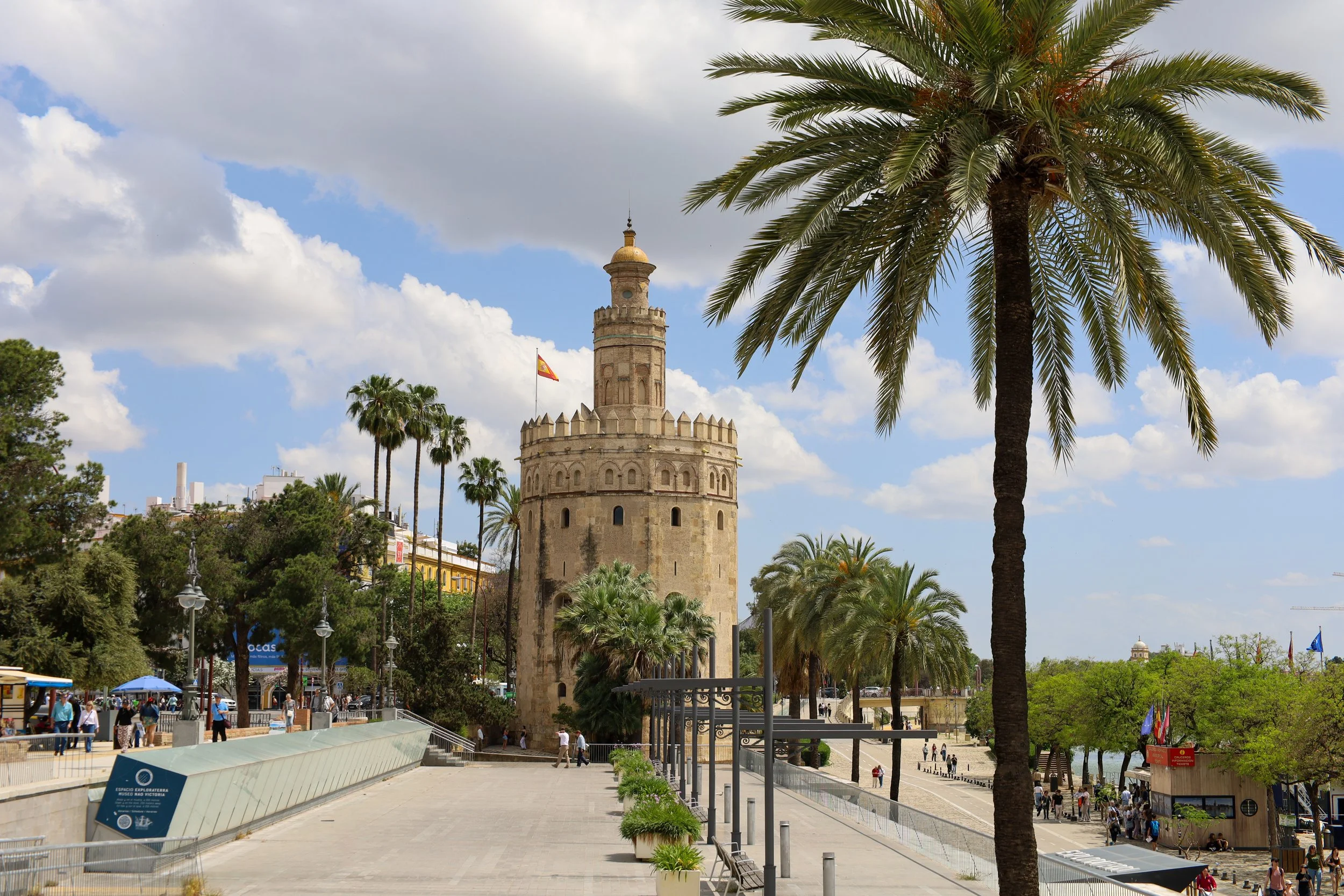
The Torre del Oro is one of Seville’s most recognisable monuments.
First Impressions of Seville: A City of Colour, Culture and Flamenco
By the time we reached Seville on our Spanish adventure, it was raining.
We'd just driven in from Olvera, dropped off our hire car, and after weeks of busy sightseeing, we were ready to slow down. We'd seen castles, wandered through historic towns and ticked off more grand monuments than I could count. They'd all been wonderful, but we were craving something different in Seville. Less sightseeing for the sake of it, more culture, local life and those unexpected moments that make travelling so memorable.
Seville delivered in spades.
There's a colour I now associate almost immediately with this city. Albero yellow. Not quite gold, not quite ochre, but that warm, earthy yellow you see across so many of Seville's buildings. Against the terracotta roofs, palm trees and deep blue Andalusian sky, it gives the city a character that's hard to mistake.
And then there's the flamenco and the sounds of Spanish guitar.
I also came away associating Seville with something a little less glamorous: snails. Lots of them. But more on that later!
Seville is the capital of Andalusia, in southern Spain, and a city where centuries of history sit alongside tapas bars, neighbourhood streets and a vibrant culture. It's famous for its Gothic cathedral, the Royal Alcázar, flamenco and Plaza de España, but some of my favourite memories came from simply wandering around without a strict plan.
If you're planning a trip to southern Spain, Seville deserves more than a quick stop between Granada and Córdoba. In this guide, I'll share the best things to do in Seville, the landmarks worth prioritising, the cultural experiences I wouldn't miss, and practical tips to help you plan a visit that feels more like travelling than ticking boxes.
Where Is Seville, Spain?
Seville is in Andalusia, in southern Spain, on the banks of the Guadalquivir River. It's one of the region's major cultural centres and a popular stop on an itinerary that includes Córdoba, Granada, Málaga and the white villages of Andalusia.
The city is known for its Moorish and Christian architecture, traditional tapas culture, orange trees, grand plazas and deep connection to flamenco. It's also an excellent destination for travellers who love history, photography, food, architecture and exploring on foot.
Why visit Seville? Come for the spectacular landmarks, but stay for the atmosphere. You can spend the morning exploring a royal palace, the afternoon wandering along the river, and the evening watching flamenco or settling into a centuries-old bar for a glass of sherry. That's the kind of variety I love in a destination.
The Best Things to Do in Seville, Spain
1. Visit the Royal Alcázar of Seville
If you're going to prioritise one historic attraction in Seville, make it the Royal Alcázar. This extraordinary royal palace is known for its decorative plasterwork, tiles, beautiful courtyards, arches and gardens.
Walking through the palace, I was reminded of Granada's Alhambra. There are similarities in the detailing, peaceful courtyards and the way water and gardens are incorporated into the architecture, although each place has its own distinct character.
The Alcázar feels like somewhere you could happily spend hours exploring. Beyond the grand rooms, the gardens feature fountains, greenery and a welcome change of pace. It's also a brilliant place for travel photography. Look beyond the obvious wide shots and pay attention to the details… patterned tiles, repeating arches, reflections in the water and the contrast between light and shadow.
My tip: Book your tickets online well in advance (trust me), especially if you're travelling in spring or autumn. Entry operates in timed slots, and popular dates can sell out. Use the official Spain Tourism website to book via the official booking site, rather than assuming a third-party ticket listing is official.
Allow at least two hours, and longer if you enjoy architecture and gardens. Don't try to rush through it just to fit in another attraction. And don’t book the last timeslot of the day. They start to close off one area at a time and you risk missing out on seeing the entire space.
2. Explore Seville Cathedral and Climb La Giralda
Seville Cathedral is stunning, inside and out. Its sheer scale is impressive, and the Gothic architecture, elaborate details and interior make it one of the city's most defining sights. It was built on the site of a former mosque, and elements of Seville's Islamic architectural history remain visible in the wider cathedral complex.
Inside, you'll find chapels, religious artworks and the monumental tomb traditionally associated with Christopher Columbus.
But the part that makes this visit particularly worthwhile is La Giralda, the cathedral's famous bell tower. It was originally constructed as the minaret of the city's mosque. From the top, you can look across Seville's rooftops and see the city's architecture from a different perspective.
Photography tip: Look for the albero-yellow buildings and terracotta rooftops that give Seville its recognisable colour palette. The view is especially rewarding if you enjoy capturing the patterns and textures of a city from above.
Practical tip: Purchase your ticket in advance and check the official Spain Tourism website. Cathedral and tower access may be affected by religious services, special events and operational changes. Allow around 75 minutes for the standard cathedral and Giralda visit, with extra time if you want to explore more slowly.
3. Watch Flamenco at Plaza de España
If there's one experience that captures the feeling I wanted from Seville, it's watching locals come together to enjoy flamenco dancing at Plaza de España.
We arrived shortly before sunset after kilometres of walking. By that point, my legs were tired, but I wasn't about to miss one of Seville's most famous landmarks.
Plaza de España is enormous, with a sweeping semicircular building, bridges, a canal and colourful ceramic tilework. It's one of those places that looks impressive in photographs but somehow feels even more striking when you're standing there.
As the light softened, the square came alive. Spanish guitar music drifted through the space. Then something happened that made the whole experience even better (and it’s so very “Spain”). People from the crowd started joining in. Locals clapped along, stamped their feet and became part of the performance rather than simply watching from the sidelines… men, women, young and old began dancing flamenco. It was beautiful to watch the pure joy on their faces as they embraced the music.
The moment that stuck with me most was watching an elderly woman dance flamenco with a complete stranger. It was simply people sharing music and movement in a public square.
I remember thinking, Wow. I'm in Spain.
That's the kind of travel moment I want more of. Not just seeing a famous place, but experiencing something that helps you feel connected to the culture around you.
When is the best time to visit Plaza de España?
I'd aim for late afternoon and stay through sunset. The light is great for photography, and the atmosphere can be fantastic when performers and visitors gather in the square. However, expect crowds. If your priority is photographing the architecture without people, visit early in the morning instead, then return later if you want to experience the atmosphere.
Street performances are not guaranteed, so treat them as a wonderful bonus rather than something you can schedule with certainty.
4. Wander Through Parque de María Luisa
Just beyond Plaza de España, Parque de María Luisa provides a welcome escape from the busy streets. This expansive green space is filled with palm trees, fountains, tiled benches and peaceful corners.
After several days of sightseeing, I find parks particularly valuable. They give you room to breathe, somewhere to sit down and a chance to experience a destination at a different pace. Parque de María Luisa is also a great place to take a break between visiting Plaza de España and exploring the rest of Seville. Look for the architectural details scattered throughout the park, as well as the way the light filters through the trees.
My tip: Bring water, comfortable walking shoes and a little flexibility in your schedule. Combine the park with Plaza de España rather than making a separate trip across the city.
5. Visit Setas de Sevilla and Enjoy the View from Above
Also known as Metropol Parasol, this enormous wooden structure looks rather like a collection of giant mushrooms rising above Plaza de la Encarnación. It's a striking contrast to the city's historic buildings, and a reminder that Seville isn't frozen in the past.
The structure has an elevated walkway and viewpoint where you can look out across the city. From above, you'll see the mix of historic rooftops, church towers and modern buildings that make up Seville's skyline. I love finding viewpoints when travelling because they help me understand the layout of a destination. They also give me a different way to appreciate the architecture I've been exploring at street level.
Setas is particularly worthwhile if you enjoy photography or want to see Seville from a different angle. The surrounding area also has a market and places to stop for food or a drink.
My tip: Consider visiting later in the day, when the changing light adds warmth to the rooftops.
6. Discover Flamenco at the Flamenco Dance Museum
If watching flamenco at Plaza de España sparks your curiosity, take the opportunity to learn more about the art form at the Flamenco Dance Museum, or Museo del Baile Flamenco.
Flamenco brings together music, singing, rhythm and movement, with traditions shaped by Andalusia's cultural history.
The museum explores the development of flamenco and the people, techniques and traditions behind it. It's a useful stop if you want to understand what you're watching when you attend a performance. The footwork, hand movements, posture and clapping all contribute to the expression of the dance.
There's also a personal reason flamenco experiences in Spain appealed to me… I studied performing arts full-time when I was younger and learnt flamenco, so I have a particular appreciation for the rhythm and complexity involved. The footwork, the use of castanets and the relationship between the music and the dancer are fascinating to watch… and using castanets while dancing is much harder than it looks.
Even if you've never taken a dance class, it's an opportunity to look beyond the spectacle and appreciate the skill behind the performance.
My tip: Check the museum's current exhibition and performance schedule before visiting. If you can, combine the museum with a live flamenco show so you can connect what you've learnt with the energy of a real performance.
7. Visit El Rinconcillo, Seville's Historic Bar
If there's one place that captures Seville's character, it's El Rinconcillo.
Founded in 1670, this historic bar and restaurant is widely recognised as one of Seville's oldest bars. Step inside and you'll find a dimly lit interior, shelves lined with bottles, traditional décor and an atmosphere that feels a world away from a modern cocktail bar.
We squeezed inside among the other customers, shoulder-to-shoulder with locals and visitors, and ordered a glass of sherry (recommended by the bartender). Because when in Seville, apparently, that's what you do.
One of the details I loved most was watching the staff write drinks orders directly onto the bar in chalk. It's a traditional practice that feels wonderfully old-school, particularly in a world where so many restaurants rely on tablets and digital ordering systems.
We paid €4.20 for two glasses of sherry during our visit, which felt like a bargain for the experience. Prices can change, so don't use that as a current price guide.
We also had a small misunderstanding while trying to order what we thought was coffee cake. Our Spanish ordering skills weren't quite up to the task, but those little moments are part of travelling, too. Not every interaction needs to go perfectly to become a good memory. Turns out it WAS coffee cake, and it was delicious.
What should you order at El Rinconcillo?
Sherry is the obvious choice if you drink alcohol. It's a fortified wine with deep ties to Andalusia, and trying a local style is a fitting way to experience the region's food and drink culture. The bar also offers traditional Andalusian dishes and tapas. Check the current menu and ask the staff what they recommend.
Tips for visiting El Rinconcillo
Be patient. There may be a queue to get in, or limited space at the bar.
Expect a busy, traditional atmosphere rather than a quiet sit-down experience
Have a translation app ready if you're unfamiliar with the menu
Check the current opening hours before making a special trip
If you don't drink alcohol, ask about non-alcoholic options or visit for the historic atmosphere and food
My recommendation: Don't rush through El Rinconcillo just to say you've been. Take a moment to observe the way the staff work, the chalk marks on the bar and the rhythm of the room. Sometimes the details are the experience.
8. Walk Along the Guadalquivir River
One of my favourite ways to experience a city is to explore it on foot, and Seville is particularly rewarding for this.
The Guadalquivir River runs through the city, offering a different perspective from the narrow streets of the historic centre. Walking along the river gives you room to slow down, take photos and watch everyday life unfold. You'll see bridges, riverside buildings, boats and people out enjoying the promenade.
It's also a good way to balance the busier attractions. After exploring cathedrals and palaces, a walk beside the water doesn't require tickets, reservations or a long list of things to see.
Depending on where you start, you can link your walk with the historic centre, the Torre del Oro and other riverside sights. I particularly enjoy these unstructured stretches of a trip. You might find a great photography angle, stumble across a café or simply enjoy the feeling of being somewhere new without needing to do anything in particular.
Photography tip: Try shooting along the river rather than straight across it. The line of the water, bridges and buildings can create a strong sense of depth. Early morning and late afternoon are often more comfortable for walking and can offer softer light.
9. See Torre del Oro
The Torre del Oro, or Tower of Gold, is one of Seville's most recognisable riverside landmarks.
This historic defensive tower stands beside the Guadalquivir River and forms part of the city's waterfront identity. Its name and appearance make it easy to spot while exploring the riverbanks.
The tower is a good stop to include in a self-guided walking route, particularly if you're already heading towards the historic centre or taking photos along the river. You don't necessarily need to spend much time here. Sometimes the best way to appreciate a landmark is to see it in context, alongside the water and surrounding streets.
If you're interested in maritime history, check whether the small naval museum inside is open during your visit.
Planning tip: Pair Torre del Oro with a riverside walk rather than treating it as a standalone destination. That way, you can enjoy the wider atmosphere without rushing from one attraction to another.
10. Admire Plaza de Toros de la Real Maestranza
The Plaza de Toros de la Real Maestranza is Seville's historic bullring, known for its traditional architecture and its place in Andalusia's bullfighting history.
Even if you have no interest in attending a bullfight, the building itself is worth understanding as part of the city's cultural landscape. Its curved exterior, pale walls and traditional details are particularly striking when viewed from the surrounding streets.
The bullring also highlights an important part of travelling… you can learn about a destination's traditions without feeling that you need to participate in every one of them. I prefer wildlife experiences that allow animals to remain undisturbed, so bullfighting isn't an activity I'd choose. But understanding its historical role provides useful context for exploring Seville and Andalusia.
If you're interested in the building's history, check the official visitor information for museum access and guided tours.
11. Explore the Royal Tobacco Factory of Seville
The Royal Tobacco Factory of Seville, or Real Fábrica de Tabacos, is another fascinating building to add to your itinerary if you enjoy history and architecture. This enormous eighteenth-century industrial complex was once associated with tobacco manufacturing and is now home to part of the University of Seville.
It's a reminder that Seville's history extends beyond palaces, churches and religious monuments. The city was also shaped by trade, industry and its connections with the wider Spanish empire. The scale of the building is impressive, and its courtyards and historic exterior are worth appreciating as you explore the area. Unlike some of Seville's headline attractions, it can be an interesting stop for travellers who want to discover a different side of the city's history.
12. Get Lost in Seville's Albero-Yellow Streets
One of my favourite things about Seville was simply walking around.
There's a distinct colour palette to the city, and for me, albero yellow is the one that stands out. You'll spot warm yellow and ochre façades, terracotta roofs, decorative ironwork and buildings that seem to glow when the sun comes out.
After our rainy arrival, those colours became even more noticeable whenever the clouds cleared. I loved wandering through the streets without a plan, passing churches, small plazas, traditional shops and buildings that made me want to stop every few minutes to take another photo.
Not every street needs to lead to a famous attraction. Sometimes it's the little details that make a place memorable: a doorway framed with tiles, a quiet square with a few tables outside, or a building whose colour catches your eye from halfway down the street.
If you're the kind of traveller who loves discovering places through walking, Seville is an excellent city to explore this way.
My tips for exploring on foot
Wear comfortable shoes. The historic centre involves plenty of walking, and uneven surfaces can catch you out.
Carry water, especially in warmer months
Use a map to understand the general layout, but leave room for detours
Explore early in the morning for quieter streets and softer photography light
Keep an eye on your belongings in busy squares and crowded tourist areas
13. Look Out for Seville's Famous Snails
Now for something I didn't expect to associate so strongly with Seville… snails.
In Andalusia, caracoles are a traditional seasonal delicacy, and in spring you'll often see them on the menus of local bars (okay, we saw them everywhere!). They're typically prepared with herbs and spices and served as a small dish to share.
Then, after a sudden downpour, we discovered just how many snails there were around the city. The footpaths near the train station had turned into what I can only describe as a snail minefield.
I'd never seen so many in one place!
It's one of those unexpected travel memories that makes me laugh when I think back on the trip. I went to Seville expecting flamenco, historic architecture and tapas. I didn't expect snails to become part of the story.
If you visit during the warmer spring months, you may notice caracoles advertised outside traditional bars. Availability is seasonal, so don't assume they'll be on every menu throughout the year.
14. Discover Seville's Plazas and Street Performers
One of the things I enjoyed most about Seville was the feeling that culture wasn't confined to museums and ticketed attractions… it spilled into the streets.
You might hear a musician playing in a square, come across dancers practising their steps or find people gathering to watch a spontaneous performance.
Plaza de España was the standout for me, but it's worth keeping your eyes and ears open throughout the city.
These encounters can be brief, and you can't guarantee they'll happen at a particular time or location. That's part of the appeal. Rather than building your entire itinerary around finding a street performance, leave some space in your day to stop when something catches your attention.
For me, these small cultural encounters are what turn a city break into something more meaningful.
What to Eat in Seville
Seville has a strong tapas culture, with traditional bars, busy restaurant terraces and menus that reflect Andalusia's regional food traditions. Moving between a few smaller places can be a lovely way to explore.
Here are a few things worth knowing.
Tapas and traditional Andalusian dishes
Tapas are small dishes that can be shared or ordered individually, depending on the restaurant. You'll find everything from olives and salads to fried fish, stews, cured meats and regional specialities. Don't assume every bar has the same menu or that every dish is available all day.
Sherry
Sherry is closely associated with Andalusia and is a fitting drink to try at a traditional bar such as El Rinconcillo if you drink alcohol. You can ask the staff about different styles, as sherry ranges from dry to sweeter varieties.
Caracoles
These seasonal snails are a traditional part of Seville's food culture, particularly in spring. Even if you don't eat them, seeing them on local menus offers a glimpse into the city's regional traditions.
Vegan food in Seville
As a vegan traveller, I recommend learning a few key Spanish phrases and checking ingredients carefully. Vegetable-based dishes aren't always vegan, as they may contain ham, fish stock, eggs or dairy. Use a translation app to communicate clearly, especially when ordering in traditional establishments with limited English menus.
The Hospitality That Made Our Final Meal Memorable
One of my favourite parts of travelling is seeing how people make you feel in a place, and our final meal in Seville stood out for exactly that reason.
There was a language barrier, but the waitress was warm, attentive and incredibly intuitive. She anticipated what we needed before we ever had to ask, made recommendations and kept everything moving without making us feel rushed. Her service was so natural that we barely needed to ask for anything. It's difficult to describe why certain interactions stay with you, but this one did.
We'd spent our days seeing extraordinary buildings and historic attractions, yet a simple meal and a thoughtful interaction became one of the memories I carried home. It's a reminder that travel isn't just about the places you visit. It's also about the people you encounter along the way.
How Many Days Do You Need in Seville?
I'd recommend spending three full days in Seville if you want to experience the major landmarks without rushing through everything. Two days can work if you're short on time, but three gives you a much better balance between sightseeing, culture and unplanned exploration.
Here's how I'd structure your visit.
Day 1: Historic Seville
Explore the historic centre on foot
Visit Seville Cathedral and climb La Giralda
Wander through the surrounding streets and plazas
Visit El Rinconcillo for a drink and a taste of traditional bar culture
Finish with a relaxed tapas dinner
Day 2: Palaces, Gardens and Flamenco
Spend the morning exploring the Royal Alcázar
Walk through Parque de María Luisa
Visit Plaza de España in the late afternoon
Stay for sunset and enjoy the atmosphere, street performers and any flamenco dancing taking place
Day 3: Views, River Walks and Local Culture
Explore the Flamenco Dance Museum
Walk along the Guadalquivir River
Stop at Torre del Oro and admire Plaza de Toros de la Real Maestranza
Explore the Royal Tobacco Factory's exterior, subject to access arrangements
Visit Setas de Sevilla and take in the panoramic views
This is a flexible itinerary rather than a race to see everything. If you love architecture, spend longer at the Alcázar and cathedral. If culture and local experiences are your priority, give yourself more time for flamenco, food and exploring the streets.
A useful planning tip: Check opening days, ticket times and the locations of each attraction before finalising your route. Some sights are close together, while others are better combined into a dedicated half-day.
Best Time to Visit Seville
Spring and autumn are generally the most comfortable seasons for exploring Seville on foot.
Spring: March to May
Spring brings milder weather, longer days and a lively atmosphere. It's a particularly popular time to visit, so book major attractions and accommodation ahead of time. We visited early May and it was perfect.
Semana Santa (Holy Week) and the Feria de Abril can make Seville especially busy. These events are wonderful opportunities to experience local traditions, but they can affect accommodation prices, transport and access around the city.
Summer: June to August
Summer can be extremely hot in Seville, with temperatures sometimes reaching or exceeding 40°C. If you're visiting in summer, plan around the heat. Explore early in the morning, take a break during the hottest part of the day and save outdoor sightseeing for the cooler evening hours.
Autumn: September to November
Autumn can be a lovely time to visit, with warm days and generally more manageable conditions than the peak of summer. September can still be hot, so check the forecast rather than assuming the season guarantees mild weather.
Winter: December to February
Winter is generally cooler and can bring rain, but it can also be a good option for travellers who prefer fewer crowds and don't mind less predictable weather.
Practical Travel Tips for Seville
Book the major attractions ahead
The Royal Alcázar and Seville Cathedral are among the city's most popular sights. Reserve tickets through their official websites and check the entry conditions for your chosen date.
Wear comfortable shoes
Seville is a brilliant walking city, but you'll cover plenty of ground if you combine the historic centre, Plaza de España and the riverfront. Comfortable footwear will make a real difference.
Plan around the heat
In the warmer months, avoid scheduling hours of outdoor sightseeing in the middle of the day. Carry water, wear sun protection and take breaks in shaded areas.
Keep your itinerary flexible
You don't need to visit every attraction to have a great time in Seville. Choose the experiences that interest you most, then leave room for a café stop, an unexpected performance or a street that catches your eye.
Carry a translation app
A translation app can help with restaurant menus, dietary requirements and conversations in smaller traditional establishments.
Be mindful of pickpockets
As in other busy European tourist destinations, stay aware of your belongings in crowded squares, on public transport and around major attractions. Keep your phone and wallet secure, particularly when you're distracted by photos or street performances.
Check opening hours before you go
Museums, historic buildings and religious sites can have different schedules, seasonal hours or closures for events. Confirm the details before building your day around a particular attraction.
Choose accommodation that suits your itinerary
For a first visit, staying in or near the historic centre makes it easier to explore on foot. If you prefer a quieter atmosphere, look at neighbourhoods just outside the busiest tourist areas, checking walking distances and transport connections before booking.
Is Seville Worth Visiting?
Absolutely.
Seville has some spectacular attractions, from the Royal Alcázar and its intricate architecture to the cathedral and the curves of Plaza de España. But what made the city special for me was the combination of those landmarks with the everyday experiences in between.
It was the albero-yellow buildings that caught my eye, the chalk marks on the bar at El Rinconcillo, the snails appearing after the rain and the spontaneous dancing at sunset. It was the waitress who made our final meal memorable, even though we struggled with the language, and the feeling that the city had more to offer than we could possibly fit into a single visit.
If you're planning a trip to Spain, add Seville to your itinerary. Give it at least a few days, make time for its cultural experiences and don't feel pressured to see everything.
Some of the best parts of travelling happen when you stop trying to find the next attraction and start paying attention to what's happening around you. That's when you begin to shift from tourist to traveller.
Frequently Asked Questions About Seville, Spain
What is Seville famous for?
Seville is famous for flamenco, the Royal Alcázar, Seville Cathedral and La Giralda, Plaza de España, traditional tapas bars and its distinctive Andalusian architecture. It's also known for its lively festivals and strong regional cultural identity.
Is Seville worth visiting?
Yes. Seville is an excellent destination for travellers interested in history, architecture, food, photography and culture. Its major attractions are impressive, but its streets, plazas, traditional bars and live performances are just as rewarding.
How many days should I spend in Seville?
Three full days is a good starting point for a first visit. Two days can cover several major highlights, while four days or more gives you time to explore neighbourhoods, enjoy additional cultural experiences and travel at a slower pace.
What are the best things to do in Seville?
The highlights include visiting the Royal Alcázar, exploring Seville Cathedral and La Giralda, watching flamenco at Plaza de España, wandering through Parque de María Luisa, visiting Setas de Sevilla and enjoying the city's historic tapas bars.
Where is the oldest bar in Seville?
El Rinconcillo, founded in 1670, is widely recognised as one of Seville's oldest bars. It's known for its traditional atmosphere and the practice of marking customers' orders in chalk on the bar.
What is the best time of year to visit Seville?
Spring and autumn are generally the most comfortable seasons for walking around the city. Spring is particularly lively but can be busy during major festivals, while summer can be extremely hot.
Can you explore Seville on foot?
Yes. Many of Seville's major sights are within walking distance of one another, particularly in the historic centre. Plaza de España and Parque de María Luisa are also easy to combine into a walking day. Comfortable shoes and a flexible itinerary are recommended.
Is Seville suitable for vegan travellers?
Yes, although traditional tapas menus often include meat, fish, eggs and dairy. Look for plant-based dishes, check ingredients carefully and use a translation app to explain your dietary requirements.
What is the albero-yellow colour seen throughout Seville?
Warm yellow and ochre tones appear on many buildings across Seville and contribute to the city's distinctive visual character. The exact shades vary between buildings, but they're a memorable part of the city's streetscape.
Why are snails so common on Seville menus?
Caracoles, or snails, are a traditional seasonal dish in Seville and other parts of Andalusia. They're particularly associated with spring, when local bars may serve them as a small dish or tapa.
Let Seville Surprise You
We arrived in Seville in the rain after weeks of sightseeing, ready to slow down. We left with memories of flamenco dancers, historic bars, colourful streets and a surprising number of snails.
The famous landmarks are worth seeing, but don't make the mistake of planning every minute of your visit around them. Take a walk beside the river. Stop when you hear music. Order something unfamiliar. Sit in a plaza and watch the city go about its day. You might not remember every monument you visit, but you'll remember the moments that made you feel like you were really there. And that's what travelling is all about.