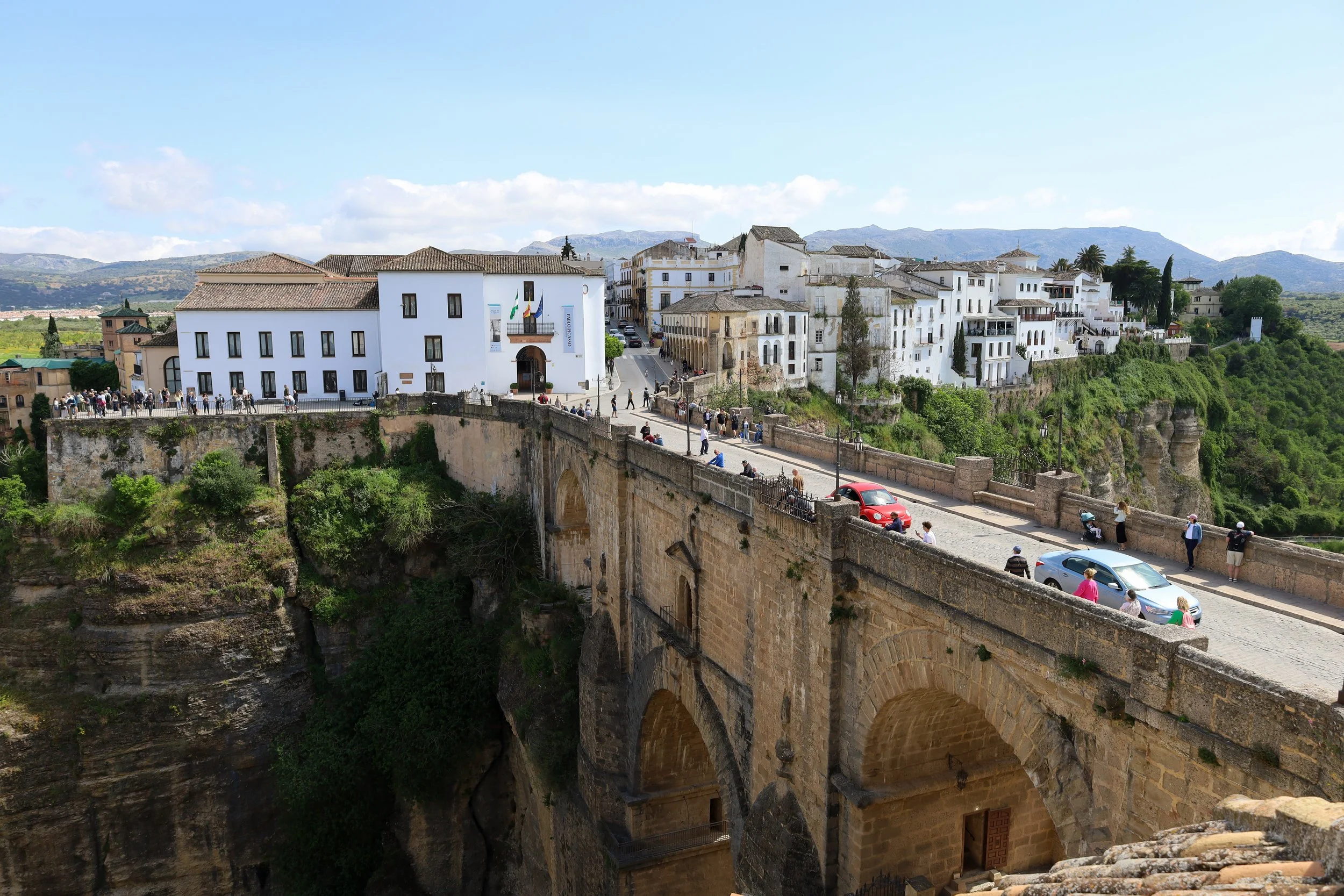
Puente Nuevo bridge spanning El Tajo gorge in Ronda, Andalusia, Spain.
I'd seen photographs of Ronda’s famous bridge, Puente Nuevo, stretching across a dramatic gorge, but I wasn't prepared for how beautiful the surrounding countryside would be, how much I'd enjoy wandering through the historic streets, or how different the town would feel once the day-trippers had left.
We stayed at Hotel Don Miguel, right beside the famous bridge, with views that made it difficult to tear ourselves away from our balcony. Watching the sun set over Ronda, then seeing the town come to life again the following morning, were two of my favourite experiences in the south of Spain.
Located in Andalusia, in southern Spain's Málaga province, Ronda sits above the El Tajo gorge, with whitewashed streets, centuries of history and sweeping views across the Serranía de Ronda mountains. Its most famous landmark is the 18th-century Puente Nuevo bridge, but the town has far more to offer than one spectacular photo opportunity.
If you're planning a trip to southern Spain, this guide covers the best things to do in Ronda, where to find quieter viewpoints, the historic sights worth visiting, nearby wineries and white villages, and the practical tips that will help you experience Ronda beyond the tourist trail.
My biggest recommendation? Stay overnight. Ronda is a completely different experience when you aren't watching the clock or trying to squeeze everything into a day trip.
Ronda, Spain: At a glance
Location: Ronda, Málaga province, Andalusia, southern Spain.
How long to stay: Ideally one to two nights.
Best time to visit: Spring and autumn for comfortable sightseeing and exploring the surrounding countryside.
Getting around: Walk around the historic centre; a hire car is useful for exploring wineries and nearby villages.
Don't miss: Puente Nuevo, Mirador de Cuenca, the Arab Baths, quiet gorge walks and sunset over the countryside.
Is Ronda, Spain worth visiting?
Absolutely. Ronda is one of the places I'd encourage travellers to add to their Andalusia itinerary, particularly if they enjoy history, dramatic landscapes, photography and exploring at their own pace.
What makes Ronda special is the combination of its natural setting and its history. The gorge divides the historic town from the newer district, and bridges connect the two sides. Beyond the famous landmark, you'll find medieval gates, remnants of Moorish architecture, traditional streets, gardens and access to some really beautiful countryside.
It's also an excellent base for exploring the surrounding white villages and vineyards, making it a good fit for travellers who prefer a slower, more immersive trip rather than rushing from one major attraction to another.
Ronda is particularly worthwhile if you:
Love dramatic landscapes and scenic photography
Enjoy exploring historic towns on foot
Want to experience Andalusia's countryside, wineries and white villages
Have time to stay overnight instead of arriving on a crowded day tour
One thing I'd change about the way some people visit Ronda is the amount of time they allow. If you arrive late in the morning, photograph the bridge and leave a few hours later, you'll miss much of what makes this place special.
1. Visit Puente Nuevo, Ronda's famous bridge
If there's one sight you've probably seen before visiting Ronda, it's Puente Nuevo.
This monumental stone bridge connects the old town with the newer district. Construction of the current bridge took place between 1751 and 1793, and it rises approximately 98 metres above the gorge.
Standing beside it, looking across the gorge and watching the landscape drop away beneath the stone arches, is an experience in itself. Photos give you an idea of the scale, but it's difficult to appreciate just how dramatic the setting is until you're there.
We were lucky enough to stay at Hotel Don Miguel, with stunning views of the bridge from our room. It meant we could enjoy the scenery without needing to head out every time we wanted to see it.
When is the best time to see Puente Nuevo?
I'd visit more than once if you can.
Early morning: Enjoy a quieter atmosphere and softer light before the main sightseeing crowds arrive
Late afternoon: Watch the light change across the gorge and surrounding landscape
Sunset: Find a viewpoint and stay long enough to see the colours change
After dark: See the bridge illuminated against the night sky, if conditions and lighting are favourable
My favourite approach is to see the bridge at different times of day rather than treating it as a quick stop. The atmosphere changes, and so does the way the stone, cliffs and surrounding landscape appear.
Where are the best viewpoints for Puente Nuevo?
The most popular viewpoints can get crowded, especially when tour groups arrive. Visit the established viewpoints, but don't feel you need to spend your entire time competing for the same photo.
Some of the best views we found came from simply walking further along the streets and paths, looking for a different angle. Sometimes the most memorable spot is the one you weren't specifically trying to find.
If you want the classic view of the whole bridge, look for viewpoints around the gorge and the paths leading down towards the lower part of El Tajo. Be prepared for steep sections and uneven ground.
Photography tip: If you have a phone with a wide-angle lens, use it to capture the bridge and the gorge together. For a more natural-looking photo, step back and use the standard lens rather than making everything appear stretched with an ultra-wide setting.
2. Explore El Tajo de Ronda
Puente Nuevo might be the star attraction, but the landscape that makes it possible is just as impressive.
El Tajo de Ronda is the dramatic gorge carved by the Guadalevín River, separating parts of the town and creating the steep cliffs that make Ronda so distinctive.
One of my favourite things about Ronda was getting away from the busiest streets and wandering towards the river. The further we explored, the more we appreciated the scale of the gorge and the beautiful countryside surrounding the town. If you're someone who enjoys exploring on foot, leave some space in your itinerary to follow paths away from the main square and look at Ronda from different angles.
Walk down towards the gorge
The lower paths offer a different perspective from the viewpoints above. Rather than looking across the bridge, you can appreciate the height of the cliffs and the landscape from below.
Access, trail conditions and opening arrangements can change, so check the current local information before setting out. Some routes are steep and exposed, and you should allow more time than the distance on a map might suggest.
Wear comfortable walking shoes, carry water and avoid getting too close to cliff edges for a photo.
My tip: Don't make every walk about reaching a specific attraction. Some of my favourite moments in Ronda came from wandering without a fixed destination and stopping when the view caught my attention.
3. Find a quieter view at Mirador de Cuenca
If you want a different perspective of Puente Nuevo, add Mirador de Cuenca and the adjoining Jardines de Cuenca to your itinerary.
These terraced gardens sit along the edge of the gorge, offering views across the cliffs and towards the bridge. Each level gives you a slightly different angle, so it's worth taking your time rather than stopping at the first viewpoint.
I particularly like the idea of visiting here early in the day or later in the afternoon, when you can take your time exploring the terraces and photographing the landscape. Although it's a worthwhile place to visit, don't assume it will always be quiet. Ronda's famous viewpoints attract plenty of visitors, especially during the middle of the day.
How to enjoy Ronda's viewpoints without the crowds
Visit early or later in the afternoon rather than arriving with the main tour groups
Walk beyond the first obvious viewing platform
Look for alternative angles along public paths, while respecting barriers and private property
Return at a different time of day if the light or crowds aren't right
Put your camera away occasionally and enjoy the view without trying to capture it
One of my favourite travel habits is to keep walking when everyone else stops. It's amazing how often a slightly different angle gives you a better experience.
4. Wander through Ronda's historic old town
The historic quarter is full of narrow streets, traditional buildings, little squares and architectural details that are easy to miss if you're moving quickly between landmarks. Its history reflects the different cultures that shaped Andalusia, including its Moorish heritage and later Christian architecture.
Walk without worrying too much about your route. Follow a street that looks interesting, stop for a coffee if you find somewhere inviting, and take the longer way back to your accommodation.
I particularly enjoyed the simple experience of walking around Ronda and discovering the town at our own pace. It was a reminder that the best parts of travelling don't always come with an entrance ticket.
What to look for as you explore
Traditional balconies and doorways
Quiet squares tucked away from the main tourist streets
Historic buildings and remnants of the old defensive walls
Views of the surrounding mountains between buildings
Streets leading towards the gorge and river
Allow yourself to get a little lost, while keeping track of where you're heading if you have a dinner reservation or a timed entry ticket.
5. Visit Ronda's Arab Baths
The Arab Baths, or Baños Árabes, are one of Ronda's most interesting historic sites and well worth adding to your itinerary if you enjoy learning about the past. Located near the river, these baths date to the 13th and 14th centuries and are among the best-preserved historic Arab bath complexes in the Iberian Peninsula. Their layout reflects the traditional sequence of cold, warm and hot bathing spaces.
The vaulted brick ceilings and star-shaped openings are particularly striking. They also offer a glimpse into everyday life in medieval Ronda, beyond the palaces, fortifications and grand landmarks. I like attractions such as this because they add context to the place you're exploring. Rather than just admiring beautiful buildings, you begin to understand how people lived and how the town developed.
Practical tips for visiting the Arab Baths
Allow around 30-60 minutes, depending on how much you enjoy reading the displays and exploring the site
Check opening hours before visiting, particularly around public holidays
Consider visiting earlier in the day so you have flexibility for other sights
Wear comfortable shoes for the surrounding streets and paths
6. Discover Puerta de Almocábar and Ronda's historic walls
If you want to explore beyond the immediate area around Puente Nuevo, make your way towards Puerta de Almocábar. This historic gate was one of the principal entrances to Ronda's old Islamic city. It sits in the southern part of the historic centre, within the remains of the town's former defensive walls. The gate was later modified during the reign of Charles V.
It's a worthwhile stop for anyone interested in architecture and history, but I'd also recommend treating the walk there as part of the experience. The streets around the old walls give you a different sense of Ronda from the busy central viewpoints. You can appreciate how the town was shaped by its geography and why its defensive position was so important.
Travel tip: Combine Puerta de Almocábar with a walk through the southern historic quarter rather than making it a separate dash across town. You'll get more out of the visit if you take your time exploring the surrounding streets.
7. Visit the Bullring of the Royal Cavalry of Ronda
Bullfighting is a controversial part of Spanish cultural history, and I don't agree with it. However, I was interested in learning more about the history behind the tradition, which is why the Bullring of the Royal Cavalry of Ronda caught my attention.
The Plaza de Toros de Ronda dates to 1785 and is closely associated with the development of modern bullfighting. It is also home to a museum exploring the history of the bullring, the institution behind it and the wider traditions connected with the sport.
For me, there is value in understanding a place's history, even when aspects of that history don't align with my own values. You don't have to agree with bullfighting to learn about its role in Spanish culture, the architecture of the arena or the way traditions have evolved over time.
What to expect
A visit typically includes the bullring and museum spaces, with exhibits that explore the history and traditions associated with the site. If you're interested in architecture, the circular arena and stone seating are also worth seeing.
Check the official Bullring and Museum visitor information for current admission prices, opening times and any access restrictions. The site has listed conservation and consolidation works, so it's worth checking the latest arrangements before you go.
8. Take in the views from Paseo de Blas Infante
Another area worth exploring is Paseo de Blas Infante, near the bullring and the edge of the gorge. This is a good place to enjoy the wider landscape and appreciate the setting of Ronda. The area includes established viewing spots overlooking the Guadalevín River and the surrounding terrain.
I'd combine this with a leisurely walk around the nearby streets and viewpoints rather than treating it as a quick photo stop.
If you're travelling with a camera or using your phone to capture your trip, this is a good opportunity to take some wider landscape photographs that show more than the bridge alone. Try including the rocky cliffs, the surrounding countryside and a little of the town itself to tell a more complete story of Ronda.
9. Walk along the river and explore beyond the main viewpoints
This is one of the experiences I'd prioritise if I returned to Ronda.
The famous viewpoints are spectacular, but there is something special about moving away from the main streets and exploring the landscape on foot. The river, rocky cliffs and surrounding countryside offer a different perspective from the more familiar photographs of Puente Nuevo.
Some routes descend quite steeply, so it's important to choose a walk that suits your fitness and the conditions on the day. Check local trail access and signage before heading down into the gorge.
My approach to finding quieter viewpoints
I don't always want to stand in a queue for a photo or squeeze into a crowded viewing platform. Instead, I like to explore the surrounding streets and paths until I find a place where I can stop, look around and appreciate the scenery. In Ronda, that approach was particularly rewarding.
Of course, not every quieter spot will be safe or accessible, and there is no need to cross barriers or stray onto unstable ground for a photograph. Stick to public paths and marked routes. But if a viewpoint is packed, keep walking. You might find a different angle that you enjoy even more.
This is one of my biggest tips for travelling beyond the tourist trail: give yourself permission to explore without needing every stop to appear on a must-see list.
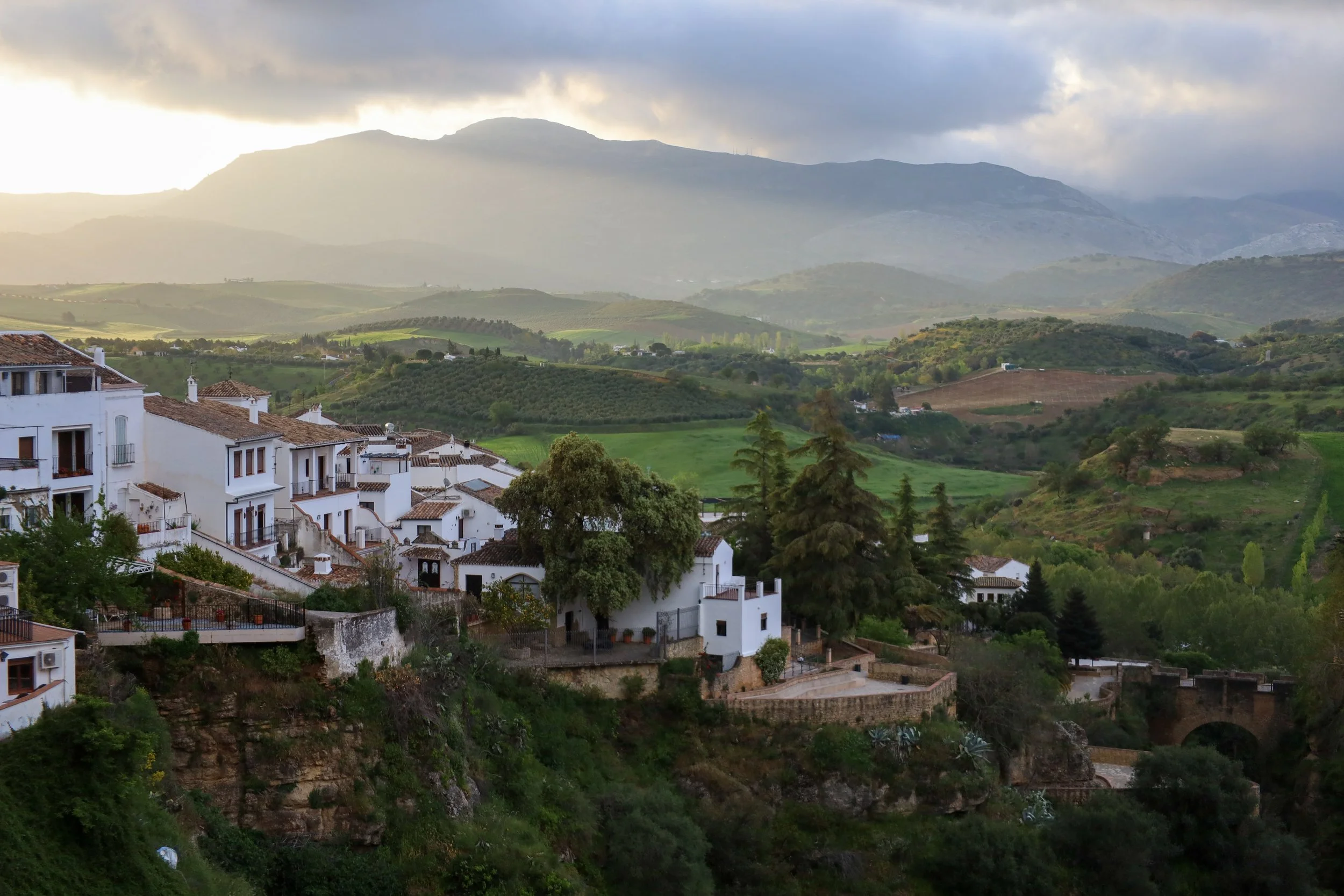
Sunrise views in Ronda, from our balcony.
10. Explore the countryside surrounding Ronda
One of the things I loved most about Ronda was the scenery beyond the town itself.
The surrounding Serranía de Ronda is a beautiful landscape of mountains, valleys, olive groves and vineyards. It's a different side of Andalusia from the beaches and larger cities, and a wonderful reason to spend a little longer in the region. If you're hiring a car, I'd set aside time to explore the countryside rather than spending your entire visit within the town centre.
The winding roads, distant mountain views and whitewashed villages make the journey part of the experience. Just remember that distances on a map can be misleading in mountainous areas, where roads are slower than you might expect. You don't need to cram five villages into one day. Choose a couple that interest you, stop when you find a beautiful view, and leave enough time to enjoy the places you visit.
11. Visit the wineries around Ronda
If you enjoy discovering local food and wine when you travel, consider adding a vineyard visit to your Ronda itinerary.
The region around Ronda has a wine-making tradition shaped by its inland setting, elevation and varied landscape. Vineyards sit among the hills of the Serranía de Ronda, making a winery visit an opportunity to experience the countryside as well as learn about local wine production.
I'd particularly recommend this for travellers who enjoy slower experiences: visiting a small producer, learning about the region and taking time to appreciate the landscape rather than simply ticking off another attraction.
Wineries to look into near Ronda
Bodega Doña Felisa: A winery in the Ronda area to investigate if you're interested in vineyard visits and learning about wine production. Check its current tour and tasting options directly before planning your day.
Bodega Joaquín Fernández: Worth researching if you're looking for a smaller winery experience in the Ronda wine region. Confirm visitor arrangements, availability and any tasting requirements in advance.
These are starting points for your research rather than confirmed recommendations based on a personal visit. Winery tours, opening days and tasting experiences can vary by season, so contact each producer before travelling.
Tips for planning a winery visit
Book ahead. Don't assume a winery will accept walk-in visitors
Check the location. Some vineyards are outside Ronda and require a drive along rural roads
Allow time. A tour and tasting can take a few hours, particularly if you want to enjoy the surroundings
Plan transport. If you're tasting wine, arrange a designated driver or a suitable transfer
Check what's included. Tours and tastings may need to be booked separately
If wine isn't your thing, the countryside is still worth exploring. You could spend the time driving through the mountains, stopping at viewpoints or visiting one of the nearby villages instead.
12. Explore the white villages near Ronda
Ronda is a fantastic base for exploring the pueblos blancos, or white villages, of Andalusia. These villages are known for their whitewashed houses, historic streets, hilltop castles and dramatic settings among the mountains. If you have an extra day or two, I'd choose a couple of villages and explore them properly rather than trying to see the entire region at once.
Here are four I'd put on your shortlist.
Setenil de las Bodegas
Approximately 20-30 minutes by car
One of the most unusual villages in Andalusia, Setenil is famous for streets where houses and cafés sit beneath enormous rock overhangs. Explore Calle Cuevas del Sol and Calle Cuevas de la Sombra, and allow time to wander beyond the most photographed sections.
Best for: Unusual architecture, photography and a short countryside excursion.
Zahara de la Sierra
Approximately 40-50 minutes by car
This white village climbs a hillside beneath the remains of a medieval castle, overlooking a striking blue-green reservoir. If you enjoy viewpoints, scenic drives and historic streets, it's a beautiful addition to a Ronda road trip.
Best for: Panoramic views, photography and a scenic mountain setting.
Grazalema
Approximately 40-50 minutes by car
Surrounded by the Sierra de Grazalema mountains, this village is a great choice if you enjoy nature, walking and mountain scenery. Take time to explore its whitewashed streets and consider combining your visit with a walk in the surrounding natural park.
Best for: Hikers, nature lovers and travellers seeking a slower pace.
Olvera
Approximately 40-50 minutes by car
Olvera is known for its hilltop castle and impressive church rising above the whitewashed town. It's a good option if you enjoy historic architecture, elevated views and exploring places that feel different from the larger Andalusian cities.
Best for: History, viewpoints and a countryside road trip.
Driving times are approximate and depend on the route, traffic and road conditions. Mountain roads can take longer than expected.
Which white village should you visit first?
If you only have time for one, I'd shortlist Setenil de las Bodegas for its unusual rock-covered streets, or Olvera if you're more interested in castles with sweeping views. For a full day out, you could combine Setenil with another nearby village, but check the driving route before committing to a longer loop. The key is not to turn your countryside adventure into another race against the clock.
13. See more of the region on a scenic drive
If you have a hire car, one of the best ways to experience the region is to spend a day exploring the countryside around Ronda.
You could build a route around Setenil de las Bodegas, continue towards Olvera or Zahara de la Sierra, and return to Ronda through the mountains. Alternatively, head towards Grazalema if you prefer nature and walking. I'd choose your route based on what you enjoy most rather than trying to visit every village.
A few things to keep in mind:
Allow extra time for winding roads and unexpected stops
Check road closures and weather conditions before setting out
Take care when stopping for photographs; use designated parking areas
Bring water, snacks and an extra layer of clothing
Check village opening times if you want to visit museums or monuments
The scenery is a big part of the appeal, so don't plan every minute. Leave room for the occasional detour when a landscape catches your eye.
14. Enjoy Ronda after the day-trippers leave
If you take just one piece of advice from this guide, let it be this… stay overnight in Ronda.
This was one of the biggest differences between Ronda and other places we visited in Spain. During the day, the town attracts visitors arriving on organised excursions and day trips. The famous viewpoints and streets around the main attractions can become busy, making it difficult to slow down and enjoy the setting.
But once the tour buses began leaving, Ronda felt different. The streets became quieter, the atmosphere relaxed, and there was more space to wander without feeling as though we were competing with everyone else for the same view.
Watching the sun set over the town and then seeing the landscape in the early morning light were two of my favourite memories of Ronda. It was the sort of experience that reminded me why I prefer travelling a little more slowly.
Why an overnight stay is worth it
You can explore the main sights early, before the busiest part of the day
You have time to enjoy sunset without worrying about a return transfer
You can wander through the old town after the crowds have thinned
You can experience the landscape in different light
You have more flexibility to visit wineries and nearby villages
If your itinerary allows it, I'd recommend two nights. That gives you one full day to explore Ronda and another for the surrounding countryside. If you're short on time, even one night is worthwhile.
Where to stay in Ronda, Spain
We stayed at Hotel Don Miguel, and it was the perfect base for our time in Ronda.
Its location beside Puente Nuevo meant we could enjoy views of the famous bridge without having to travel anywhere. For me, that made a huge difference, especially when we wanted to watch the light change over the gorge or head out for an early morning walk.
If you're choosing accommodation in Ronda, I'd prioritise location over finding the cheapest room outside the centre. Being able to walk to the main sights, return to your room between outings and explore before the day-trippers arrive is a real advantage.
Hotel Don Miguel
Best for: Travellers who want to stay close to Puente Nuevo.
We loved the location and the views of the bridge. If seeing Ronda's most famous landmark at different times of day is high on your list, it's a property worth considering. Check the room type carefully if a bridge view is important to you, as views can vary by room.
Tips for choosing accommodation
Stay within walking distance of the historic centre. It makes early mornings and evenings much easier.
Check the exact room view. A hotel near the bridge doesn't necessarily mean every room overlooks it.
Read the parking information carefully. Don't assume your hotel has convenient on-site parking.
Consider stairs and luggage access. Historic buildings and steep streets can make bags more difficult to manage.
Book ahead for popular dates. Spring and autumn can be busy, particularly around weekends and local events.
If you want to explore the surrounding countryside, a centrally located hotel with a clear parking plan can make your trip much easier.
Food and restaurants in Ronda: What I wish I'd known
One thing that surprised me about Ronda was how difficult it could be to find an appealing dinner option later in the evening.
We found that many restaurants seemed geared towards tourists, and the places we encountered were often more expensive than we'd expected. Unlike other parts of Spain we'd visited, we also found many options closed by around 8:30 pm. That was our experience, rather than a rule that applies to every restaurant in Ronda. Opening hours vary, and seasonal schedules can affect what's available.
Still, I'd plan ahead rather than assuming you'll be able to wander out late and find plenty of options. If you're travelling in a group or have particular dietary requirements, checking menus ahead of time is even more useful.
The lesson for me was simple: Ronda is a place I'd happily spend more time exploring, but I'd do a little more preparation around dinner and parking next time.
Getting to Ronda and getting around
Ronda is inland from the Costa del Sol, in the mountainous countryside of Andalusia. You can reach it by car, train or bus, depending on where you're travelling from. I'd consider a hire car if you want to explore the surrounding wineries and white villages, but you don't necessarily need one to enjoy Ronda itself.
Driving to Ronda
Driving gives you the flexibility to stop at viewpoints, explore villages and visit wineries outside town. However, parking was one of our biggest challenges. We ended up parking kilometres away from our accommodation, which was far from ideal when we had luggage to carry. This is something I'd plan much more carefully next time.
My parking tips:
Ask your hotel for its recommended parking options before you arrive
Check whether the hotel has private parking, and whether it needs to be reserved
Research public car parks near your accommodation
Check the walking distance from the car park, including any hills or stairs
Avoid driving into narrow historic streets unless you know your accommodation has suitable access
If you're travelling with luggage, consider dropping it off where permitted before parking further away
Don't assume that a hotel in a central location will have convenient parking simply because it appears close on a map.
Travelling by train or bus
Ronda is also accessible by rail and road connections from other Andalusian destinations. Depending on your starting point, public transport can be a convenient alternative to driving.
Check current schedules before booking, as journey times and service frequency vary. If you arrive without a car, you can explore most of the central sights on foot. For wineries and smaller villages, you'll need to investigate local transport, taxis or organised excursions.
The best time to visit Ronda
Spring and autumn are excellent times to explore Ronda, particularly if you want to combine sightseeing with walking and countryside excursions. We visited in early May, and although I expected southern Spain to be warm, it was surprisingly cold. The temperature caught me off guard, especially when we were outside enjoying the views in the morning and evening.
It's a good reminder that the weather in southern Spain isn't always beach weather, particularly in elevated inland towns.
Here's how I'd approach each season.
Spring (March–May): Pleasant sightseeing conditions are possible, but temperatures and rainfall vary. Pack layers and a light waterproof jacket.
Summer (June–August): Hotter conditions, strong sunshine and potentially busy sightseeing areas. Explore early and later in the day.
Autumn (September–November): Often a lovely time for countryside scenery and exploring villages, with increasing rainfall later in the season. Consider a winery visit or scenic drive.
Winter (December–February): Cooler weather, shorter days and the possibility of rain or chilly mornings. Check forecasts and trail conditions before setting out.
For my style of travel, I'd lean towards spring or autumn. Both can work well for exploring the historic town and surrounding countryside, although conditions vary from year to year.
Packing tip: Bring a warm layer even if you're visiting Andalusia in spring. You'll appreciate it when you're standing at a viewpoint before sunrise or watching the sun disappear behind the mountains.
How many days do you need in Ronda?
I'd recommend at least one night, with two nights being even better if you want to explore beyond the town.
Here's how I'd structure your visit.
One night in Ronda
Best if you're travelling around Andalusia and have limited time.
Day 1
Afternoon: Arrive and explore
Check in, visit Puente Nuevo, explore Mirador de Cuenca and wander through the historic streets. Head to a viewpoint for sunset, then enjoy dinner.
Day 2
Morning: Explore before the crowds
Enjoy an early walk, visit the Arab Baths or bullring museum, and explore Puerta de Almocábar if time allows. Continue to your next destination after lunch.
Two nights in Ronda
My preferred option for a slower, more immersive experience.
Day 1
Arrive and enjoy the town
Settle into your accommodation, explore the bridge and surrounding viewpoints, and spend the evening wandering through the old town.
Day 2
Discover historic Ronda
Visit the Arab Baths, explore the bullring and historic walls, wander towards the river and enjoy sunset without rushing.
Day 3
Explore the surrounding countryside
Visit Setenil de las Bodegas, head towards Zahara de la Sierra or Grazalema, or arrange a winery visit before continuing your journey.
If you're someone who loves finding hidden corners, taking photographs and enjoying the atmosphere of a place, I wouldn't try to squeeze everything into a single day.
Practical tips for visiting Ronda, Spain
Here are the things I'd want to know before visiting Ronda for the first time.
Stay overnight. This is my biggest recommendation. The town feels different when the day-trippers leave.
Plan your parking. Don't assume you'll find a convenient spot close to your accommodation.
Book dinner or have a backup. We found evening dining options more limited than expected, particularly later at night.
Pack layers. Early May was colder than I anticipated, especially around sunrise and sunset.
Wear comfortable walking shoes. Expect cobblestones, hills, stairs and uneven paths.
Visit popular viewpoints early. You'll have a better chance of enjoying the scenery without the biggest crowds.
Explore beyond the bridge. The old town, Arab Baths, historic walls and surrounding countryside deserve time.
Allow extra time for driving. Mountain roads can be slow, especially if you're stopping for photographs.
Check attraction information before visiting. Opening hours, entry prices and access arrangements can change.
Keep your itinerary flexible. Some of the best experiences come from simply wandering.
Is Ronda worth adding to your Spain bucket list?
For me, absolutely. Ronda was one of our favourite places in Spain, not just because of its famous bridge, but because of the experience of being there.
I loved wandering through the streets, exploring along the river, finding different viewpoints and looking out over the surrounding countryside. Staying at Hotel Don Miguel made it even more memorable, particularly when we could watch the light change over Puente Nuevo.
What stood out most was how much more I enjoyed Ronda once I stopped thinking about it as a collection of attractions and started enjoying it as a place to explore. The bridge is spectacular, and the historic sights are worth visiting. But the quiet moments between them are what made Ronda special for me.
If you're planning an Andalusia itinerary, I'd make room for at least one night here. Better still, stay two nights and use the extra time to explore the white villages and countryside beyond the town. You might arrive for the famous bridge, but I suspect you'll leave remembering much more than that.
Frequently asked questions about Ronda, Spain
Is Ronda worth visiting on a trip to Spain?
Yes. Ronda is one of Andalusia's most distinctive destinations, combining dramatic gorge scenery, historic architecture, traditional streets and access to the surrounding countryside. It's especially rewarding for travellers who enjoy walking, photography and exploring beyond the main attractions.
Can you visit Ronda on a day trip?
Yes, but you'll have limited time to explore. A day trip can cover Puente Nuevo, some of the main viewpoints and a walk through the old town. I recommend staying overnight if possible so you can experience the town in the early morning and evening.
What is Ronda most famous for?
Ronda is best known for Puente Nuevo, the monumental stone bridge spanning the El Tajo gorge. The town is also known for its historic Arab Baths, bullring, old town and surrounding mountain scenery.
How long should you spend in Ronda?
One night is a good starting point, while two nights allow you to explore the historic sights at a more relaxed pace and take a day trip to nearby villages or wineries.
Do you need a car in Ronda?
No, not if you're mainly exploring the town centre. Most major sights are accessible on foot. A car is useful for visiting nearby villages, vineyards and scenic areas, although parking in Ronda itself requires planning.
What is the best time of year to visit Ronda?
Spring and autumn are good options for sightseeing and exploring the countryside. However, temperatures can be cooler than expected, particularly in the morning and evening, so pack layers and check the forecast.
What are the best places to visit near Ronda?
Setenil de las Bodegas, Zahara de la Sierra, Grazalema and Olvera are excellent options for exploring the white villages of Andalusia. You can also look into wineries around the Serranía de Ronda for a countryside experience.
Is Ronda walkable?
The central historic area is walkable, but expect hills, cobblestones, stairs and uneven surfaces. Walks down towards the gorge can be steep, so choose routes that suit your abilities and check local access information.
Where should you stay in Ronda?
I'd recommend staying close to the historic centre so you can explore early and enjoy the town after the day-trippers leave. We stayed at Hotel Don Miguel and loved its location and views of Puente Nuevo. Check the exact room type and parking arrangements before booking.