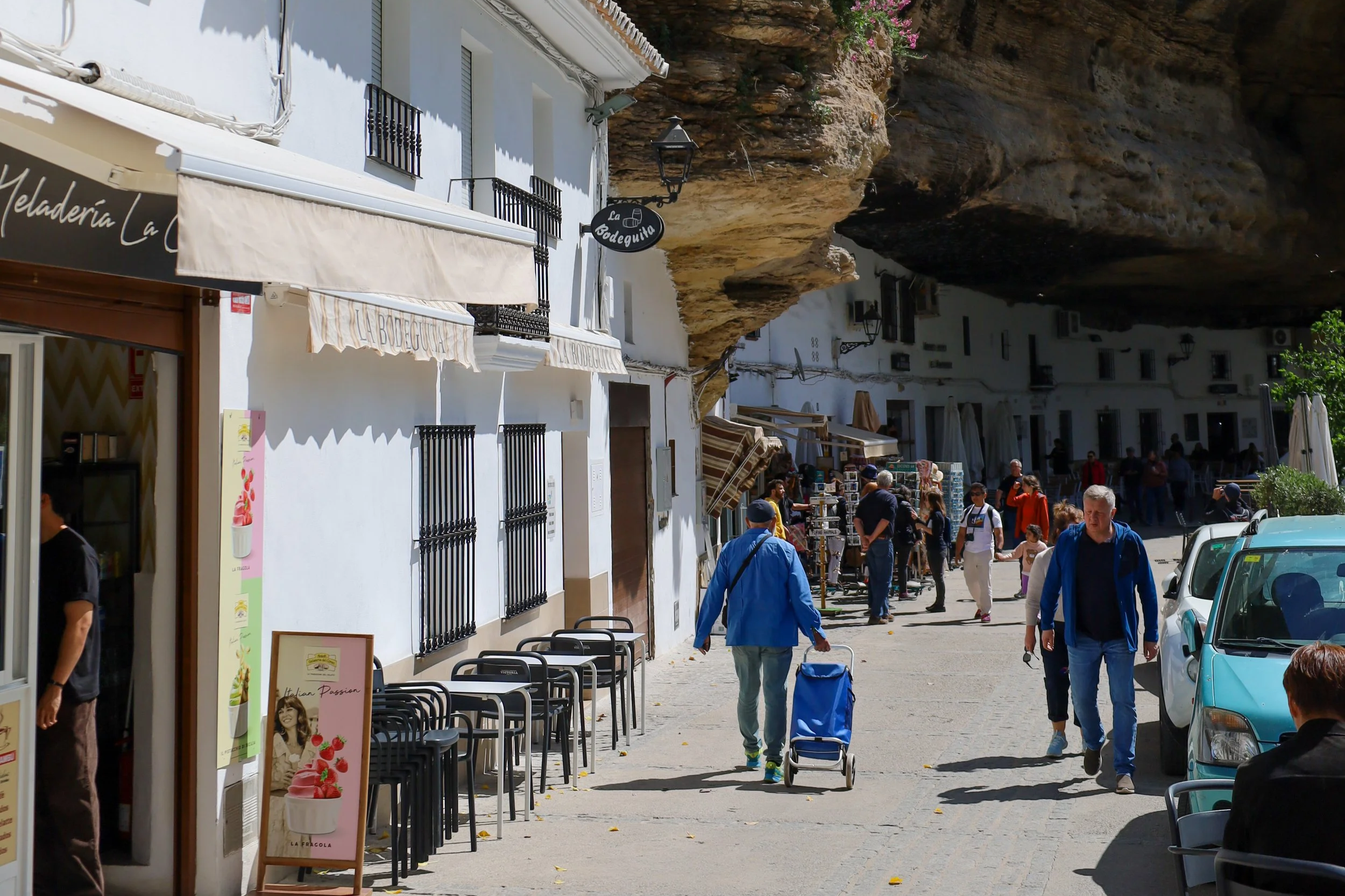
This unique village is built into the rock.
There are plenty of beautiful white villages scattered throughout southern Spain, but every now and then you stumble across somewhere that makes you stop and wonder how on earth it came to exist.
Setenil de las Bodegas is one of those places.
Tucked away in the hills of Andalusia, this little village is unlike anywhere else I've visited in Spain. Instead of simply building houses along the mountainside, the locals have built them into it. Enormous rock formations hang over narrow streets, providing natural roofs for homes, shops, bars and restaurants. In some places, the rock almost completely covers the street, creating the impression that you're walking through a tunnel carved into the mountainside.
It's unusual, a little surreal and incredibly photogenic.
We visited Setenil de las Bodegas on a road trip through southern Spain, stopping here after spending a night in Ronda. We arrived early, before the tour buses descended on the village, and were rewarded with relatively quiet streets and some beautiful views of the whitewashed buildings nestled beneath the rock.
We only spent a few hours exploring, but that was enough to appreciate what makes this village so special.
If you're planning a road trip through Andalusia, here's why I'd recommend adding Setenil de las Bodegas to your itinerary, what to see while you're there, where to find the best views and everything you should know before visiting.
Where Is Setenil de las Bodegas?
Setenil de las Bodegas is a small white village in the province of Cádiz, in the Andalusia region of southern Spain.
It's located in the Sierra de Cádiz, approximately 20 kilometres north-east of Ronda, making it an easy addition to a road trip through the famous Pueblos Blancos (White Villages) of Andalusia.
The village sits within a narrow gorge carved by the Río Trejo, where the surrounding limestone rock formations have shaped the way the town developed. Unlike many other white villages in Spain, where houses are built along steep hillsides, Setenil is famous for its homes and businesses constructed beneath enormous natural rock overhangs.
It's this unusual architecture that has made it one of the most recognisable villages in southern Spain.
Setenil de las Bodegas at a glance
Location: Cádiz province, Andalusia, Spain
Nearest major town: Ronda
Distance from Ronda: Approximately 20 kilometres
Driving time from Ronda: Around 25-30 minutes
Time needed: 2-3 hours for a relaxed visit
Best known for: Houses and streets built beneath natural rock formations
Best time to visit: Early morning or later afternoon
Best way to explore: On foot
Why Visit Setenil de las Bodegas?
If you've already spent time exploring the white villages of Andalusia, you might be wondering whether Setenil de las Bodegas is worth another stop.
My answer is yes.
While there are plenty of beautiful pueblos blancos throughout southern Spain, Setenil offers something genuinely different. It's not just another collection of whitewashed buildings, flower-filled balconies and winding cobblestone streets.
Here, the rock formations are part of the village itself. Walking beneath enormous slabs of stone while looking at homes and businesses tucked into the natural landscape is a completely different experience. It's one of those places where you find yourself looking up, down and around, trying to work out how everything fits together.
I also loved the contrast between the whitewashed buildings, the earthy colours of the rock and the surrounding green hills. It's a fantastic place for photography, particularly if you enjoy capturing interesting architecture, unusual landscapes and the little details that make a destination unique.
Another reason to visit is its location. Setenil is close enough to Ronda that you don't need to go out of your way to see it. If you're already exploring this part of Andalusia, it's an easy stop to incorporate into your road trip. You don't need an elaborate itinerary or a full day here. Sometimes a few hours exploring somewhere completely different is exactly what makes a trip memorable.
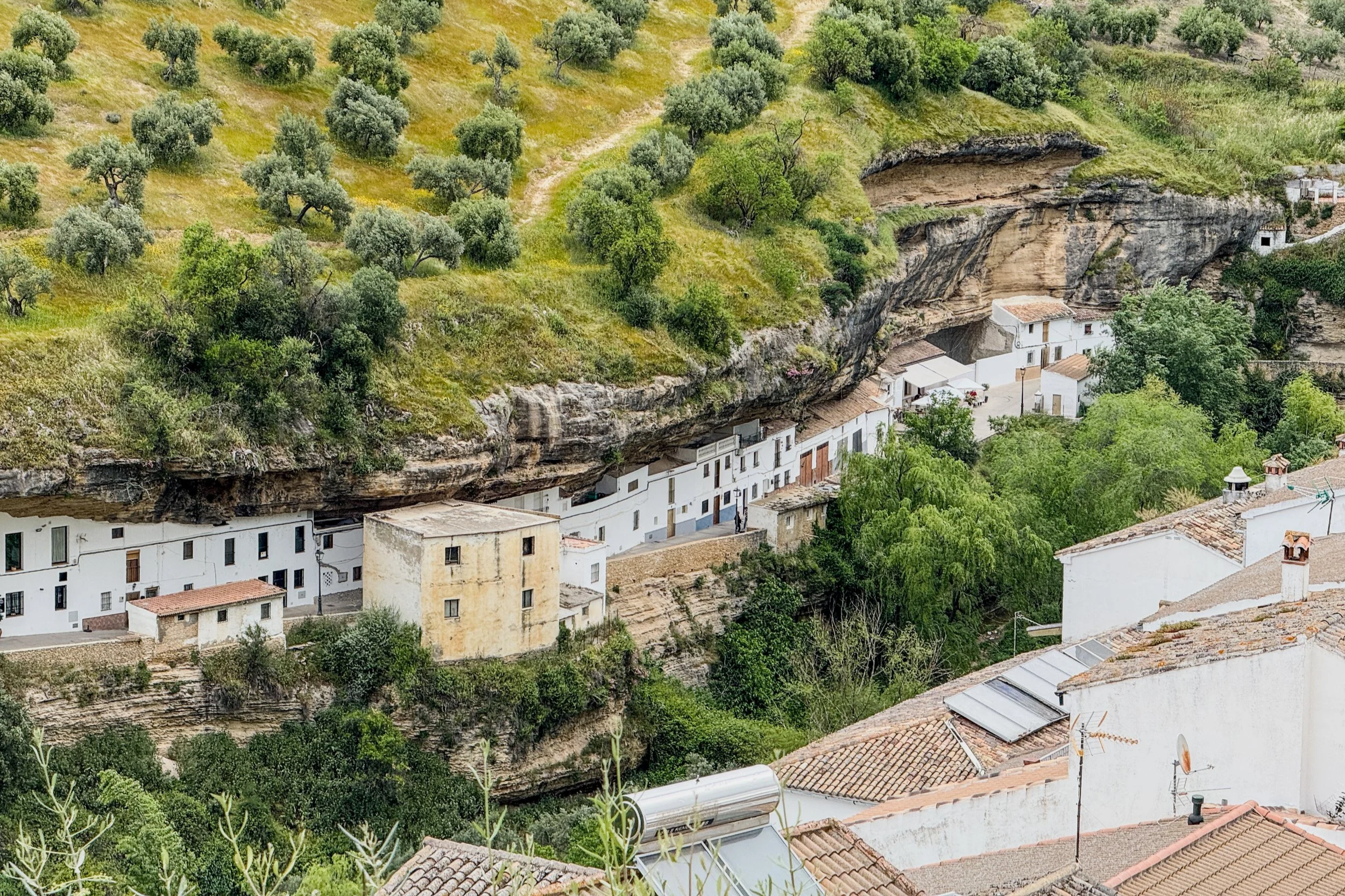
A must see on your south of Spain road trip.
A Brief History of Setenil de las Bodegas: Why Are the Houses Built Under the Rock?
One of the most fascinating things about Setenil de las Bodegas is that its unusual architecture isn't simply a design choice. It's the result of people adapting to the landscape around them.
The village developed within a natural gorge formed by the Río Trejo. Over thousands of years, water erosion helped create cavities, cliffs and overhanging rock formations throughout the area. Rather than fighting the landscape, people made use of it.
Natural caves and rock shelters provided protection from the elements, and residents gradually developed homes that incorporated the existing rock formations. In many cases, the rock itself became the roof, while walls, doors and other structural elements were added to create functional living spaces.
The result is a village where the natural environment and human architecture are almost inseparable.
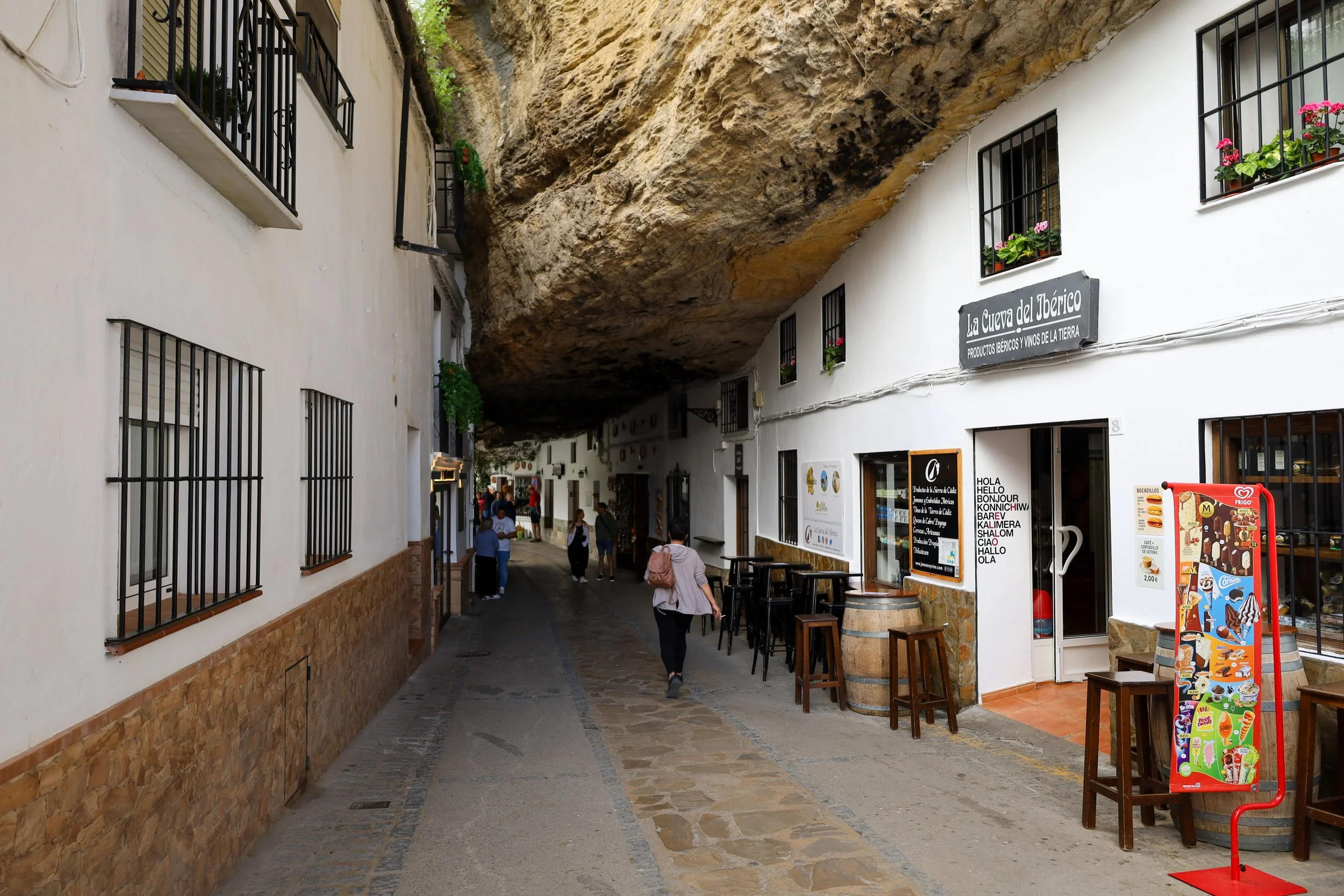
Explore shops, cafes and restaurants built under the rock.
The Best Things to See and Do in Setenil de las Bodegas
Let's be realistic: Setenil de las Bodegas isn't a destination packed with major tourist attractions. Its biggest attraction is the village itself.
The best way to experience it is to put your map away occasionally, wander through the narrow streets and take in the unusual architecture. That said, there are a few places worth making a point of visiting.
1. Walk Along Calle Cuevas del Sol
If you've seen photographs of Setenil de las Bodegas, there's a good chance they were taken along Calle Cuevas del Sol. This is one of the village's most famous streets, and it's easy to understand why.
The road follows the natural rock formations, with whitewashed houses and businesses built into the cavities beneath the overhanging stone. Unlike some of the darker streets elsewhere in the village, Cuevas del Sol faces south and receives plenty of sunlight. This creates a beautiful contrast between the bright white buildings, warm-coloured rock and blue Andalusian skies.
You'll also find several bars, cafés and restaurants along this street, making it a popular place to stop for a drink or something to eat. It's worth taking your time here rather than simply walking through for a photograph. Look at the way the buildings have been incorporated into the rock and notice how the natural landscape has dictated the layout of the street.
Photography tip: Visit early in the morning if you want to photograph the street without crowds. The combination of sunlight, whitewashed facades and natural rock makes this one of the most distinctive photography locations in the village.
2. Explore Calle Cuevas de la Sombra
If Cuevas del Sol is the sunny side of Setenil, Calle Cuevas de la Sombra is its darker, more dramatic counterpart. This is arguably the most unusual street in the village.
Here, the enormous rock overhang stretches across the road, almost completely covering it. Instead of looking up at the sky, you're looking directly at the underside of the natural rock formation. Homes and businesses are tucked beneath the stone, creating a street that feels more like a cave than a traditional road. It's quite remarkable to stand underneath such an enormous natural formation and realise that people live and work here every day.
The atmosphere is completely different from the brighter Cuevas del Sol, and I recommend visiting both to appreciate the contrast.
Photography tip: Look for a composition that captures the curve of the rock overhead alongside the white facades of the buildings. The contrast between light and shadow makes for some interesting photographs.
3. Wander Along Calle Herrería
If you have time to venture beyond the two famous cave streets, make your way to Calle Herrería. This is one of the village's prettiest traditional streets, with narrow lanes, whitewashed buildings and plenty of character. One of its most photographed details is a little corner known as Bésame en este Rincón, which translates to 'Kiss me in this Corner'.
It's a charming little spot and a lovely reminder that some of the best discoveries when travelling happen when you wander away from the obvious attractions. The surrounding streets are also worth exploring if you want to see a quieter side of Setenil.
4. Discover Calle Jabonería and Calle Cabrerizas
These streets are another opportunity to see how the village has adapted to the natural rock formations. Like the more famous cave streets, the houses here are built into natural hollows and beneath overhanging rock. They offer a slightly different perspective on Setenil's unusual architecture and are worth exploring if you're interested in seeing more than just the main tourist area. The streets follow the natural shape of the gorge, creating interesting little corners and unexpected views.
5. Visit the Mirador del Carmen
One of the best ways to appreciate Setenil de las Bodegas is to get above the village. The Mirador del Carmen is one of the most popular viewpoints, offering a beautiful panoramic view across the whitewashed buildings, the surrounding hills and the historic village.
From here, you can really appreciate how the village has been built into the gorge, with its buildings seemingly stacked against the rocky landscape. The viewpoint is reached via a climb up steps, so be prepared for a little exercise. If you're visiting for photography, this is one of the places I'd prioritise. The elevated perspective gives you a completely different appreciation of the village compared with walking through the narrow streets below.
6. Enjoy the Unexpected Viewpoints Around the Village
One of my favourite things about visiting Setenil was that some of the best views weren't necessarily places we'd planned to visit. We parked up the hill and walked down towards the main village. Although finding a parking spot wasn't particularly easy, the walk gave us the opportunity to discover several unexpected viewpoints along the way.
Looking down towards the whitewashed buildings, with the surrounding hills framing the village, was just as memorable as exploring the famous cave streets. This is one of the reasons I'd encourage you not to rush straight to the main attraction. Take your time walking into the village, look for elevated streets and viewpoints, and enjoy the changing perspectives.
Sometimes the best photographs aren't taken at the obvious tourist spots.
7. Visit the Moorish Castle Tower
If you're interested in history, it's worth adding the remains of Setenil's medieval fortress to your walk.
The Torreón del Homenaje is the surviving tower of the former Moorish fortress, which dates back to the medieval period. The fortress played an important defensive role because of Setenil's strategic location within the gorge.
The tower and nearby Arab cistern provide a glimpse into the village's past, and the elevated position offers another perspective over the surrounding landscape. You can also learn more about the area's Islamic history and the important role the fortress played during the Christian conquest.
Allow a little extra time if you plan to visit, as you'll need to walk uphill through the village.
8. See the Church of Nuestra Señora de la Encarnación
Located in the upper part of the village, the Church of Nuestra Señora de la Encarnación is another historic landmark worth seeing. It was built over the site of the former mosque following the Christian conquest and combines architectural influences from different periods. Construction continued over several centuries, with the church eventually completed in 1614.
Its position above the village makes it an interesting landmark to include when exploring the historic centre. Even if you're not particularly interested in visiting churches, the surrounding area offers another opportunity to appreciate Setenil from above.
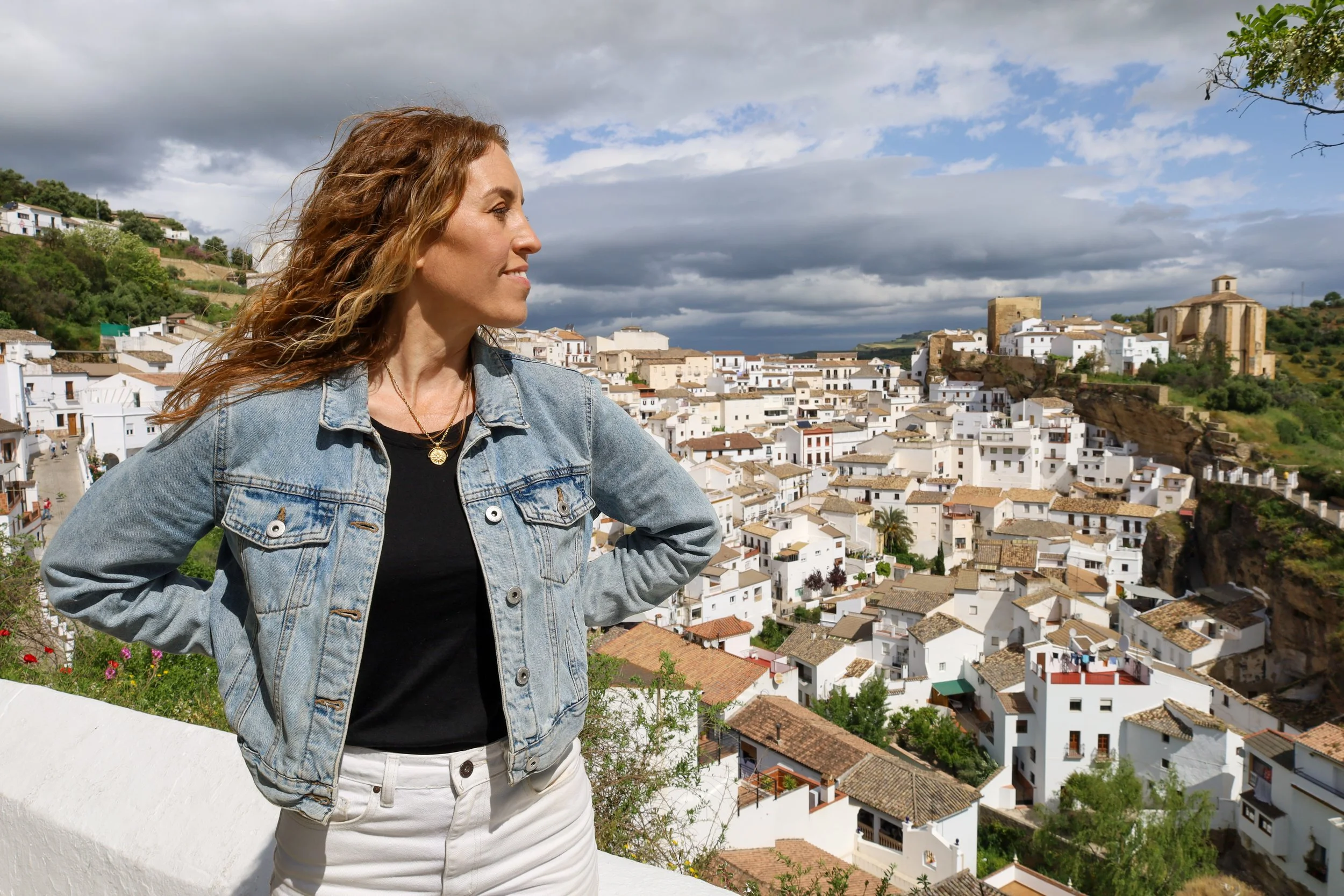
Not just another white washed village.
How Long Should You Spend in Setenil de las Bodegas?
I'd recommend allowing around 2-3 hours to explore Setenil de las Bodegas. This gives you enough time to walk along the famous cave streets, explore some of the quieter lanes, stop at a viewpoint and enjoy a coffee or something to eat.
If you're short on time, you could see the two main streets in around an hour. However, I think you'd miss some of the charm of the village if you simply arrived, took a photograph and left.
We spent a few hours here, which was perfect for our road trip. We weren't trying to tick off every attraction or spend the entire day exploring. We wanted to experience the unusual architecture, enjoy the views and have a relaxed brunch before getting back on the road. That was more than enough for us.
If you're particularly interested in photography, architecture or history, you could easily spend half a day exploring at a slower pace. My recommendation? Don't overcomplicate your visit. Setenil is a place to wander, look up, explore and enjoy somewhere a little different.
Where to Eat in Setenil de las Bodegas
One of the experiences I'd recommend is stopping for a drink or something to eat beneath the enormous rock formations. There are several cafés, tapas bars and restaurants throughout the village, particularly along Calle Cuevas del Sol. It's a rather unique setting for a meal, and even if you aren't particularly hungry, it's worth finding somewhere to sit and appreciate the surroundings.
What is the food like?
Setenil de las Bodegas is known for traditional Andalusian cuisine, with local specialities including cured meats, pork products, olive oil and regional dishes. Some traditional dishes associated with the area include sopas cortijeras, a rustic soup made with bread, olive oil and other ingredients, and various local pastries. The food culture here is quite traditional, which is something to keep in mind if you have specific dietary requirements.
Is Setenil de las Bodegas vegan friendly?
I'll be honest: we didn't find Setenil particularly vegan friendly.
We checked the menus at several restaurants while looking for somewhere to stop for brunch. Although the restaurants appeared to have different names, many of the menus were almost identical, so there wasn't much variety to choose from.
We eventually settled on patatas bravas and a coffee before heading back to the car. It wasn't the most exciting meal of our trip, but sometimes you have to work with what's available when travelling through smaller villages.
If you're vegan or have dietary restrictions, I'd recommend checking menus before sitting down and having a backup plan. Patatas bravas can be a reasonable option, but always check the sauce and preparation, as traditional recipes may contain ingredients that aren't vegan.
Don't assume that different restaurant names necessarily mean completely different menus in a small village.
How to Get to Setenil de las Bodegas
The easiest way to visit Setenil de las Bodegas is by car. Its location makes it a straightforward addition to a southern Spain road trip, particularly if you're travelling between Ronda and Seville.
Driving from Ronda
Ronda is the closest major tourist destination, approximately 20 kilometres away. The drive takes around 25-30 minutes, depending on your route and traffic.
This makes Setenil an easy half-day excursion from Ronda, or a convenient stop if you're travelling onwards to another destination. We spent the night in Ronda before driving to Setenil the following morning. It was a great way to break up the journey and explore another part of Andalusia without having to make a significant detour.
Driving from Seville
If you're travelling from Seville, Setenil is approximately 115 kilometres away, with a drive of around 1 hour 45 minutes to 2 hours depending on your route. You can also combine it with Ronda and other white villages as part of a longer road trip.
Can you visit Setenil de las Bodegas without a car?
Yes, although it's a little less convenient. You can look into bus connections from Ronda, but services are less frequent than you might expect. Check current timetables before planning your day around public transport.
Another option is to join an organised day tour from Ronda or Málaga, often combining Setenil with other attractions in the region.
If you want the freedom to explore several white villages at your own pace, I'd recommend hiring a car.
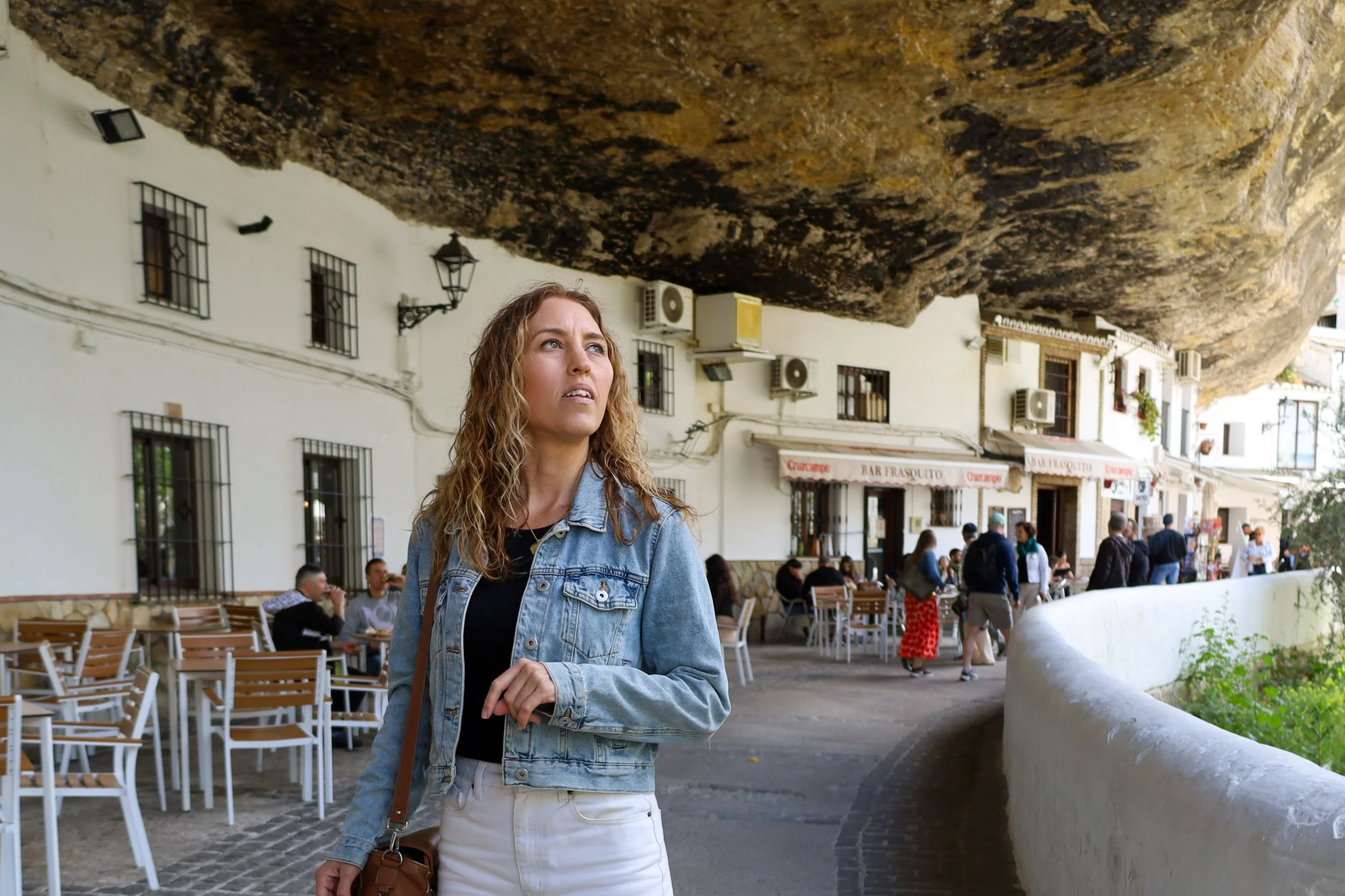
Driving allows you to beat the tour busses that arrive just before lunch time.
How to Include Setenil de las Bodegas in a Southern Spain Road Trip
One of the best things about Setenil de las Bodegas is how easily it fits into a wider Andalusia itinerary. We visited as part of a road trip through southern Spain, travelling from Ronda to Setenil, then onwards to Olvera before eventually arriving in Seville. It was a full day of exploring, but breaking up the drive with a couple of interesting stops made the journey much more enjoyable.
Here's how I'd recommend incorporating Setenil into your itinerary.
Stop 1: Ronda
Start your day in Ronda, one of my favourite places in southern Spain. If you haven't already visited, I'd recommend spending at least one night here.
Ronda is famous for its dramatic Puente Nuevo bridge, which spans the enormous El Tajo gorge. There are also historic Arab baths, beautiful viewpoints, traditional streets and plenty of places to enjoy a meal. We stayed at Hotel Don Miguel, which had fantastic views of Puente Nuevo.
Allow time to explore Ronda before setting off the following morning.
Suggested time: One to two nights.
Stop 2: Setenil de las Bodegas
From Ronda, drive approximately 25-30 minutes to Setenil de las Bodegas. I'd recommend arriving early, ideally before 10 am, particularly if you're visiting during spring, summer or a busy weekend. Spend a couple of hours exploring the cave streets, taking photographs, discovering the viewpoints and enjoying a relaxed breakfast or brunch.
Once you've seen the main attractions, you can continue your road trip towards Olvera.
Suggested time: 2-3 hours.
Stop 3: Olvera
Continue onwards to Olvera, another beautiful white village in the Cádiz province.
Olvera is particularly recognisable for its dramatic hilltop setting, with the Church of Nuestra Señora de la Encarnación and the Moorish castle dominating the skyline.
If you have time, wander through the historic streets and climb towards the castle for views across the surrounding countryside. Olvera is also known as a starting point for the Vía Verde de la Sierra, a scenic walking and cycling route that follows a former railway line. It's a lovely additional stop if you enjoy exploring smaller Spanish towns and getting away from the main tourist trail.
Suggested time: 1-2 hours, or longer if you want to explore the Vía Verde.
Stop 4: Seville
From Olvera, continue your journey to Seville, where you can spend the next few nights.
Seville is a completely different experience from the quiet white villages, with grand architecture, lively plazas, flamenco performances, tapas bars and plenty of history.
I'd recommend allowing at least two to three nights to explore the city properly. Some highlights include the Royal Alcázar, Seville Cathedral, Plaza de España, the Metropol Parasol and the historic neighbourhood of Santa Cruz.
After a day exploring the smaller villages of Andalusia, arriving in Seville feels like stepping into another world.
Suggested time: 2-3 nights.
Parking in Setenil de las Bodegas: What You Need to Know
If there's one practical thing I'd recommend planning before visiting Setenil, it's parking. Finding somewhere to leave the car can be surprisingly challenging.
We arrived early in the morning, before the main tourist buses, but still found parking difficult.
The village has narrow streets and limited parking in its historic centre, so you shouldn't expect to drive directly to the famous cave streets and find a convenient spot.
We eventually parked further up the hill and walked down towards the village. While this wasn't necessarily the most convenient option, it did have an unexpected benefit: we discovered some beautiful viewpoints along the way.
My advice is to avoid trying to drive into the historic centre. The streets are narrow, and walking is the easiest way to explore.
Top tip: Allow extra time to find a parking space, particularly if visiting during peak tourist season. Even arriving early doesn't guarantee an easy park.
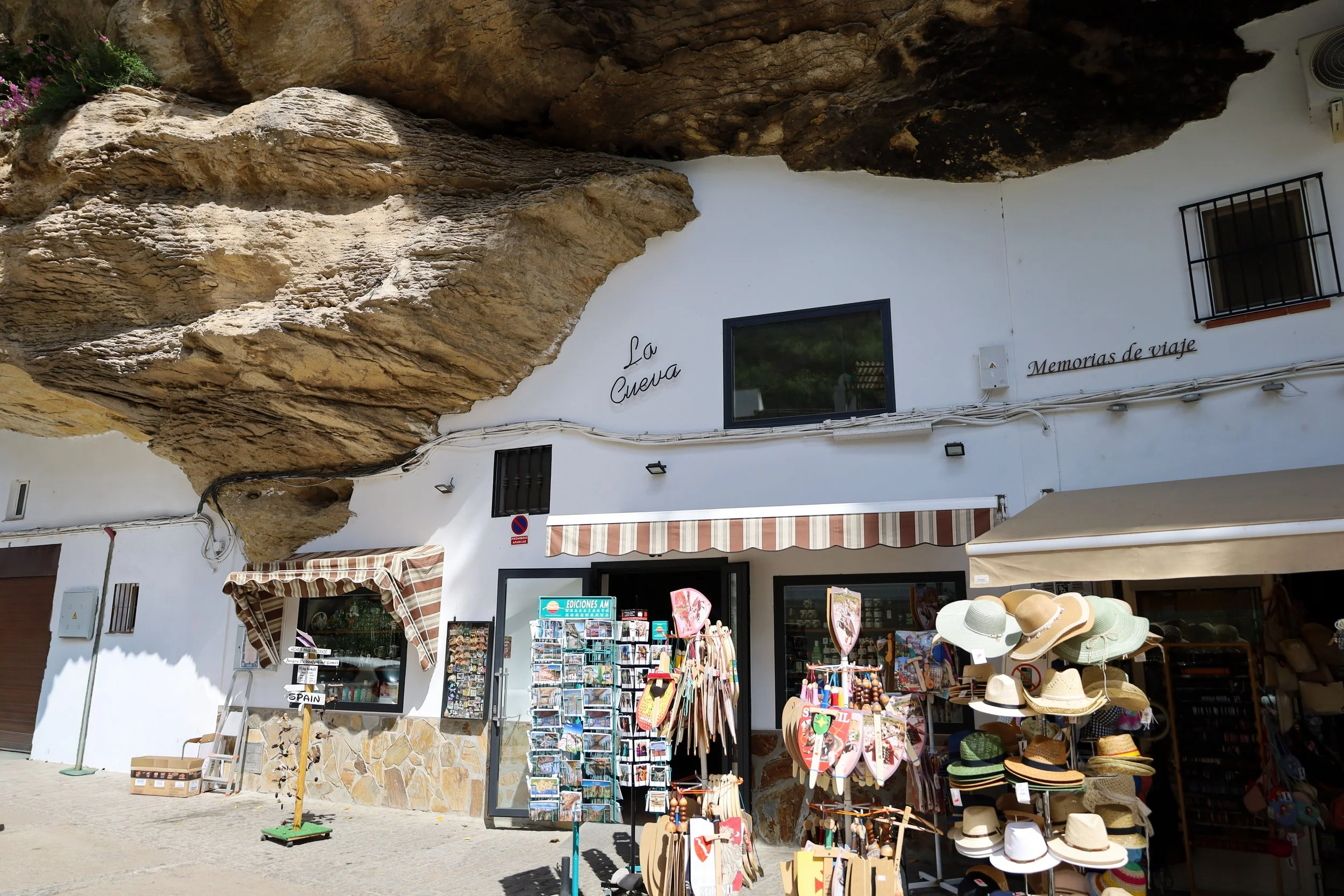
The perfect stop on your south of Spain road trip.
When Is the Best Time to Visit Setenil de las Bodegas?
Timing can make a big difference to your experience in Setenil de las Bodegas. Although the village is relatively small, it attracts a surprising number of visitors, including organised tour groups and large tourist buses. The famous cave streets can become particularly crowded once the buses start arriving.
Visit early in the morning
This is my recommendation.
We arrived early and were able to explore many of the streets without the crowds. It made such a difference being able to walk through the village, take photographs and appreciate the architecture without constantly navigating around large groups of people. It also gave us a better chance of finding somewhere to park before the village became busy.
Aim to arrive before 10 am if possible.
Alternatively, visit later in the afternoon
If you're unable to get there early, consider visiting later in the afternoon. Many day-trip visitors will have moved on by then, particularly during the warmer months. Just check restaurant opening times if you plan to stop for a meal, as some businesses may have limited hours.
What time of year should you visit?
Spring and autumn are particularly good times to explore Andalusia. Temperatures are generally more comfortable for walking, and the surrounding countryside can be beautiful.
Summer is also possible, although temperatures can be very hot. One advantage of Setenil's unusual architecture is that the shaded streets beneath the rock can provide some relief from the heat. However, summer is also a busy travel period, so arriving early becomes even more important.
Is Setenil de las Bodegas Worth Visiting?
Absolutely.
Setenil de las Bodegas might not have the same number of attractions as Seville, Granada or Córdoba, but that's not really why you'd visit. You come here because it's different.
It's a place where nature has dictated the architecture, where enormous rock formations provide natural roofs for homes and businesses, and where an entire village has adapted to its surroundings in a way you don't see every day. I particularly loved seeing the village from above, with the whitewashed buildings tucked into the gorge and the surrounding hills creating a beautiful backdrop.
Was it somewhere I'd spend an entire day? Probably not. But was I glad we included it in our road trip? Definitely. We had a lovely morning exploring, found some beautiful photography spots, enjoyed a coffee and a bite to eat, and then continued towards Olvera and Seville.
Sometimes the best travel experiences aren't about spending days somewhere or ticking off every attraction. They're about discovering somewhere unexpected, taking a little time to explore and appreciating what makes a destination special.
If you're planning a southern Spain road trip, I'd absolutely add Setenil de las Bodegas to your itinerary. Just remember to arrive early, be prepared to walk a little further than expected and don't underestimate how busy this tiny village can get.
Frequently Asked Questions About Setenil de las Bodegas
What is Setenil de las Bodegas famous for?
Setenil de las Bodegas is famous for its unusual homes and businesses built beneath enormous natural rock formations. Rather than constructing traditional roofs, many buildings use the overhanging rock as a natural roof. Its two most famous streets are Calle Cuevas del Sol and Calle Cuevas de la Sombra.
How much time do you need in Setenil de las Bodegas?
Allow around 2-3 hours to explore the village, visit the famous cave streets, discover a few viewpoints and stop for something to eat. If you're short on time, you can see the main streets in around an hour.
Is Setenil de las Bodegas worth visiting?
Yes! It's one of the most unusual villages in Andalusia and offers something quite different from the region's other white villages. It's particularly worthwhile if you're already visiting Ronda or exploring the Pueblos Blancos.
How far is Setenil de las Bodegas from Ronda?
Setenil de las Bodegas is approximately 20 kilometres from Ronda, with a drive of around 25-30 minutes.
Can you visit Setenil de las Bodegas and Ronda in one day?
Yes. The two destinations are close enough to combine into one day, although I'd recommend spending at least one night in Ronda if you want enough time to explore its attractions.
Where are the famous streets in Setenil de las Bodegas?
The two most famous streets are Calle Cuevas del Sol and Calle Cuevas de la Sombra. Both feature houses and businesses built beneath natural rock overhangs.
Is Setenil de las Bodegas crowded?
It can be! The village attracts plenty of organised tour groups and tourist buses, particularly during the middle of the day. Arriving early in the morning or later in the afternoon is the best way to avoid the busiest periods.
Is Setenil de las Bodegas suitable for a day trip?
Absolutely. Its small size and proximity to Ronda make it an easy day trip or road trip stop. You don't need to dedicate an entire day to exploring the village.
Is Setenil de las Bodegas vegan friendly?
Not particularly. Traditional local cuisine features plenty of meat and dairy, and restaurant menus can be quite similar. Vegan travellers should check ingredients carefully and consider bringing a backup snack.
Can you drive into Setenil de las Bodegas?
You can drive into parts of the village, but the historic streets are very narrow and aren't suitable for visitor parking. It's better to use designated parking areas around the outskirts and explore on foot.
Add Setenil de las Bodegas to Your Andalusia Bucket List
There are so many beautiful places to discover in southern Spain, and Setenil de las Bodegas is one of those little surprises that makes exploring Andalusia by car so worthwhile. It's not about how many attractions you can squeeze into your visit. It's about experiencing somewhere completely different, discovering the stories behind its unusual architecture and appreciating the way people have adapted to the landscape.
If you're travelling between Ronda and Seville, make the detour. Spend a few hours wandering beneath the rocks, find a viewpoint overlooking the whitewashed village and enjoy a slower morning before getting back on the road.
You might not need long here, but it's a stop you'll remember.
Ready to explore more of southern Spain? Keep exploring my Andalusia travel guides for practical tips, road trip inspiration and the places worth adding to your own Spanish adventure.