20 Things I Wish I Knew Before Visiting Egypt
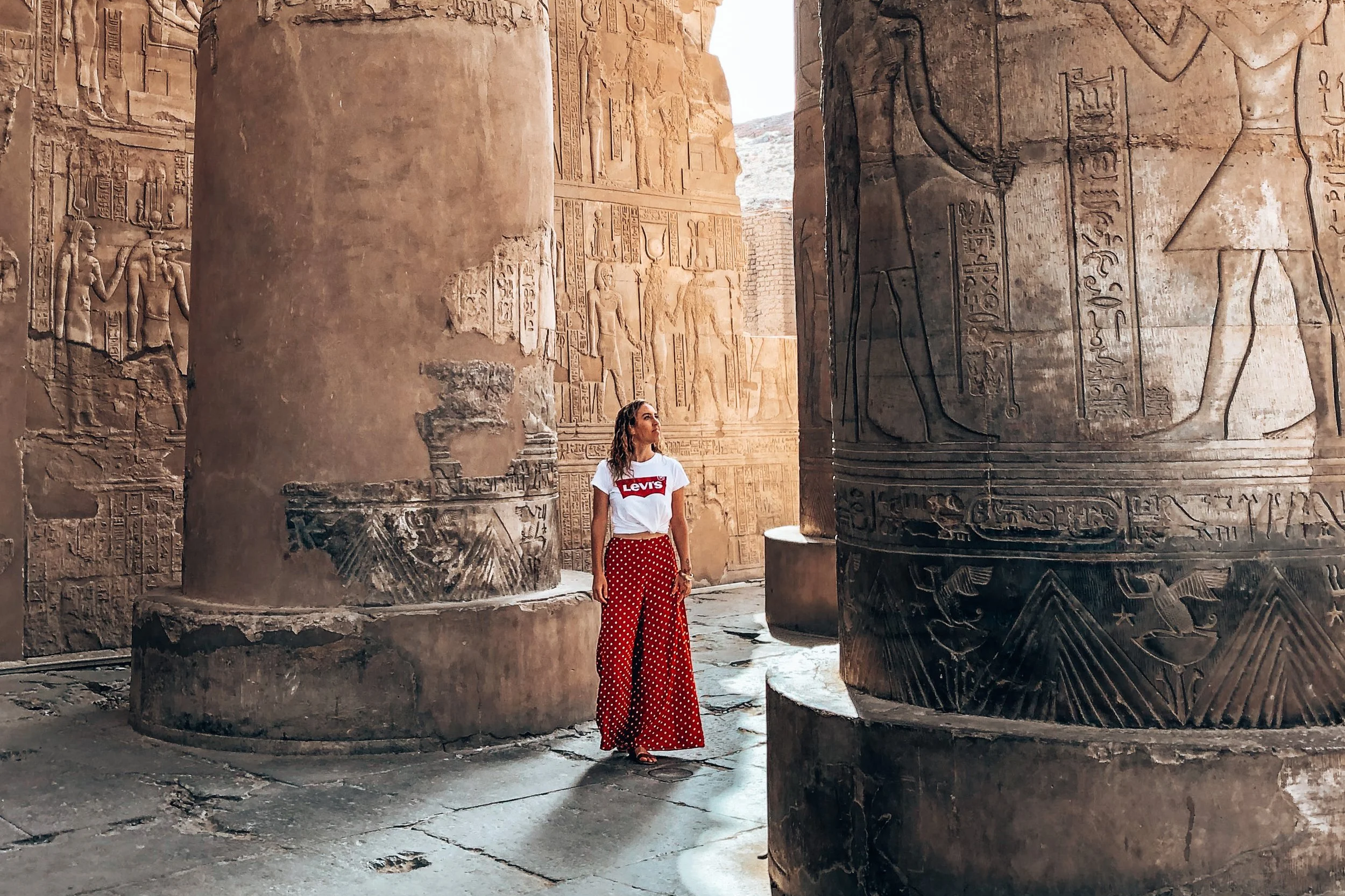
Wandering through temples in Egypt was a dream come true.
Egypt had been on my bucket list for as long as I can remember. Not just because of the pyramids, but because of the history behind them.
When I was growing up, our dad would read us books about the world instead of the usual children’s bedtime stories. We had books about animals, countries, planets and ancient history. And somewhere amongst those books were the pyramids, the Sphinx and the stories of ancient Egypt. So, when I finally travelled to Egypt, it wasn’t just another country to tick off my list. It was somewhere I had dreamed about visiting since childhood.
And while Egypt absolutely lived up to the fascination I had with it, there were plenty of things that surprised me along the way. Some were incredible. Some were confronting. Some were things I probably should have known before I went. From the safety concerns I experienced to the time I saw an armed guard sitting at the front of our tour bus, here are 20 things I wish I knew before visiting Egypt.
My biggest takeaway: Egypt is an extraordinary country to explore, but it is a destination where preparation, cultural awareness and keeping safety in mind can make a huge difference to your experience.
1. Safety is something you need to take seriously in Egypt
Let’s start with the thing that surprised me most… safety.
I have travelled to quite a few countries around the world, and if I’m being completely honest, Egypt was probably the place where I felt the least safe.
That’s my personal experience, not a universal judgement on Egypt or its people. Plenty of travellers visit Egypt and have incredible experiences. But I think it’s important to be honest about how I felt, rather than glossing over it because the country is a popular bucket-list destination.
I felt more comfortable in some of the other Middle Eastern countries I had visited than I did in Egypt. That doesn’t mean you shouldn’t go. It means you should think carefully about how you travel.
Why I chose a group tour
One of the reasons I chose to visit Egypt with a group tour was safety.
We travelled with a local guide who knew the area, understood local customs and was familiar with the places we were visiting. Having someone who knew where we were going, how to get around and what to look out for made a difference. For me, having that local knowledge was reassuring. Our guide also helped us navigate situations that I would have found difficult to manage independently, particularly in busy markets and unfamiliar areas.
My advice: If you’re a first-time visitor to Egypt, particularly if you’re travelling solo or feel unsure about navigating the country, consider a reputable group tour or a private trip with a knowledgeable local guide. It doesn’t eliminate every risk, but it can make the experience feel more manageable.
Is Egypt safe to visit?
This is a question worth researching before booking your trip.
Safety can vary between destinations and change over time. My experience on a tour is also not the same as travelling independently.
Before travelling, check:
Your government’s current travel advice.
The areas you plan to visit.
Any local security restrictions.
Whether your tour operator has appropriate safety procedures.
Travel insurance requirements and exclusions.
2. I didn’t realise our tour bus had an armed guard
This is one of those travel stories that still makes me laugh a little, because I cannot believe how long it took me to notice.
We were travelling around Egypt on a small tour bus. Some days we were driving for incredibly long periods, and I assumed there were two bus drivers because of the amount of time we spent on the road.
What I didn’t realise was that the second guy sitting at the front of the bus wasn’t another driver… he was an armed guard. And apparently, he had a machine gun with him. I didn’t even notice until someone else in the group pointed it out to me several days into the trip. I remember thinking, How did I not notice this? For me, it validated my sense of unease and concern for safety.
When we needed to leave the group
On one occasion, a few of us needed to go to an ATM while we were visiting a market.
We weren’t simply told to go and come back when we were finished. We were escorted by the armed guard. At the time, I remember thinking how unusual the whole situation was. It was very different from the way I had travelled in other countries.
It also reinforced why I had chosen to travel with a group. What I learned was… don’t assume that travelling with a group means every destination will feel comfortable or familiar. Ask questions about transport, security and what happens if you need to leave the group.
3. Ancient history really does appear out of nowhere
One of the first things that surprised me about Egypt was how close ancient history is to modern life.
You can be driving through what feels like ordinary Giza, surrounded by buildings, traffic and the everyday business of a modern city. And then, suddenly… there are pyramids. Just appearing behind the skyscrapers.
I knew the pyramids were in Giza, but for some reason I had imagined them as being much further away from the city. I didn’t realise just how integrated they were into the surrounding urban landscape. It’s such a strange and fascinating contrast. One minute you’re in modern Egypt. The next, you’re looking at one of the most recognisable ancient structures in the world.
And it’s not just the pyramids. Ancient temples, tombs and archaeological sites are scattered throughout Egypt. You can be travelling along a road, going about your day, and then come across something that is thousands of years old. For someone who has been fascinated by ancient history since childhood, that was pretty special.
Travel tip: Give yourself time to take in the contrast between modern Egypt and ancient Egypt. Don’t rush from one attraction to the next. Sometimes the most memorable moments are when you’re simply standing there thinking, How is this actually here?
4. The pyramids never get old
I’ve heard mixed opinions from people who have visited the pyramids.
Some people say you should go inside. Others say it’s not worth paying extra because there isn’t much to see.
For me, that decision was easy. If I’m going all the way to Egypt and have the opportunity to go inside a pyramid, I’m going inside. I know there isn’t necessarily a huge amount to see inside. Many of the pyramids have been excavated, and the treasures and artefacts associated with ancient Egyptian burial practices are often found in museums or other collections.
But that wasn’t really the point for me. The experience was about walking through a structure that had been built thousands of years ago and imagining what it must have been like. Where was the mummy placed? What were the rooms used for? What did the inside of the pyramid look like when it was first built? I found that fascinating.
What is it like inside a pyramid?
It’s not necessarily the grand, spacious experience you might imagine from looking at the outside.
Some passages are narrow, steep and uncomfortable. Depending on the pyramid and the route available, you may be climbing through tight corridors or using steps and wooden walkways. It can feel claustrophobic, particularly when it’s hot. And when we travelled, it was incredibly hot and stuffy. But honestly? That was part of the experience. I wasn’t expecting air conditioning and a comfortable museum walkway. I was walking through an ancient pyramid.
Is it worth going inside the pyramids?
For me, yes. But I would make sure you understand what you’re paying for before you go. Access to some pyramid interiors requires an additional ticket, and entry arrangements can vary depending on the pyramid and current regulations.
My advice… if going inside a pyramid is a bucket-list experience for you, budget for it and check the current ticket options before visiting. Don’t assume every pyramid offers the same experience.
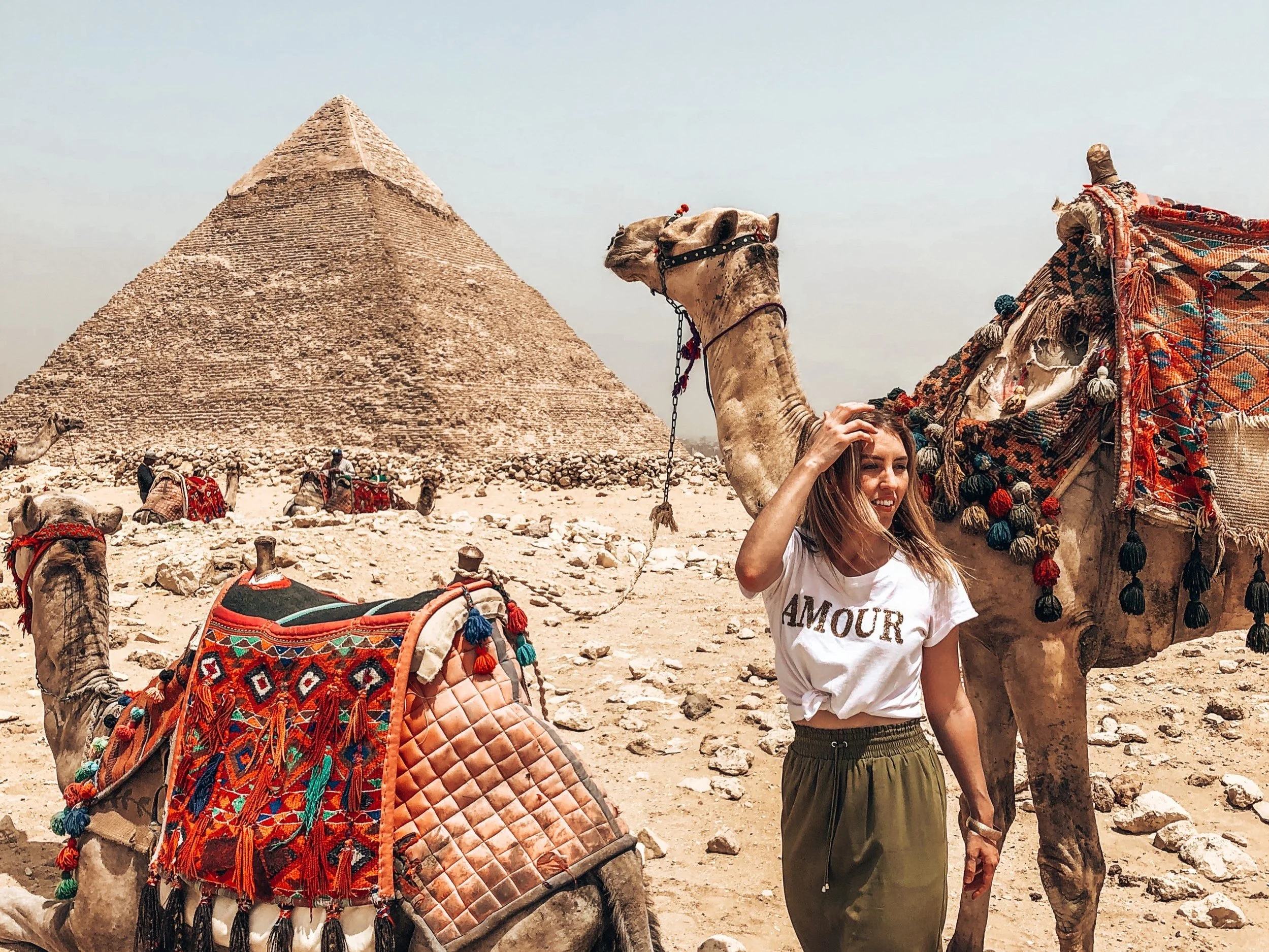
The pyramids are jaw dropping every single time.
5. You will probably be hassled at major tourist sites
One thing I wish I had been more prepared for was the amount of hassling around major tourist attractions.
Imagine trying to take your perfect photo of the pyramids… you’ve got the angle right, the light is good, you’re standing there taking it all in... and then someone comes up trying to sell you something, or asking if you want to ride a camel, or offering to take your photo, or telling you that you need to pay for something.
It can be frustrating when you’re trying to enjoy the experience. I know this is a common part of visiting many popular tourist destinations, but I found it particularly noticeable in Egypt.
My advice for handling the hassling
Our guide warned us in advance, which was helpful.
A few things that worked for me:
Be polite but firm
Don’t feel obligated to buy something
Don’t accept an offer simply because someone has approached you
If you’re not interested, clearly say no and keep moving
Stay with your group if you’re feeling uncomfortable
Follow your guide’s advice about where to go and how to respond
You don’t need to be rude, but you also don’t need to keep explaining yourself. A simple “No, thank you” and moving on is often enough. And if you feel uncomfortable, don’t be afraid to ask your guide for help.
6. The souks and bazaars can be more confronting than you expect
The souks and bazaars (Egyptian markets) were another experience that surprised me.
I’ve been to markets in quite a few countries, but I found the sellers in Egypt to be some of the most persistent I had experienced. And I’m not talking about someone casually asking whether you want to buy something… I’m talking about people who would continue approaching us, trying to convince us to purchase their products and, in some cases, becoming aggressive when we said no.
I remember locals literally yelling at me because I wouldn’t buy their things. That was quite scary… especially as a female traveller. We had been warned by our guide about how pushy the sellers could be, but even with that warning, it still felt confronting when it happened.
How to prepare for Egyptian souks and bazaars
If you enjoy shopping and bargaining, you may love the markets. But if you’re someone who prefers to browse quietly, it’s worth preparing yourself for a different experience.
My tips:
Decide before you go whether you actually want to buy anything
Don’t feel pressured to purchase something because a seller has spent time talking to you
Keep your valuables secure and avoid displaying large amounts of cash
If you feel uncomfortable, leave the situation and return to your group
Ask your guide which markets are best for your interests and how to navigate them
You can enjoy the culture and shopping without having to buy something from everyone who approaches you.
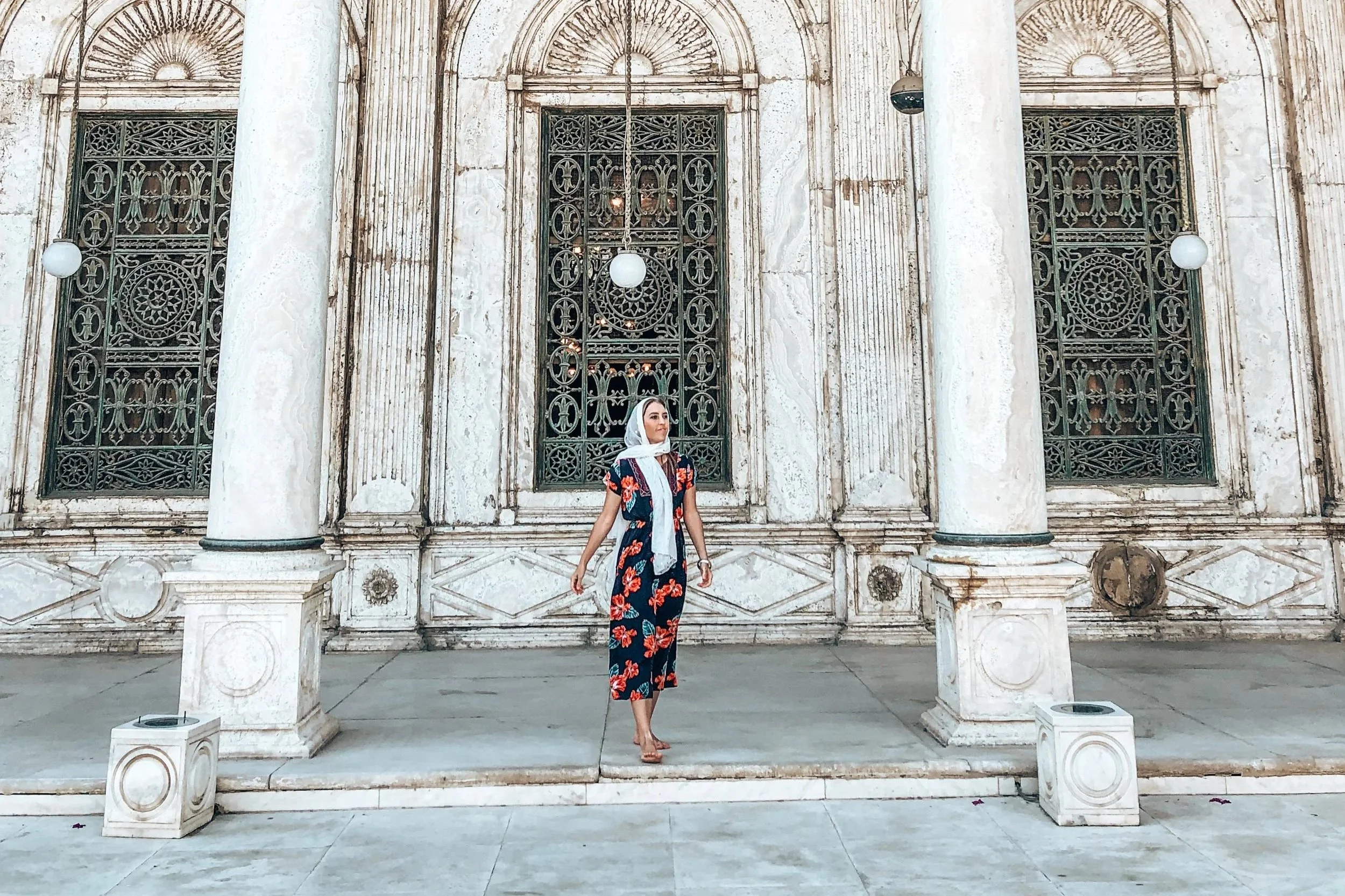
Wandering around the Citadel.
7. We skipped the nighttime pyramid show (and made our own fun instead)
This is probably one of my favourite memories from Egypt.
While we were travelling, we had the opportunity to see the pyramids lit up at night. We had just come from Jordan, where we had experienced Petra by Night. And, honestly, we had decided that the Petra experience hadn’t been worth it for us.
So… when we heard about the nighttime show at the pyramids, we (against my better judgement) decided to skip it.
From what we had been told, it was essentially the pyramids lit up with a show. For some people, that might be a fantastic experience. But we didn’t feel like it was something we needed to do. And I’m glad we made that decision.
The Great Beeramid of Giza
Instead of heading back to the pyramids, we decided to hang out with the locals around our accommodation.
We sang… we danced… we drank local beers… we spent time together as a group… and then, because we are apparently very mature adults, we created our own Great Beeramid of Giza… out of our empty beer cans.
We put the flashlight on our phones and danced it around the pyramid to make it look like we were having a better experience than the people who had gone to the nighttime show.
It was hilarious… and it became one of the most memorable nights of the entire trip.
My advice
Not every optional excursion is worth paying for.
Before booking an additional experience, ask yourself:
Does this genuinely interest me?
Is it something I will remember?
Does it add something to the trip?
Would I rather spend that time doing something else?
Sometimes the best travel memories are the ones you didn’t plan.
8. Egypt has huge travel distances
One of the biggest things to know before visiting Egypt is that it is a large country, and travelling between destinations can take a long time.
I think a lot of people picture Egypt as being about the pyramids, the Nile and a few temples. But if you want to see the country’s major historical sites, you can spend a lot of time on the road. We had some incredibly long driving days. And I’m talking about the kind of driving where you start to wonder if you’re ever going to get there.
Why travel time matters
Egypt’s major attractions are spread across different regions.
For example, Cairo, Luxor, Aswan and Abu Simbel are not all close together. Depending on your itinerary, you may need to allow for long road journeys, flights or a combination of transport. This is especially important if you’re trying to fit a lot into a short trip. Don’t underestimate travel days when planning your Egypt itinerary. You may be tempted to pack in as much as possible, but sometimes the journey itself takes a significant part of the day.
My Egypt itinerary advice
If you’re planning a trip to Egypt, think about what matters most to you.
Do you want:
The pyramids and Cairo?
The temples and Valley of the Kings?
Sailing the Nile?
Abu Simbel?
Museums and ancient history?
Local markets and villages?
Then build your itinerary around those priorities. You don’t need to see everything to have an incredible trip.
9. Military checkpoints are part of the travel experience in some areas
This was another thing I hadn’t expected. Throughout our travels in Egypt, we encountered military checkpoints.
Our vehicle would stop, and armed personnel would walk around the bus. In some cases, they would get on to check who was inside and what was happening. I found this quite confronting. It’s not something I had experienced in the same way in other countries.
The shortcut we probably shouldn’t have taken
There was one occasion when our group was offered the opportunity to take a shortcut that was not part of the usual tourist route.
It was going to save us something like eight hours of driving. Eight hours. And it meant we could fit in an extra site that wasn’t originally on the itinerary.
Naturally, we were interested.
But there was a catch… we were told that it was an illegal road for tourists. We had to vote as a group, and if even one person voted no, we wouldn’t take it.
Everyone voted yes.
Looking back, I think it was a pretty stupid decision… but at the time, we were excited about the opportunity to see another site and save a huge amount of travel time.
Our guide took the situation very seriously. We were told what to do if we were stopped at a military checkpoint. We had to practise hiding from view inside the bus, with the curtains drawn and luggage stored underneath. The idea was to avoid making it obvious that we were carrying tourists.
We practised what would happen if the bus was pulled over. And we got it wrong… a lot! Someone would have a foot sticking out. Someone would leave a jacket on the back of a seat. Someone’s head would be visible. We were told we needed to get it right three times in a row before the guide was confident enough for us to take the road. It was quite surreal.
So… what happened you ask? We did take the road. And yes, we were pulled up.
An armed person got onto the bus with a machine gun or rifle (I can’t remember which) and spoke to the driver. They looked down the bus… we were all hiding… and terrified. Then they got off, and we continued on our way.
It was thrilling, terrifying and probably not the smartest travel decision I’ve ever made. But it is certainly something I will remember.
Would I recommend taking an illegal route for tourists?
Absolutely not.
This is a story from my trip, not a recommendation. I would not encourage anyone to take an unauthorised road or ignore local security restrictions to save time. If you’re travelling to Egypt, follow your tour operator’s safety advice and current official travel guidance. The extra site is not worth putting yourself or your group at unnecessary risk.
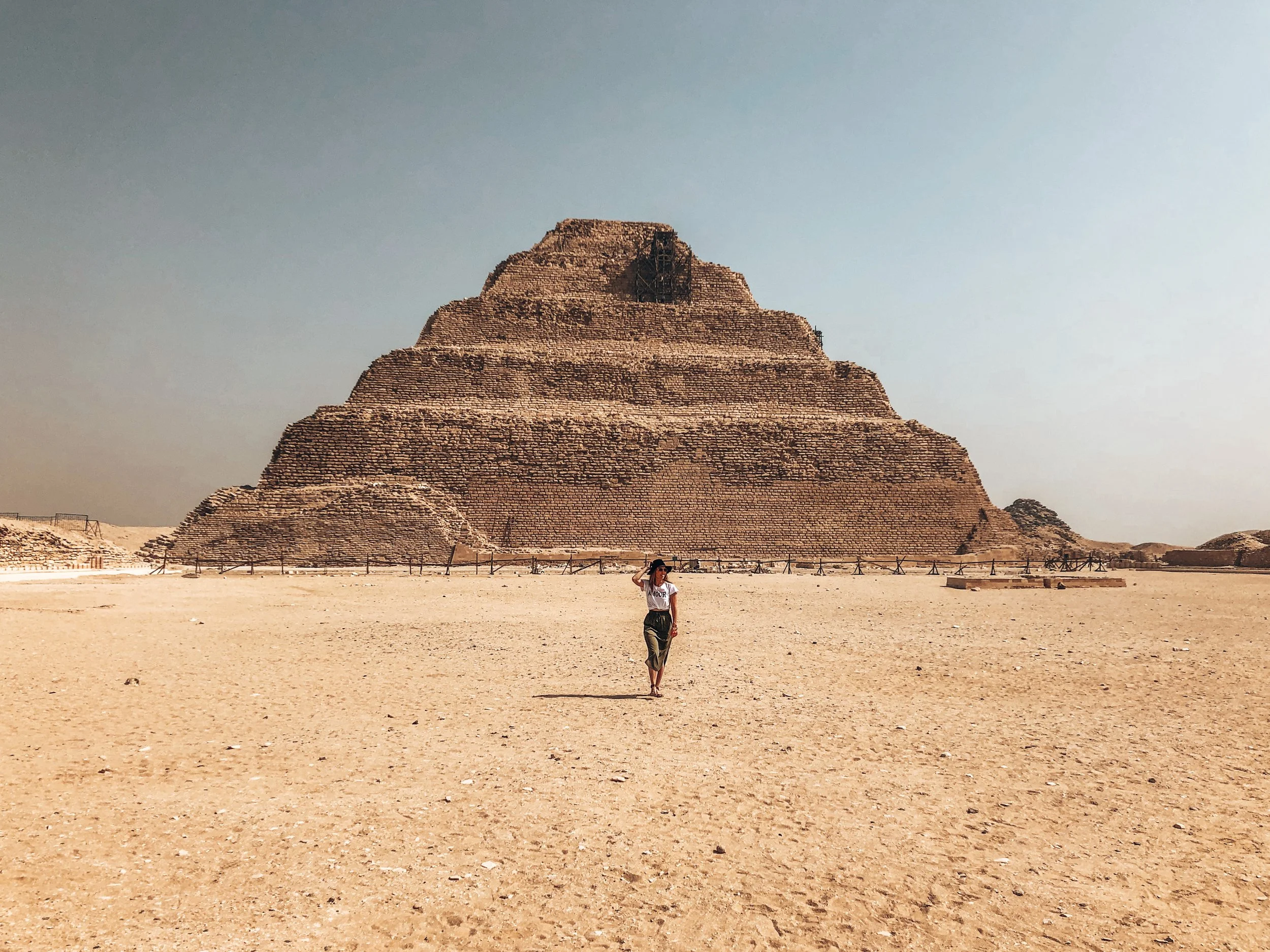
More pyramids, of course.
10. Egyptian falafel is a must-try
Let’s talk about food. Falafel is everywhere in Egypt, and I loved that.
One thing I noticed was that Egyptian falafel was different from the falafel we had eaten in Jordan. Egyptian falafel, often called taameya, is traditionally made using fava beans rather than the chickpeas commonly used in many other countries. That gives it a different flavour and texture.
It’s one of those little travel details that I love noticing… how the same food can be prepared differently from one country to the next.
Other foods you’ll find in Egypt
Egypt has plenty of delicious traditional dishes, including:
Taameya: Egyptian-style falafel
Ful medames: Slow-cooked fava beans, often eaten for breakfast
Koshari: A popular Egyptian dish made with rice, pasta, lentils and tomato sauce
Aish baladi: Traditional Egyptian flatbread
Mahshi: Vegetables or vine leaves stuffed with rice and herbs
There is also a lot of meat in Egyptian cuisine, so if you’re vegan or vegetarian, it’s worth learning a few useful phrases and asking what is in each dish.
Travel tip: Try local food, but choose places that look busy and have good food hygiene practices. Be cautious with drinking water and raw foods if you’re unsure of the source.
11. The bridges are guarded
This is one of the most unusual things I noticed in Egypt. Almost every bridge we saw appeared to have armed people stationed on either side.
And I’m talking about all kinds of bridges. Large bridges, small community bridges, bridges that looked like they were simply connecting one side of a road to another. They seemed to have people with guns on either side.
I had never seen anything quite like it. It was one of those moments where I found myself looking out the bus window thinking, Is this normal here? It was a very different experience from travelling through other countries.
What I learned
Egypt has a very visible security presence in some areas. That doesn’t necessarily mean every location is unsafe, but it was certainly something I noticed as a traveller. It also reinforced how important it was to have a guide who understood the country and could explain what was happening.
12. Camel rides are everywhere (but I chose to walk)
You will have plenty of opportunities to ride camels in Egypt, especially around major tourist attractions. But this is something I personally chose not to do. I prefer to avoid animal tourism where I can, particularly when I’m unsure how the animals are treated. And I think it’s important to say that this isn’t about judging people who choose to ride camels. It’s about making the choice that feels right for you.
My camel experience
We had a camel experience included in our tour. The camels were provided, and I decided that I wanted to walk alongside mine instead of riding it.
The local camel guide was confused… and then he was a little bit annoyed. But I feel uncomfortable with animal tourism, and I wanted to do the kind thing and walk. So I did. And I don’t regret it.
I still got to spend time with the camels and take photos at the end. Would I have preferred not to have paid for the experience? Yes. But it had already been included in the tour, so I made the most of it.
Responsible animal tourism in Egypt
If you want to interact with animals while travelling, do your research first.
Ask yourself:
Are the animals healthy and well cared for?
Are they being forced to work in extreme heat?
Is there access to water, shade and rest?
Are you comfortable with how the animals are treated?
Can you enjoy the experience without riding or handling them?
You can experience Egypt’s deserts and pyramids without riding an animal.
13. Having an Egyptologist guide made the history come alive
One of the best decisions we made in Egypt was travelling with a local guide who was an Egyptologist. And honestly, he made such a difference to the trip.
I have always been fascinated by ancient Egyptian history, but there is only so much you can learn from reading a guidebook or wandering around a temple on your own. Our guide had an incredible amount of knowledge. He could explain the history, the symbolism, the stories and the people behind the sites we visited. But what I loved most was that he could read the hieroglyphs.
Learning to read hieroglyphics
This was a huge highlight for me. I’ve been fascinated by hieroglyphics since I was a child. And our guide didn’t just translate the writing for us… he explained how to understand the symbols, how the position of the body mattered, what different hand gestures meant, how the legs were positioned, how the figures were represented, ow the symbols worked together to tell stories.
By the end of the trip, he was quizzing us.
He would point to a wall and ask… What do you see here? What does that mean? What story do you think this is trying to tell?
And we could actually answer. Not perfectly, obviously. But we had started to understand the way ancient Egyptian storytelling worked. It was fascinating.
Why I recommend an Egyptologist
If you’re interested in history, ancient Egypt or archaeology, I would absolutely recommend having a knowledgeable guide.
A good guide can help you understand:
The history behind the temples and tombs
The stories represented in the hieroglyphics
The symbolism used in ancient Egyptian art
The burial practices of the pharaohs
How ancient Egyptian beliefs influenced their architecture
The pyramids are incredible to look at. Understanding the history behind them makes the experience even better.
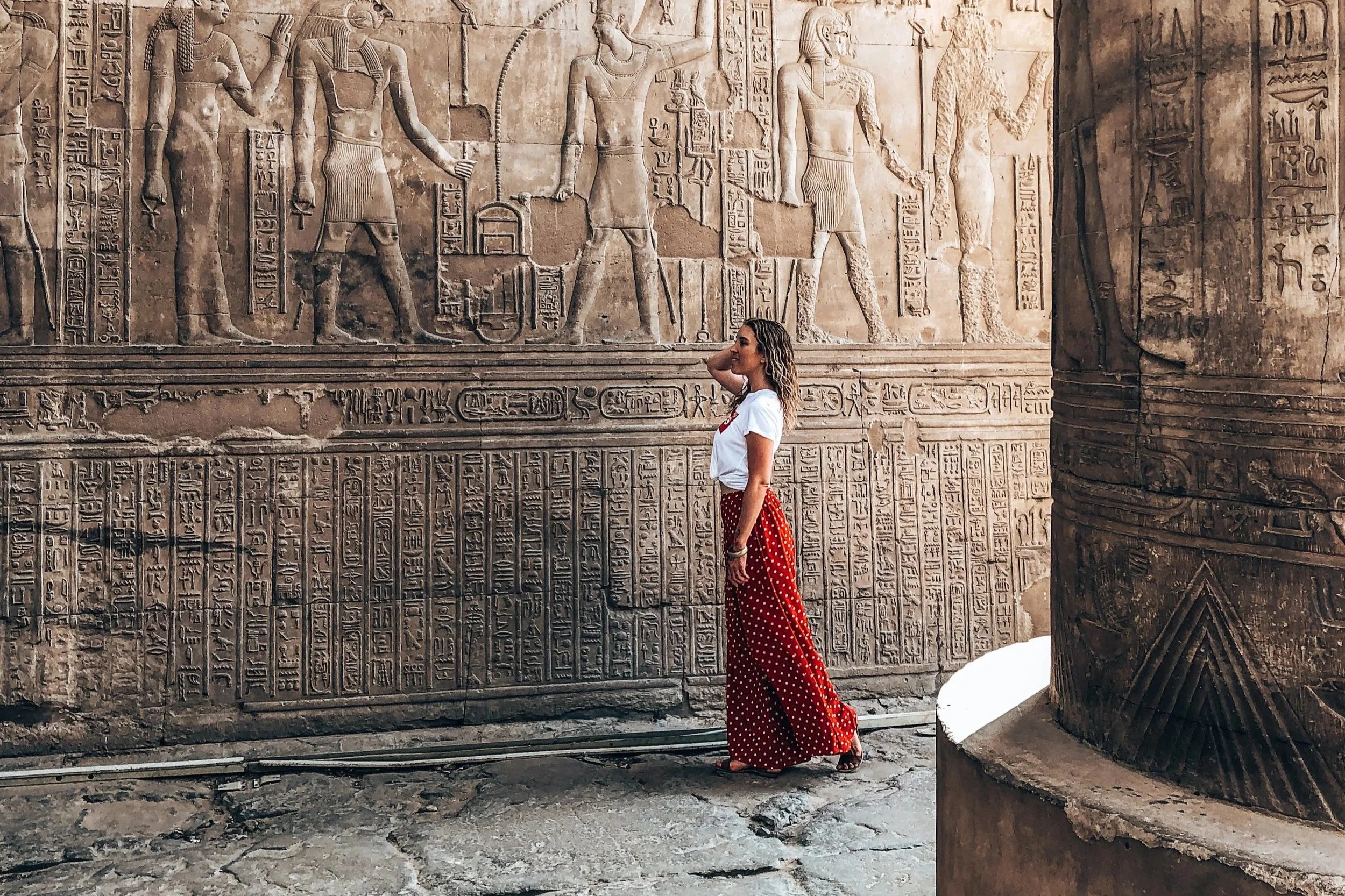
Exploring with an Egyptologist can help you understand the hieroglyphics.
14. The Valley of the Kings is a must-visit
If you’re travelling to Egypt, I highly recommend visiting the Valley of the Kings.
For me, this was one of the most fascinating parts of the trip. The Valley of the Kings is where many of the pharaohs were buried, and it offers an incredible insight into ancient Egyptian burial practices. There is something quite surreal about walking into a tomb and seeing the paintings, hieroglyphics and decorations that were created thousands of years ago.
Why it fascinated me
I’ve always been interested in the stories behind the pharaohs. Their lives, their beliefs, their ideas about the afterlife, the way they prepared for death, and the lengths they went to in order to ensure that they would be remembered.
Visiting the tombs made all of that feel more real. You can stand inside a tomb and look at the walls, knowing that the people who created these paintings and symbols lived thousands of years ago. And somehow, some of that history is still there.
My tip for visiting the Valley of the Kings
Allow enough time to visit more than one tomb if you can. Different tombs offer different experiences, and some require additional tickets. Check which tombs are open during your visit, as access can change. If you’re particularly interested in the history of the pharaohs, consider visiting with an Egyptologist guide.
15. Abu Simbel is worth the effort
Another place I highly recommend visiting is Abu Simbel.
The temples are incredible. And when you stand in front of them, it’s hard not to think about how the ancient Egyptians managed to build such enormous structures with the technology they had at the time. The scale is just incredible.
Why Abu Simbel is so fascinating
The temples are dedicated to Ramses II and were carved into the rock.
What makes them even more remarkable is that the temples were relocated in the 1960s to save them from the rising waters of Lake Nasser following the construction of the Aswan High Dam. They were dismantled and reconstructed piece by piece. Think about that for a moment. An entire ancient temple complex, moved and rebuilt to preserve it. That is an incredible feat of engineering.
If you’re planning an Egypt itinerary that includes ancient history, Abu Simbel is one of the places I would prioritise.
16. Sailing the Nile on a felucca was a dream come true
If there’s one experience from Egypt that I would recommend to almost everyone, it’s sailing down the Nile on a traditional felucca.
This wasn’t an experience I originally had on my bucket list, nor was it part of my group tour. We did it on a whim, and it became a highlight of the trip.
A felucca is a traditional sailing boat, and spending time on the Nile this way felt like the perfect way to slow down and see a different side of Egypt. We had spent so much time on the road, moving from one ancient site to another. But on the felucca, everything slowed down.
Read more about my experience Sailing the Nile on a Felucca.
What is it like staying on a felucca?
Our experience was very much like camping… but on a boat.
We had one large communal mattress, which was where we sat, ate, drank, slept and spent our days. Everyone had their own blanket and pillow, but there wasn’t really a private sleeping space. You simply found a spot on the mattress and made yourself comfortable. And we spent a few days and nights like that.
It was basic… it was communal… it was not luxury travel… but it was such a memorable experience.
Why I preferred a felucca to a luxury Nile cruise
I know a luxury Nile River cruise is a popular way to explore Egypt, and I can absolutely understand why. But for me, the felucca felt like a more authentic experience. It was slower, simpler, and felt more connected to the river and the landscapes around us. You weren’t rushing from one attraction to the next, you were simply sailing, watching the river, spending time with your group, taking in the scenery.
This is the epitome of slow travel. And if sleeping on a communal mattress isn’t your thing, you can also experience a felucca for just a few hours. You don’t have to spend multiple nights on the boat to enjoy the experience.
17. Egypt has colourful villages and local experiences you might not see online
One of the experiences I really enjoyed was visiting a colourful village in Egypt.
I can’t remember the exact name of the village, but it was an afternoon and evening experience where we visited a local family. We had a homemade traditional meal, met the family, heard their stories, and the women in our group had the opportunity to get henna tattoos. It was a really lovely experience.
A different side of Egypt
The colourful buildings and village atmosphere were something I hadn’t really seen in the photos or videos I had watched before travelling.
Most of the images I had seen of Egypt were pyramids, temples, deserts and museums. So this was a refreshing change. It felt like we were getting a glimpse of another side of the country. A side that wasn’t just about the famous tourist attractions.
My advice
If you’re travelling to Egypt with a guide or tour operator, ask whether you can visit a local village or have a meal with a local family. These kinds of experiences can be a great way to learn about everyday life. Just make sure the experience is organised responsibly and that local families are treated fairly.
18. The temples are all different - and that’s what makes them fascinating
I knew Egypt was famous for its temples. But I don’t think I fully appreciated just how many different temples there were to explore. And what surprised me was how different they all were.
Some were huge, some were small, some were surrounded by water, some were dedicated to specific gods, some had fascinating stories about how they were built or relocated, and all of them had something interesting to offer.
Temples dedicated to cats and crocodiles
One of the things I found fascinating was learning about the animals that were worshipped in ancient Egypt. There were temples associated with cats. There were temples associated with crocodiles. And learning about the role of animals in ancient Egyptian religion was something I really enjoyed.
Temples that were relocated
One of the temples we visited had been moved because it would have ended up underwater. It was dismantled, moved piece by piece and reconstructed. Again, just incredible. To think about the engineering, the planning and the effort that would have gone into something like that.
Temples surrounded by water
There were also temples where you needed to take a boat to get there. Imagine arriving at an ancient temple by boat, surrounded by water. It’s such a unique experience.
The symmetry and alignment
Something else that fascinated me was the way ancient Egyptian temples were designed. The symmetry. The positioning. The way the temples aligned with the surrounding landscape and elements of nature. You start to notice how much thought went into the layout of these places.
And then you start thinking about how they managed to achieve all of this without modern technology. It’s mind-blowing.
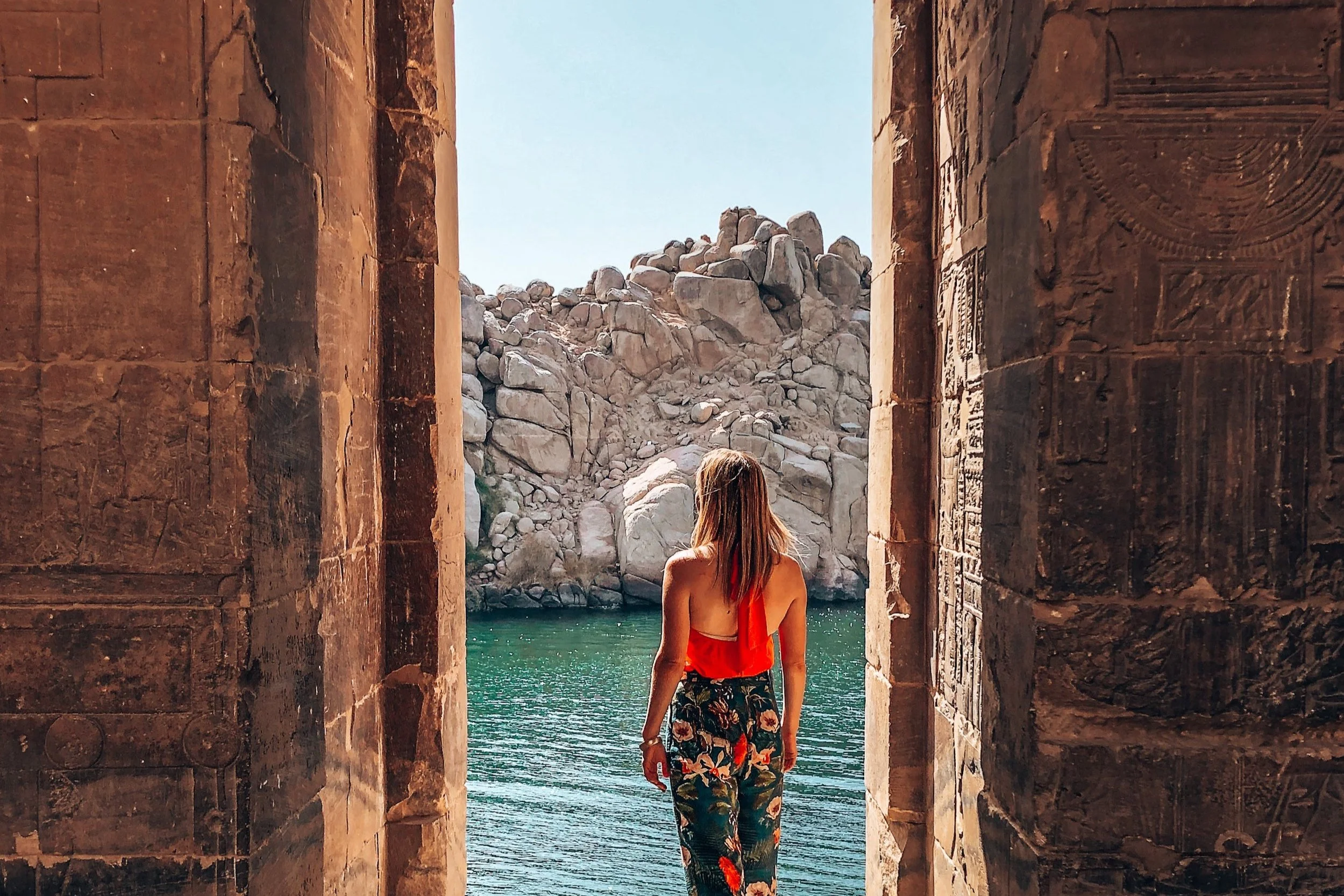
This temple is accessible by boat.
19. The history of mummification is fascinating - and museums are worth visiting
If you’re interested in ancient Egyptian history, I highly recommend visiting museums in Egypt. This is where you get to see some of the incredible artefacts that have been discovered in pyramids and tombs. And, yes, you can see real mummies.
What you can expect to see
Depending on the museum, you may see:
Mummies that are still completely wrapped
Sarcophagi and burial artefacts
Objects found inside tombs
Displays explaining mummification
Mummies where parts of the wrappings have been removed
Reconstructions and imagery showing what researchers believe the person may have looked like
Some of the displays are quite graphic. You’re literally looking at human remains. But I found them fascinating.
The ancient Egyptian beliefs about the afterlife
What really interested me was the thinking behind mummification. Ancient Egyptians had complex beliefs about death and the afterlife. Mummification was connected to their beliefs about preserving the body and preparing for what came after death. And it wasn’t just something that happened to one particular group of people. It was practised on people with wealth and status, and in some cases, animals were also mummified.
Why the museums are worth your time
The pyramids and temples show you the scale and engineering of ancient Egypt. Museums help you understand the people, their beliefs and the objects connected to their lives. If you want to go beyond the famous tourist attractions, make room for museums in your Egypt itinerary.
20. The pharaohs, hieroglyphics and ancient engineering will blow your mind
I don’t think I will ever get over the history of Egypt.
The ancient Egyptians achieved so much with the technology available to them. The pyramids, the temples, the tombs, the engineering, the writing, he art, the religious beliefs, the way they organised their society… it’s just incredible to think about.
The pharaohs
Learning about the pharaohs was particularly interesting. Many of them were related, and royal families sometimes practised marriage between close relatives. This contributed to some genetic conditions among certain royal family members, though the exact circumstances varied from ruler to ruler.
One thing that stood out to me was the way the pharaohs were represented in hieroglyphics. They were often shown as strong, powerful and idealised figures. And that symbolism tells you a lot about how ancient Egyptian rulers wanted to be remembered.
The afterlife
Ancient Egyptians had complex beliefs about the afterlife. Their tombs, burial practices and artwork reflected those beliefs. And when you’re walking through a tomb or looking at a sarcophagus, you start to appreciate how much thought went into preparing for death.
The engineering
But for me, the biggest thing was the engineering. How did they build the pyramids? Where did the stone come from? How did they move it? How did they create such precise structures? How did they plan the temples? How did they align everything?
We have theories and evidence, but standing in front of these structures still leaves you with a sense of disbelief. The ancient Egyptians were extraordinary engineers, and seeing their work in person is something you won’t forget.
More things to know before travelling to Egypt
The experiences above were the ones that stood out most to me, but there are a few practical things worth knowing before you go.
Dress modestly, especially as a female traveller
Egypt is a country where it’s important to be mindful of local customs and culture. Dressing modestly is a good idea, particularly when visiting temples, mosques and other sacred sites. For me, it was also something I kept in mind for my own comfort and safety.
What to pack
I would recommend:
Loose-fitting clothing that covers your shoulders and knees
A lightweight scarf or shawl
Comfortable walking shoes
A hat and sunscreen
Breathable clothing for hot weather
A light layer for cooler evenings or air-conditioned transport
If you’re visiting a mosque or other religious site, check the specific dress requirements in advance.
What about women covering their heads?
Requirements can vary between sites. At one citadel I visited, I remember women being required to have their shoulders, legs and head covered, as well as removing their shoes. I don’t remember the exact name of the citadel, so I won’t guess.
Always check the dress requirements for the specific site you’re visiting.
Photography rules can be surprisingly strict
One thing that surprised me was how many rules there were around photography. At some locations, photography was not allowed at all. At others, you could take photos, but you needed to purchase an additional photography ticket or pass.
Sometimes you would be given a wristband or separate ticket to show that you had paid for the privilege. And there were people walking around checking whether tourists had the correct pass.
My advice for photographers
If you’re travelling to Egypt with a camera or mobile phone, don’t assume you can photograph everything.
Before taking photos:
Check whether photography is allowed
Ask if you need a photography ticket
Keep your pass or wristband accessible
Follow the instructions of staff and guides
Don’t photograph people without permission
Some sites have strict rules about photography inside tombs, museums and pyramids. And those rules can change. Always check the current rules at each attraction.
Be prepared for whistles and strict site rules
Another thing that surprised me was how strict some tourist sites were about what you could and couldn’t do.
If you touched something you shouldn’t, if you had your camera out when photography wasn’t allowed, if you were somewhere you weren’t meant to be.. you might get a whistle blown at you. And not a quiet little whistle… a loud one. Then someone would yell at you and tell you that you were in trouble. This happened around the pyramids as well, where people were trying to climb the structures.
I understand why the rules are there. These sites are thousands of years old, and they need to be protected. But it can still feel quite confronting when someone is yelling at you in a foreign country.
My advice
Follow the rules
Don’t climb on ancient structures
Don’t touch artefacts or walls unless permitted
Ask before taking photos
Listen to your guide and site staff
It’s much easier to enjoy your experience when you’re not worried about being told off.
Try a local Egyptian beer
This is a little travel habit of mine. Whenever I visit a new country, I like to try the local beer.
I’m not saying it’s always the best beer I’ve ever had. But I enjoy trying local products and seeing what people drink. Egypt has its own local beer, and it was fun to try it while travelling. If you enjoy discovering local food and drinks, make a point of trying something local. Just remember that alcohol isn’t appropriate everywhere, particularly at religious sites.
A hot air balloon over the Valley of the Kings is an option
One of the optional experiences we were offered was a hot air balloon ride over the Valley of the Kings. It sounded incredible. And it is absolutely the kind of experience that could be a once-in-a-lifetime memory. But we chose not to do it.
For me, it came down to priorities. We had to choose between the hot air balloon and another activity. And at the time, the other activity felt more valuable to me. It was included in the tour, so we weren’t paying extra money, but we still had to choose how to spend our time. I don’t regret the decision. But if you have the time and budget, a hot air balloon ride over Luxor could be an incredible experience.
Is Egypt worth visiting?
Absolutely.
Even though Egypt was probably the country where I felt the least safe, it was also one of the most fascinating countries I’ve ever visited. The history is extraordinary. The ancient sites are incredible. The pyramids are just as impressive as you imagine. The Nile is beautiful. And the opportunity to learn about ancient Egyptian civilisation is something I will never forget.
But I think it’s important to go with realistic expectations. Egypt is not necessarily the easiest destination to travel through. There are long travel days. There can be a strong security presence. The markets can be confronting. The tourist sites can be busy and overwhelming. And you need to be mindful of local customs and photography rules.
But if you prepare, keep safety in mind and allow yourself to experience the country beyond the famous tourist attractions, it can be an incredible adventure.
Would I go back?
Yes.
There is still so much more I would love to see. And I know that Egypt will always hold a special place on my travel bucket list. After all, this was a country I had dreamed about visiting since I was a child. And standing in front of those pyramids for the first time? That was a moment I will never forget.
Keep exploring with my guide on Sailing The Nile on a Felucca.