25 Best Things to See and Do in Egypt
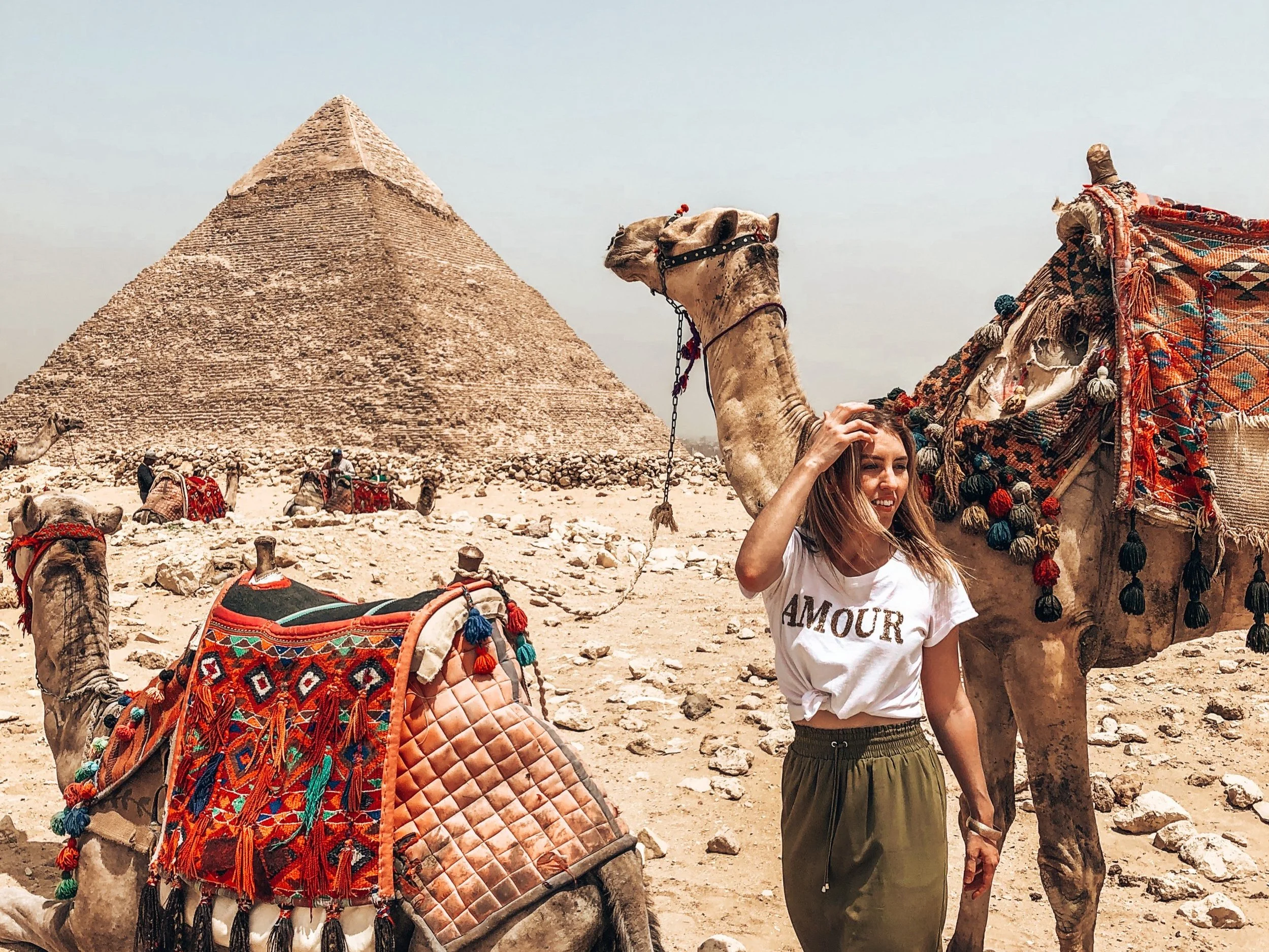
Pinch me moments in Egypt.
Egypt is one of those countries where the list of things to see and do can feel almost ridiculous.
The pyramids, the Sphinx, ancient temples, tombs, mummies, the Nile, desert landscapes, colourful Nubian villages, museums, bazaars, feluccas, and enough ancient history to keep you busy for weeks.
I had dreamed about visiting Egypt since I was a kid. Growing up, our dad used to read us books about the world, animals, planets and ancient history instead of the usual bedtime stories. Somewhere amongst those books were the pyramids, the Sphinx and the stories of the pharaohs.
So when I finally stood in front of the pyramids, it wasn't simply another destination ticked off my bucket list… it was one of those I've actually made it here moments.
And while the famous sights absolutely lived up to the hype, some of my favourite memories from Egypt happened away from the obvious attractions. Sailing down the Nile on a traditional felucca… learning to read hieroglyphics with our Egyptologist guide… visiting a local village… watching the sun rise over the river… and seeing ancient temples appear almost unexpectedly as we travelled through the country.
Egypt can be overwhelming. It's hot, busy, enormous and packed with things to see. You could spend weeks exploring and still only scratch the surface.
So if you're planning an Egypt trip, where should you actually go?
Here are 25 of the best things to see and do in Egypt, including the famous bucket-list attractions, unforgettable experiences and a few places you might not have heard of.
Quick answer: For a first trip to Egypt, I'd prioritise Cairo and Giza, Luxor, the Nile, Aswan, Abu Simbel and at least one less-touristy experience such as a Nubian village or traditional felucca trip. If you have more time, add Alexandria, Edfu, Kom Ombo and some of Egypt's lesser-known archaeological sites.
1. See the Pyramids of Giza
Let's start with the obvious one.
You cannot come to Egypt and ignore the pyramids. Well… you technically can. But I'm not sure why you would.
The Pyramids of Giza are exactly the kind of attraction that can feel over-photographed and over-hyped before you arrive. You've seen them in movies. You've seen them on Instagram. You've seen thousands of photographs.
And then you actually stand there. It hits differently. The sheer scale is difficult to understand until you're standing at the base of one. And one of the things that surprised me most was how close the pyramids are to modern Cairo and Giza. I'd imagined them sitting somewhere far out in the desert, completely separated from the city. Instead, modern Egypt and ancient Egypt exist side by side.
What to see at Giza
Allow enough time to explore more than simply taking the obligatory pyramid photograph.
You'll find:
The Great Pyramid of Khufu
The Pyramid of Khafre
The Pyramid of Menkaure
The Great Sphinx
Smaller pyramids and tombs
Viewpoints across the Giza Plateau
You can also purchase additional tickets to go inside some of the pyramids.
My tip
If going inside a pyramid is on your bucket list, do it.
I knew there wouldn't necessarily be much to see inside, but that wasn't the point for me. I wanted to experience what it felt like to walk through a structure that had been standing for thousands of years. The passages can be narrow, steep and uncomfortable, particularly in the heat, so know what you're signing up for before you buy your ticket.
Read my full guide: 20 Things I Wish I Knew Before Visiting Egypt
2. Stand in front of the Great Sphinx
The Sphinx is one of those attractions you've probably seen hundreds of times before you ever visit Egypt. But seeing it in person is different.
The enormous limestone statue sits beside the Giza pyramids and depicts a human head on a lion's body. The monument is traditionally associated with the reign of Khafre.
For me, one of the best things about visiting Giza is seeing the pyramids and Sphinx together rather than treating them as separate attractions. Take your time here. And yes, get the classic photograph. You're allowed.
3. Explore Cairo
Cairo is chaotic. It's busy, it's noisy, it's full of traffic… and after spending time looking at photographs of Egypt's ancient monuments, you might not be prepared for just how enormous and modern the city feels.
But don't make the mistake of treating Cairo as somewhere you simply sleep before heading to the pyramids. There's plenty to explore. Depending on your interests, you can visit museums, mosques, churches, bazaars and historic neighbourhoods, as well as experiencing everyday life in one of the world's great cities.
Things to do in Cairo
Consider adding:
The Egyptian Museum
The National Museum of Egyptian Civilization
Historic Cairo
Khan el-Khalili
The Citadel of Cairo
Al-Azhar Mosque
Coptic Cairo
The Nile Corniche
Local markets and food experiences
One of my favourite things about travelling through Egypt was seeing the contrast between the ancient world I'd imagined and the modern country that exists today. You don't have to choose between the two. Experience both.
4. Visit the Egyptian Museum and see ancient artefacts
If you're fascinated by ancient Egypt, don't skip the museums. The pyramids and temples give you the enormous, jaw-dropping architecture. Museums help you understand the people who created it.
You'll find artefacts connected to ancient Egyptian life, religion, burial practices, rulers and everyday life. And yes, depending on the museum, you can see real mummies. Some displays are confronting. You're looking at human remains that are thousands of years old.
But if you're interested in understanding ancient Egypt beyond the photographs, museums are absolutely worth your time.
5. Wander through Khan el-Khalili
If you want to experience the more chaotic side of Cairo, head into Khan el-Khalili. This historic market area is packed with shops selling souvenirs, jewellery, spices, clothing, artwork and all kinds of things you probably didn't realise you needed.
I should warn you, though… the shopping experience in Egypt can be intense. I found sellers particularly persistent, and some interactions were confronting. Our guide prepared us for this, which made a difference.
My advice? Be polite but firm. You don't have to buy something because someone approached you. You don't have to accept an offer. And you don't have to keep explaining why you're not interested. A simple "No, thank you" and continuing to walk is often enough.
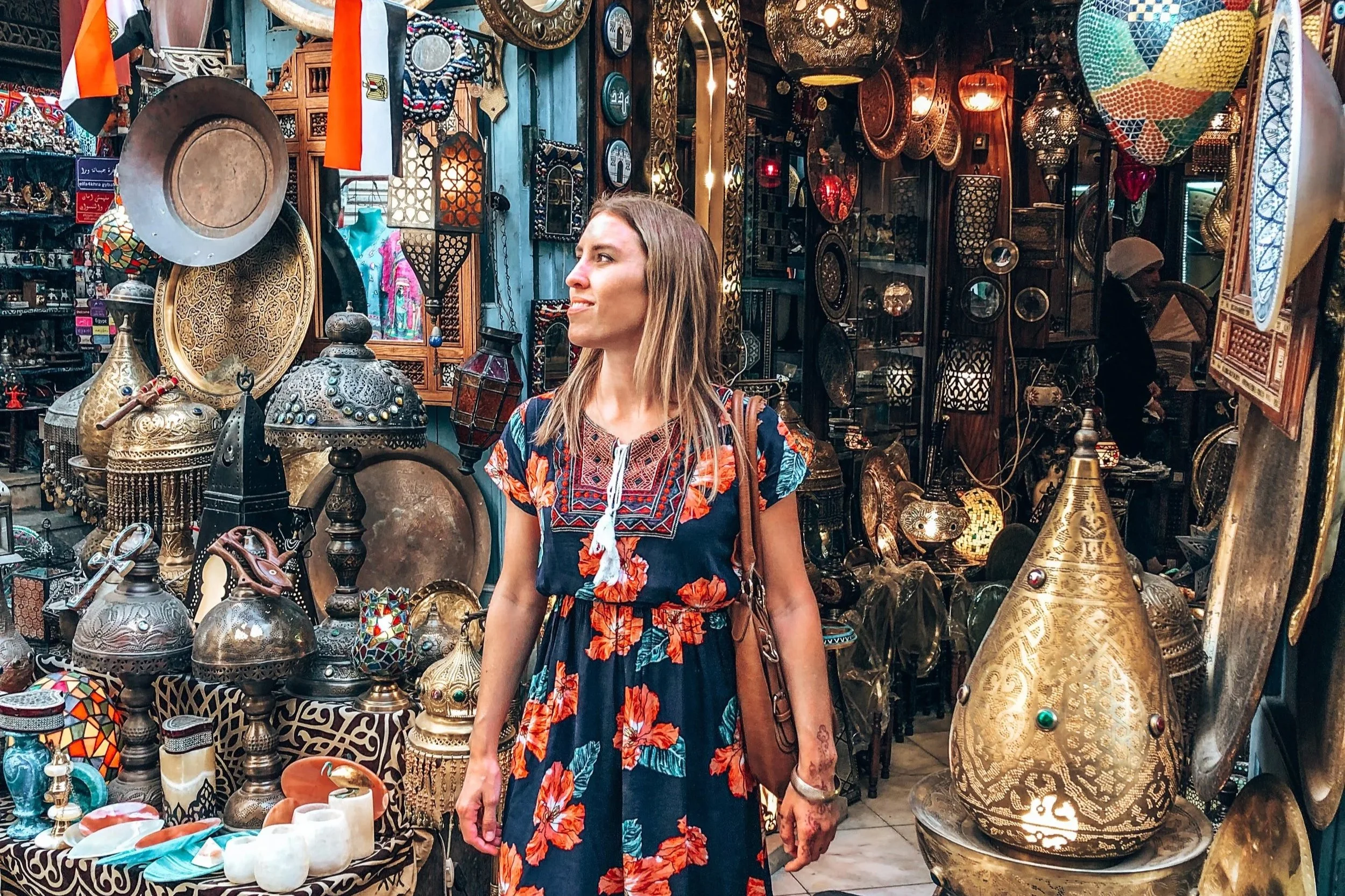
Markets can be both overwhelming and fascinating in Egypt.
6. Explore the ancient sites of Saqqara and Dahshur
Here's where I'd encourage you to go beyond the obvious. Most people immediately think of Giza when they think about Egyptian pyramids. But the wider Cairo region has several important archaeological sites.
At Saqqara, you'll find the Step Pyramid of Djoser, one of Egypt's earliest monumental stone structures.
Then there's Dahshur, where you can see the Bent Pyramid and Red Pyramid and learn more about how pyramid construction developed before the famous pyramids of Giza.
These sites are particularly interesting because they give you more context around the development of pyramid building. Instead of seeing the Giza pyramids as one isolated achievement, you start to understand them as part of a much longer story.
7. Explore Luxor - one of the world's greatest open-air museums
If you're travelling to Egypt for ancient history, Luxor deserves serious time on your itinerary.
Luxor sits on the site of ancient Thebes and is packed with temples, tombs and archaeological sites. This is where Egypt starts to feel almost ridiculous. You visit one ancient temple… then another… then another… and somehow they're all different.
The city is divided by the Nile, with major sites on both the east and west banks.
On the east bank
Visit:
Karnak Temple
Luxor Temple
On the west bank
Explore:
Valley of the Kings
Valley of the Queens
Temple of Hatshepsut
Colossi of Memnon
Tombs and archaeological sites across the Theban Necropolis
If ancient history is your thing, I'd give Luxor more than one day. There is a lot to see.
8. Walk through Karnak Temple
Karnak is enormous… and I mean enormous. It's not simply one temple. It's a vast complex of temples, chapels, pylons and other structures that developed over centuries.
One of the highlights is the Great Hypostyle Hall, with its huge forest of columns. Standing amongst them gives you a real sense of the scale and ambition of ancient Egyptian architecture. This was one of those places where I was very glad to have an Egyptologist guide. Without a guide, you can look at the columns and think, Wow, that's impressive.
With a knowledgeable guide explaining what you're actually looking at, the site becomes a story. You'll learn about the gods, pharaohs, religious ceremonies, symbolism and the way the temple developed over time.
Travel tip
Give yourself plenty of time here. Don't race through Karnak simply because you have another attraction booked. Look up, .look down, look at the hieroglyphics, look at the scale of the columns… and let yourself actually take it in.
9. Visit Luxor Temple
Luxor Temple is another must-see in Luxor. Unlike Karnak, which feels vast and sprawling, Luxor Temple can feel more contained and atmospheric. The temple was connected to Karnak by an ancient processional avenue lined with sphinxes and played an important role in the Opet Festival.
If you're staying in Luxor, consider visiting at a time when you can experience the changing atmosphere of the site. And if you enjoy photography, this is one where having time to wander rather than rushing through with a tour group can really pay off.
10. Explore the Valley of the Kings
The Valley of the Kings was one of my favourite places in Egypt. This is where many of the pharaohs of the New Kingdom were buried, in underground tombs carved into the desert cliffs. And when you walk inside the tombs, you can still see incredibly detailed paintings and hieroglyphics covering the walls.
It's difficult not to think about the people who created them. Thousands of years later, you're standing inside the place they prepared for the afterlife. The Valley contains more than 60 known tombs and additional unfinished tombs, although only a selection are open to visitors at any particular time.
Don't assume every tomb is included
The tombs available to visitors can change, and some require additional tickets. If you're particularly interested in the history, research the current options before your visit rather than simply accepting whichever tombs your itinerary happens to include.
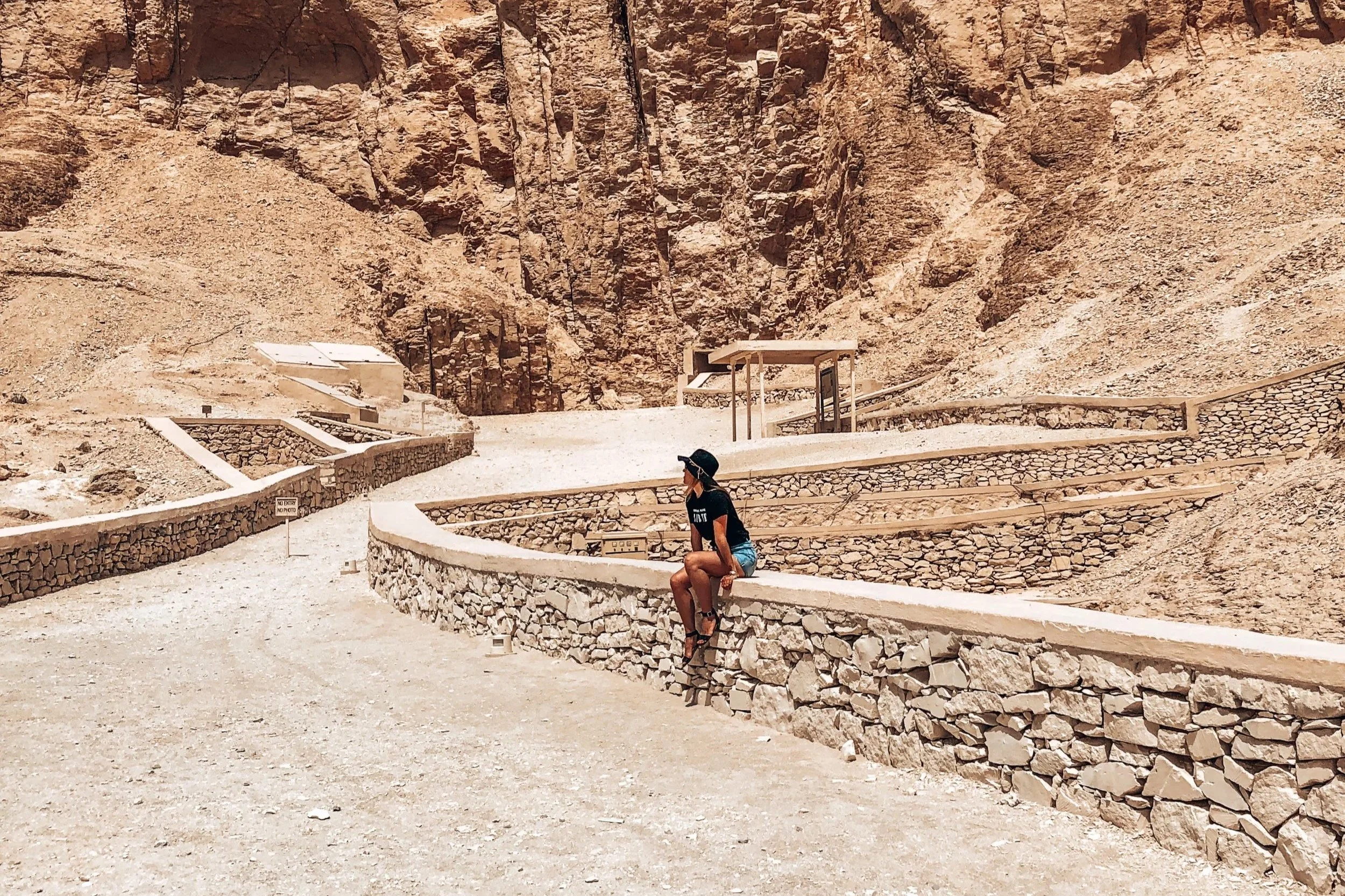
Exploring Valley of the Kings.
11. See the Temple of Hatshepsut
The Temple of Hatshepsut is built dramatically into the cliffs on the west bank of Luxor. Hatshepsut is one of ancient Egypt's most fascinating rulers, particularly because she was a woman who ruled as pharaoh.
The architecture is also completely different from the mental image many people have of an Egyptian temple. The terraces rise against the cliffs, creating an incredible backdrop.
If you're interested in ancient Egyptian history, make sure you learn a little about Hatshepsut before visiting. It makes the experience much more interesting.
12. Take a hot air balloon over Luxor
This is one of those experiences that sounds almost too perfect. Imagine floating above the Nile at sunrise, with the desert, farmland, temples and archaeological sites below you.
We were offered the opportunity to do a hot air balloon flight over Luxor during my trip, though we would have had to skip another activity to fit it in. We chose to skip the hot air balloon experience. And honestly? I don't regret it. But if you have the budget and time, it's absolutely something I'd consider adding to an Egypt itinerary.
My advice
Don't book an experience simply because everyone says you should. Ask yourself whether it genuinely interests you. For me, there was another experience I wanted more at the time. That's the beauty of travelling. You don't have to do everything.
13. Sail the Nile on a traditional felucca
This was one of my favourite experiences in Egypt… and it wasn't even part of my original plan.
Our group had the option to swap a couple of nights in five-star accommodation for a traditional felucca experience on the Nile. We said yes. And instead of sleeping in a luxury hotel, we spent a couple of nights sleeping on a communal mattress on a traditional sailing boat.
There was no private cabin, no room service, no luxury bathroom. It was basically camping on the water… and it was brilliant.
We watched sunsets and sunrises, passed villages and farmland, shared meals, played games, spent time with locals and sat around a bonfire on the riverbank. It was one of those travel experiences where the lack of comfort somehow became part of the adventure.
Is a felucca worth it?
If you love adventure, slow travel and unusual experiences, I'd seriously consider it. If you need a private bathroom and air conditioning every night, perhaps book a luxury Nile cruise instead.
Read more about Sailing the Nile on a Felucca: My Unforgettable Egypt Adventure.
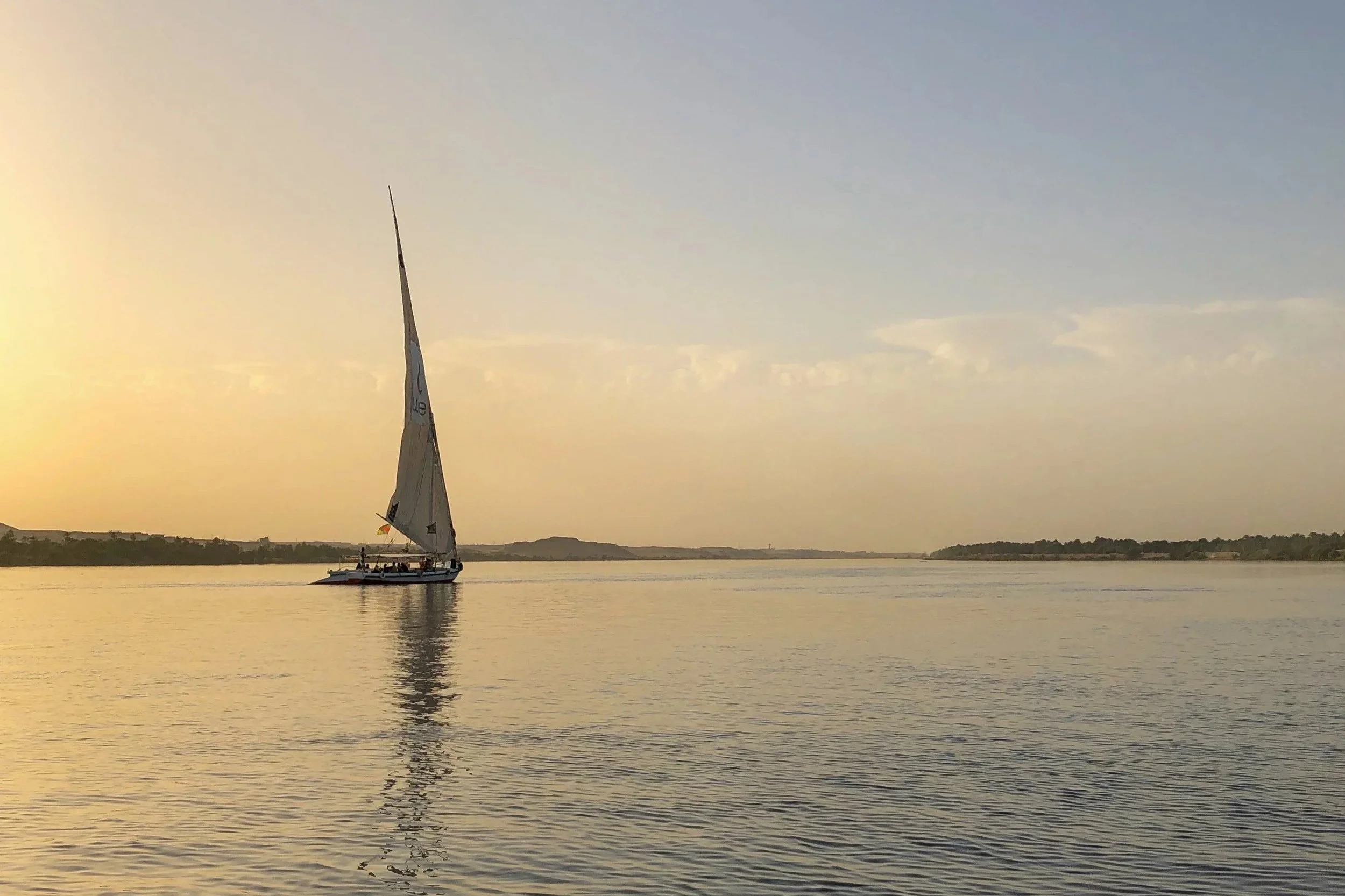
Sailing the Nile on a traditional felucca was one of my fave experiences in Egypt.
14. Take a luxury Nile cruise
The Nile is one of the great rivers of the world, and cruising along it is one of the classic ways to explore Egypt. A luxury Nile cruise is a very different experience from a felucca.
You'll generally have:
A private cabin
A bathroom
Meals
More comfortable facilities
A structured itinerary
Easier access to major sites along the river
For many travellers, this is the sweet spot between sightseeing and comfort. And you don't necessarily have to choose between a cruise and a felucca.
15. Visit Edfu Temple
Edfu is one of those places that can easily become a blur when you're travelling through Egypt because there are simply so many temples.
But don't underestimate it.
The Temple of Horus at Edfu is one of the best-preserved ancient Egyptian temples. It was dedicated to Horus, the falcon-headed god, and construction took place during the Ptolemaic period.
The enormous entrance pylons are impressive, but what I found particularly fascinating was how much detail has survived. If you're travelling between Luxor and Aswan, Edfu is a natural stop on many Nile itineraries.
Travel tip
This is a great example of why having a knowledgeable guide makes such a difference. There's an enormous amount of symbolism and mythology here. Don't just take the photo and leave. Find out what you're actually looking at.
16. See the unusual double temple at Kom Ombo
Kom Ombo is one of the more unusual temples you'll visit in Egypt because it was dedicated to two gods: Sobek, the crocodile god, and Horus the Elder.
The temple is effectively divided into two sides, reflecting the dual dedication. And then there's the crocodile connection. The site includes fascinating imagery connected with Sobek, as well as carvings that are believed to depict surgical instruments. There is also a crocodile museum nearby displaying mummified crocodiles.
If you're travelling along the Nile, Kom Ombo is definitely worth adding to your list.
17. Visit Aswan
Aswan felt different to me. The further south you travel, the more the landscape changes. The Nile becomes a much bigger part of the experience, with islands, lush riverbanks and desert landscapes creating a completely different atmosphere from Cairo.
Aswan is also an important gateway to Nubia and Abu Simbel. Spend some time simply enjoying the river rather than treating Aswan as somewhere you sleep between attractions.
Things to do in Aswan
Visit Philae Temple
Explore Nubian villages
Sail around the islands
Visit the Unfinished Obelisk
Explore the Nubian Museum
Visit Elephantine Island
See the Aswan High Dam
Take a felucca ride
Visit Abu Simbel
And if you've been travelling hard through Cairo and Luxor, Aswan can be a good place to slow the pace down.
18. Take a boat to Philae Temple
Philae is one of the temples I remember particularly well because of the journey to get there.
You don't simply walk up to it from a car park. You travel by boat to the island where the temple complex now stands.
And there's a pretty incredible story behind that. The monuments of Philae were relocated to nearby Agilkia Island during the international campaign to save them from being submerged following the construction of the Aswan High Dam.
So you're not only looking at an ancient temple. You're looking at an ancient temple that was dismantled and moved to save it. The main temple was dedicated to Isis and contains a fascinating mix of Egyptian, Greek and Roman history.
19. Visit a Nubian village
If you want to experience a different side of Egypt, add a Nubian village visit to your itinerary. This was one of the experiences I enjoyed because it moved beyond the enormous ancient monuments and gave us a glimpse into local life. The colourful buildings were very different from the Egypt I'd seen in photographs before my trip.
We visited a local family, shared a meal and spent time learning about their lives and traditions. It was a reminder that Egypt isn't simply pyramids, temples and tombs. There are communities, cultures and everyday lives happening around all of those famous landmarks.
Travel responsibly
When booking a village visit or homestay-style experience, look for operators that work respectfully with local communities and ensure that hosts are fairly compensated. The goal shouldn't be to turn someone's home into a tourist attraction. It should be an opportunity for genuine cultural exchange.
20. Make the effort to visit Abu Simbel
Abu Simbel is a long way from many of Egypt's major attractions. Which raises the obvious question… Is Abu Simbel worth the effort?
For me, absolutely.
The temples were carved into the rock during the reign of Ramesses II, and the enormous statues on the façade are extraordinary. But the part of the story I found almost as fascinating as the temples themselves is what happened in modern times.
The temples were threatened with being submerged after the construction of the Aswan High Dam. They were painstakingly relocated as part of an international effort led by UNESCO. So when you stand in front of Abu Simbel, you're looking at an ancient monument that survived not only thousands of years of history, but also a massive modern engineering project.
If you have limited time
You can visit Abu Simbel as a day trip from Aswan, but be prepared for an early start and a long day. If ancient history is one of your main reasons for visiting Egypt, I'd make the effort.
21. Visit the Nubian Monuments beyond the usual itinerary
Here's a slightly more adventurous option.
The Nubian region between Aswan and Abu Simbel contains a collection of significant archaeological sites, many of which were relocated during the campaign to save monuments threatened by the Aswan High Dam.
Depending on your itinerary and available access, you can explore sites beyond the standard tourist circuit, including Kalabsha and other monuments around Lake Nasser. This is particularly appealing if you've already visited the major temples and want to dig a little deeper.
It's also a great reminder that Egypt's ancient history extends far beyond the pyramids.
22. Explore Alexandria
Alexandria offers something completely different again.
Located on the Mediterranean coast, the city has a very different atmosphere from Cairo, Luxor and Aswan. Founded by Alexander the Great, Alexandria became one of the most important cities of the ancient Mediterranean world.
Today, you can explore attractions connected with the city's ancient and modern history, including:
Bibliotheca Alexandrina
Qaitbay Citadel
Catacombs of Kom el Shoqafa
Pompey's Pillar
Mediterranean waterfront
Local seafood and cafés
If you have enough time in Egypt, Alexandria makes an interesting addition to an itinerary focused heavily on ancient Egyptian sites.
23. Discover Egypt's desert landscapes
Egypt isn't just ancient temples and cities. There are enormous desert landscapes waiting beyond the main tourist route.
If you have additional time, consider exploring:
Siwa Oasis
White Desert
Black Desert
Bahariya Oasis
Western Desert
These destinations require more planning and aren't something I'd simply squeeze into a packed one-week Egypt itinerary. But if you have two weeks or more, they can completely change your experience of the country.
Siwa Oasis
Siwa is particularly interesting for travellers looking for something different. It's far from Cairo and has a distinct culture, landscapes, salt lakes and oasis scenery.
White Desert
The White Desert is another spectacular option, with surreal chalk formations rising from the desert. These are the kinds of places I'd put on the list if you've already covered the classic Egypt itinerary and want to explore beyond it.
24. Learn to read the stories in the hieroglyphics
One of my favourite parts of travelling through Egypt wasn't actually a specific attraction. It was learning how to understand what I was looking at.
Our guide was an Egyptologist, and he could read hieroglyphics. At first, I'd look at a wall covered in symbols and have absolutely no idea what I was seeing. Then he'd explain it.
He'd point out the positioning of the figures, the symbols, the gestures, the clothing and the way the story was being represented. Eventually, he started quizzing us. "What do you see here?" And suddenly we weren't just looking at ancient writing… we were starting to understand it.
My biggest tip for visiting ancient sites
Get a good guide.
You can absolutely walk around a temple independently. But if ancient Egyptian history fascinates you, having someone explain the stories can completely change the experience. You're not just looking at old walls anymore. You're understanding what they were trying to tell you.
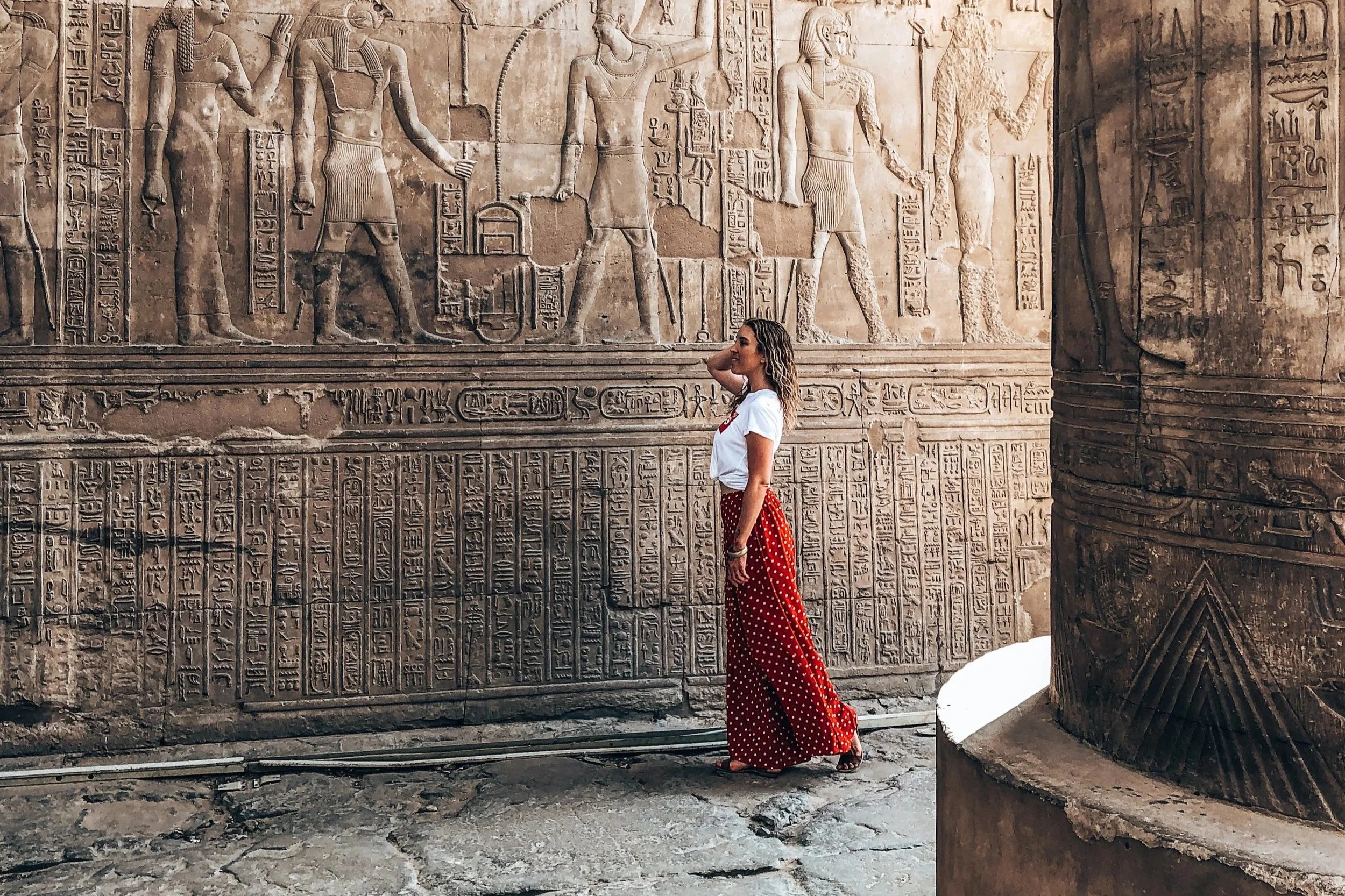
A good Egyptologist can help you understand hieroglyphics.
25. Slow down and let the Nile be part of the journey
This might actually be my biggest recommendation.
Don't make your entire Egypt trip about ticking off attractions. Yes, see the pyramids visit the temples, stand in front of Abu Simbel… but give yourself some time to simply experience Egypt.
Sit beside the Nile… watch the sun go down… take a felucca… talk to locals… have a meal that you didn't recognise from a menu at home… wander through a market… sit on the deck of a boat and watch villages pass by.
Some of my favourite memories from Egypt weren't the moments when we were standing in front of the biggest monument. They were the moments when we weren't doing much at all.
More things to see and do in Egypt
If you have more time, there are plenty of other experiences worth considering.
Visit the Citadel of Cairo
The Citadel offers views across Cairo and is home to historic mosques and other important buildings.
Visit Coptic Cairo
Explore the Christian history of Cairo and visit some of the city's historic churches.
Explore the Valley of the Queens
If you've already visited the Valley of the Kings, consider adding the Valley of the Queens to your itinerary.
See the Colossi of Memnon
These enormous statues stand on Luxor's west bank and are an easy addition to a west-bank itinerary.
Visit the Unfinished Obelisk
In Aswan, you can see an enormous obelisk that was abandoned before completion. It's a fascinating insight into how these enormous stone monuments were created.
Visit Elephantine Island
Spend some time exploring this island in the Nile and learning more about the history and culture of the area.
Visit the Nubian Museum in Aswan
If you're interested in understanding Nubian history and culture, this is worth adding to your Aswan itinerary.
Try Egyptian food
Don't leave Egypt without trying local dishes such as:
Taameya
Ful medames
Koshari
Aish baladi
Mahshi
Falafel
Egyptian food is also a great way to experience the country beyond its ancient monuments.
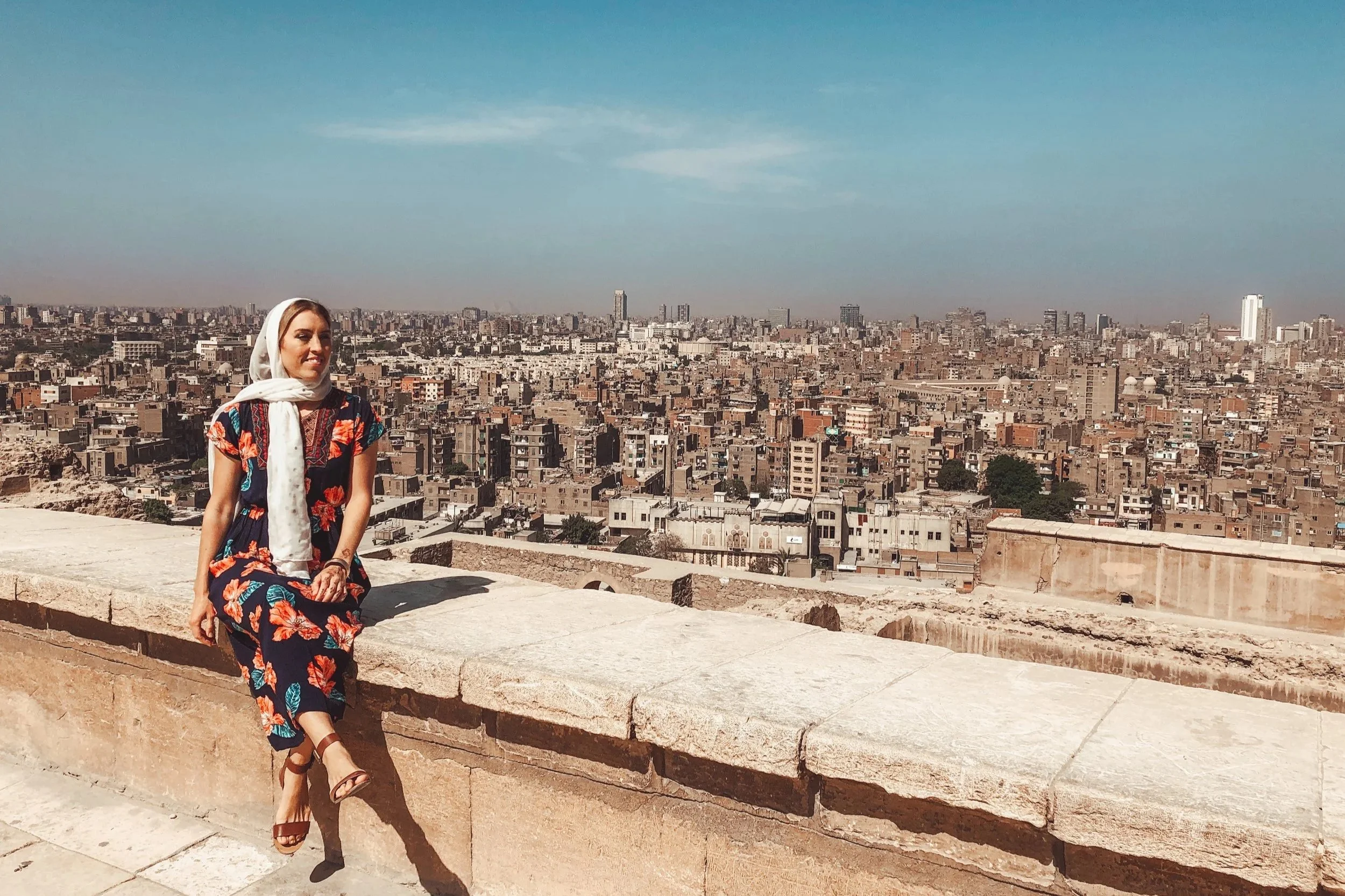
Egypt is a blend of modern and ancient worlds.
Hidden Gems and Lesser-Known Places in Egypt
If you're anything like me, you'll probably want to get beyond the classic tourist trail. Here are a few places I'd consider adding if you have the time.
Saqqara
Often overshadowed by Giza, Saqqara gives you a fascinating look at the development of pyramid construction and ancient Egyptian burial practices.
Dahshur
Home to the Bent Pyramid and Red Pyramid, Dahshur is another excellent addition for anyone fascinated by pyramids but wanting to escape some of the crowds around Giza.
Siwa Oasis
A remote oasis in Egypt's Western Desert with a very different atmosphere from Cairo and the Nile Valley.
White Desert
Surreal white rock formations rising from the desert make this one of Egypt's most unusual landscapes.
Kalabsha Temple
Located south of Aswan, Kalabsha is one to investigate if you want to explore beyond the standard Nile itinerary.
Elephantine Island
A slower-paced way to experience the Nile and learn more about Nubian history and life around Aswan.
Valley of the Queens
Often overshadowed by the Valley of the Kings, this site offers another perspective on ancient Egyptian burial practices.
How many days do you need in Egypt?
This depends heavily on how much of the country you want to see.
5 days in Egypt
Focus on:
Cairo
Giza
Pyramids
Sphinx
One or two Cairo attractions
This gives you a taste of Egypt but will feel fast.
7 days in Egypt
Consider:
Cairo
Giza
Luxor
Valley of the Kings
Karnak
Nile experience
This is a good starting point for a first trip.
10 days in Egypt
With 10 days, you can start combining:
Cairo
Giza
Luxor
Nile
Aswan
Abu Simbel
You'll still need to plan your transport carefully.
14 days in Egypt
This gives you much more breathing room.
You could include:
Cairo
Giza
Saqqara
Dahshur
Luxor
Valley of the Kings
Karnak
Edfu
Kom Ombo
Aswan
Philae
Nubian village
Abu Simbel
Felucca
And if you're willing to move beyond the classic route, you could consider Alexandria, Siwa or the desert.
Read my 20 Things I Wish I Knew Before Visiting Egypt for the practical lessons I learned during my trip.
How I would plan an Egypt trip
If I were planning another Egypt trip, I'd divide the country into a few key experiences rather than trying to see absolutely everything.
Cairo + Giza
For the modern city, museums and pyramids.
Luxor
For the temples, tombs and ancient history.
Nile
For slowing down and experiencing the landscape.
Aswan
For Nubian culture, islands and a different pace.
Abu Simbel
For one of the most impressive ancient sites in the country.
Then I'd add one or two experiences that weren't simply about sightseeing. For me, that would be a felucca, a local village experience and plenty of time beside the Nile.
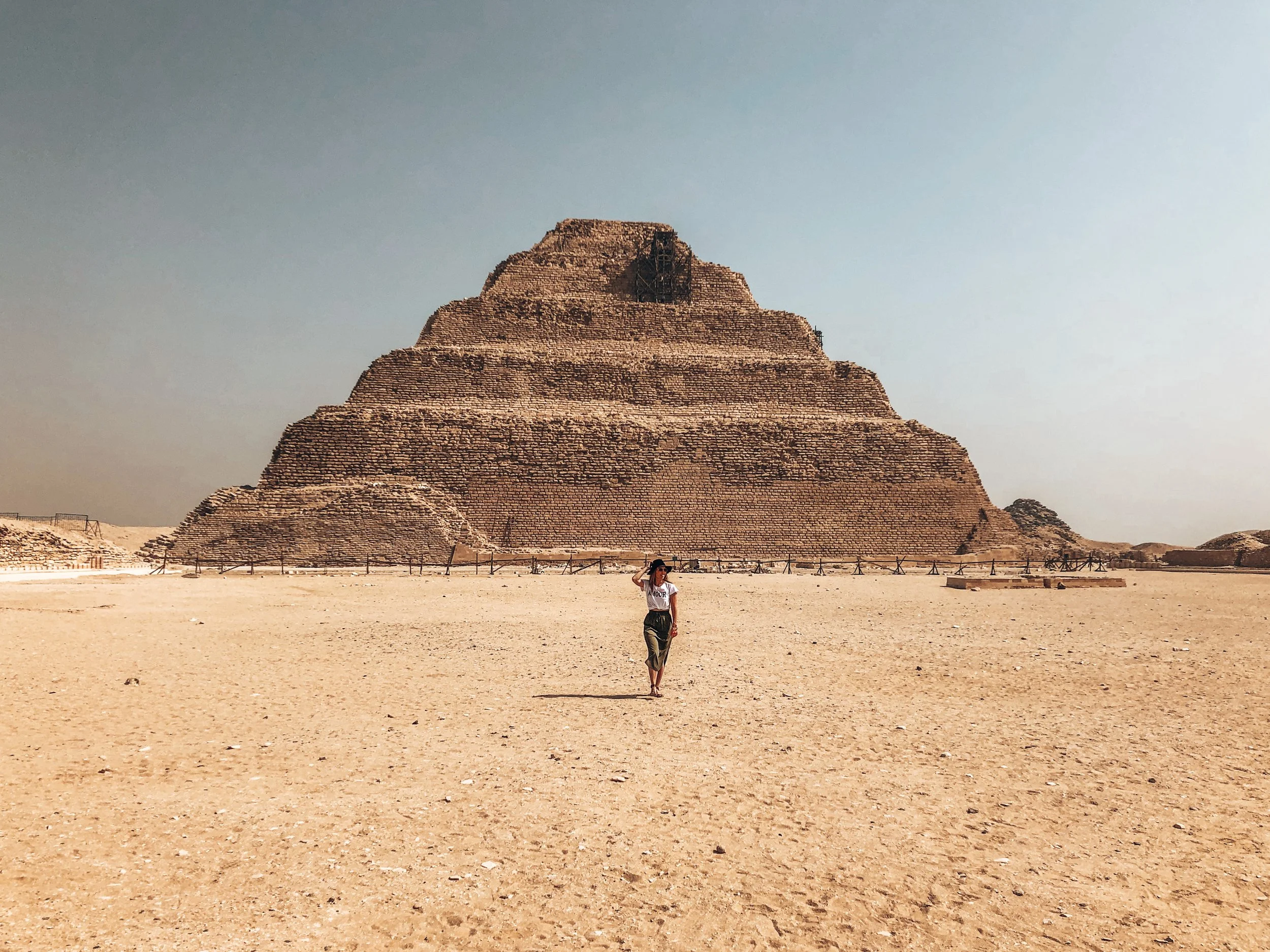
Exploring some of the lesser known pyramids.
A few things I wish I'd known before visiting Egypt
Egypt can be an incredible destination, but it isn't always an easy one.
There can be long travel days. Tourist sites can be busy. Markets can be intense. You'll encounter different cultural expectations. Photography rules can vary. And depending on your itinerary, you'll spend a surprising amount of time travelling between destinations.
I personally felt less comfortable with safety in Egypt than I had in many other countries I'd travelled to. That's my experience, not a universal assessment of Egypt, and conditions can change.
If you're planning a trip, check the latest government travel advice before you go and make sure you understand the current situation in the places you're visiting.
I'd also recommend thinking carefully about how you want to travel. For my first trip, travelling with a group and an experienced local guide gave me reassurance and made navigating the country much easier.
So, what are the best things to see and do in Egypt?
Don't visit Egypt simply to tick off the pyramids, temples and tombs. Those places are incredible, and they deserve a place on your bucket list. But some of my favourite moments happened in between them… sleeping on a felucca instead of a five-star hotel, watching the sun rise over the Nile, sitting around a bonfire with locals, learning to recognise hieroglyphics, wandering through a colourful village, laughing with people I'd met only days earlier, and simply sitting on the river watching Egypt drift past.
That's what turned Egypt from a list of famous places into an actual travel experience for me. Because the best Egypt itinerary isn't necessarily the one that fits in the most attractions. It's the one that gives you enough time to actually experience the country.
And if Egypt has been sitting on your bucket list for years, maybe it's time to stop dreaming about the pyramids and start planning the trip.
Planning an Egypt trip?
Start with my 20 Things I Wish I Knew Before Visiting Egypt for the practical lessons I learned along the way.
And if you're looking for a completely different way to experience the country, read Sailing the Nile on a Felucca: My Unforgettable Egypt Adventure.
Because sometimes the best travel experiences aren't the ones you planned months in advance. Sometimes they're the ones you say yes to when you're standing at the edge of the unknown.