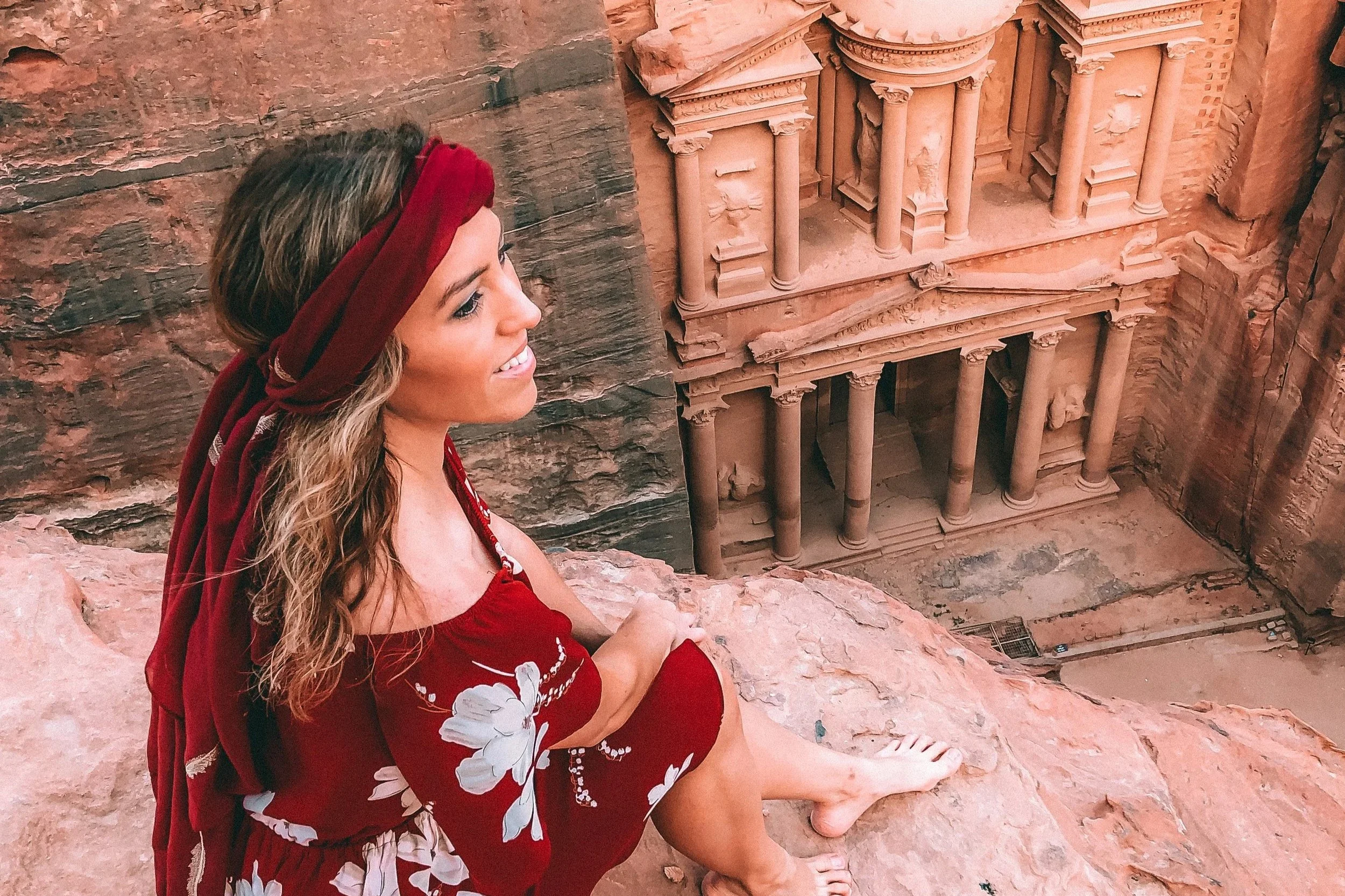
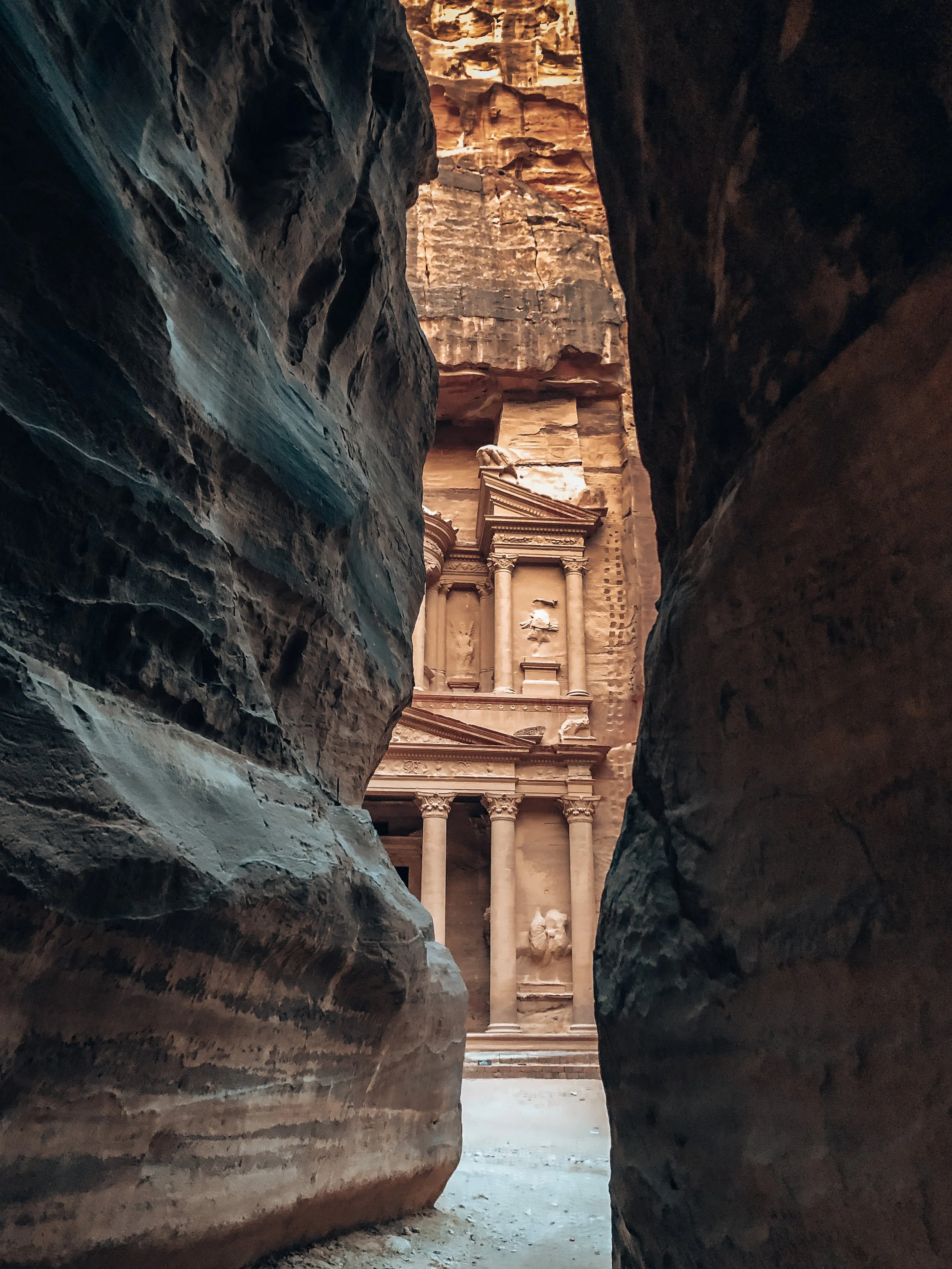
The Treasury from a new perspective.
Petra was the whole reason I travelled to Jordan.
I’d seen it splashed across documentaries, travel feeds, and blockbuster films like Indiana Jones and the Last Crusade. And yet… nothing prepares you for seeing Petra in real life. It doesn’t feel real. It feels carved out of imagination, except people genuinely still live here. That contrast is what makes Petra so powerful.
We stayed in the town of Petra (Wadi Musa) for a couple of nights before entering the site, and I’m so glad we did. This isn’t a “pop in for a few hours” kind of place. Petra is huge. Monumentally huge.
Over two full days, we walked 26 kilometres… and still felt like we’d barely scratched the surface.
Where Is Petra, Jordan?
Petra is located in southern Jordan, just outside the modern town of Wadi Musa, which literally translates to Valley of Moses.
It sits between the Red Sea and the Dead Sea, tucked into a rugged desert landscape of sandstone mountains and hidden valleys. On a map, Petra doesn’t look particularly large… but once you’re inside it, you quickly realise this ancient city sprawls far beyond what most people imagine.
Petra’s remote location is part of what made it so powerful, and what allowed it to remain hidden from the Western world for centuries.
A Brief (But Fascinating) History of Petra
Petra was established as early as 300 BC by the Nabataeans, a highly advanced Arab civilisation who built an entire city by carving it directly into sandstone cliffs.
Not building on the rock… carving into it.
That alone is mind-blowing.
The Nabataeans were master traders, controlling vital trade routes that connected Arabia, Egypt, and the Mediterranean. Petra became incredibly wealthy thanks to the trade of spices, incense, silk, and precious goods… and that wealth is what funded the jaw-dropping architecture you see today.
Even more impressive?
They engineered an advanced water management system in one of the harshest desert environments on earth… using dams, channels, and cisterns to collect and store rainwater. That’s how an entire city was able to flourish where it seemingly shouldn’t have.
Petra eventually declined when trade routes shifted, and earthquakes damaged parts of the city. By the time it was “rediscovered” by a Swiss explorer in 1812, it had been largely forgotten by the outside world.
Today, historians estimate that over 80% of Petra is still unexcavated.
What you see now? That’s just the beginning.
Why Petra Is One of the Most Unique Places on Earth
Petra isn’t just historically important, it’s emotionally powerful. Here’s why it stands apart from other ancient sites:
It’s a City Hidden in Stone
Temples, tombs, homes, theatres… all carved into rose-coloured sandstone cliffs that change colour throughout the day.
It’s Still Being Discovered
Only around 15-20% of Petra has been excavated. Most of the city is still buried underground. You’re walking through history that is literally still unfolding.
It’s a Living Landscape
This isn’t a fenced-off ruin. Bedouin families have lived in and around Petra for generations. The land still breathes, works, and evolves.
It Looks Unreal - Because It Almost Is
Petra has featured in countless films and documentaries, yet standing there feels surreal. Like you’ve stepped into another world.
Petra Isn’t Just a Photo - It’s a Feeling
It’s easy to think of Petra as “that place with the Treasury”.
But Petra is:
Tombs carved into cliffs
Ancient theatres and temples
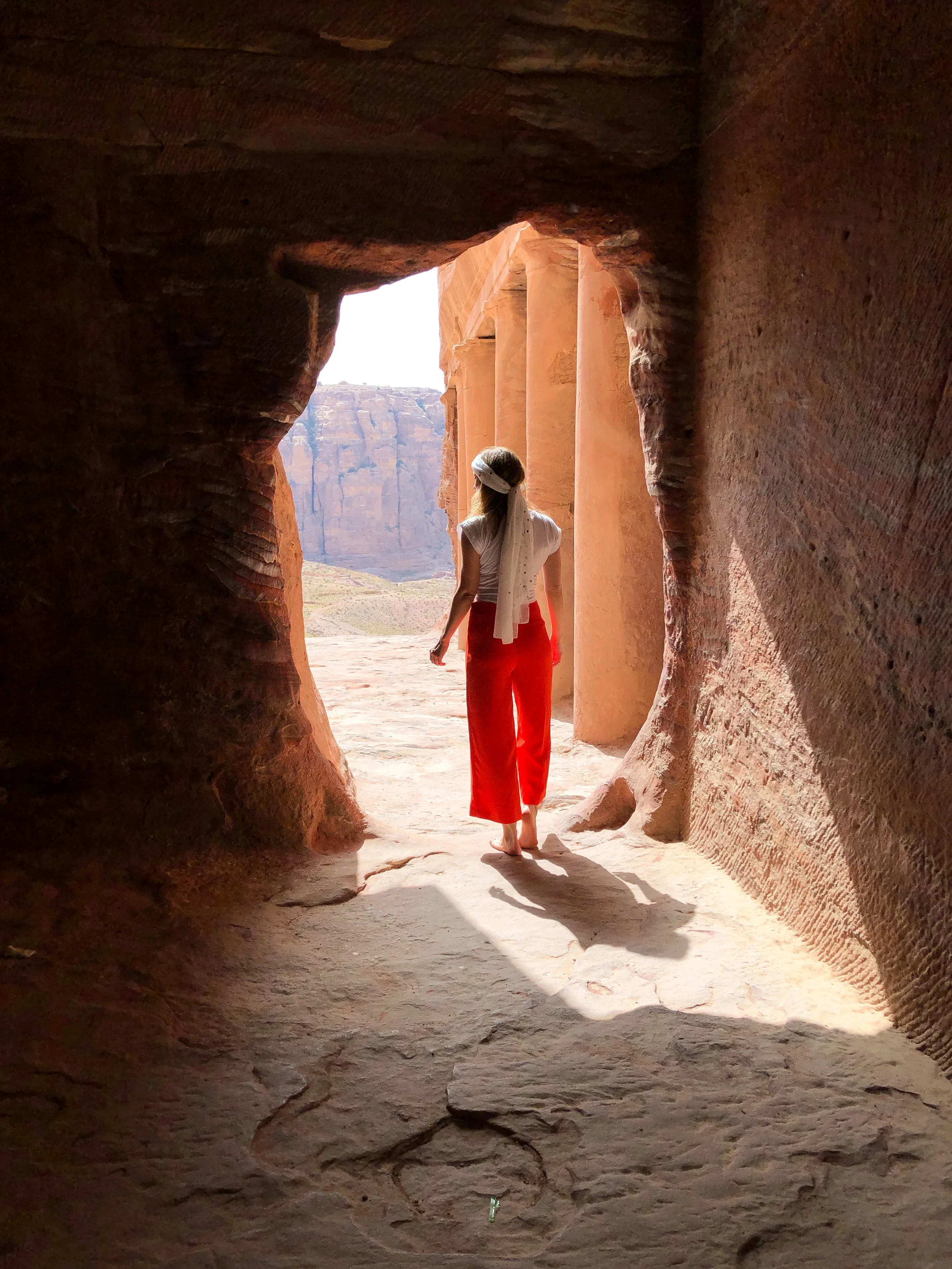
Caves you can step inside
Endless staircases leading to quiet viewpoints
A living landscape shaped by thousands of years of human presence
It’s history you don’t just read about, you walk through it.
And when you finally stand in front of the Treasury… whether alone at sunrise or surrounded by travellers from around the world… there’s a moment where everything goes quiet.
That’s when it hits you. This place is real. And you’re standing inside it.
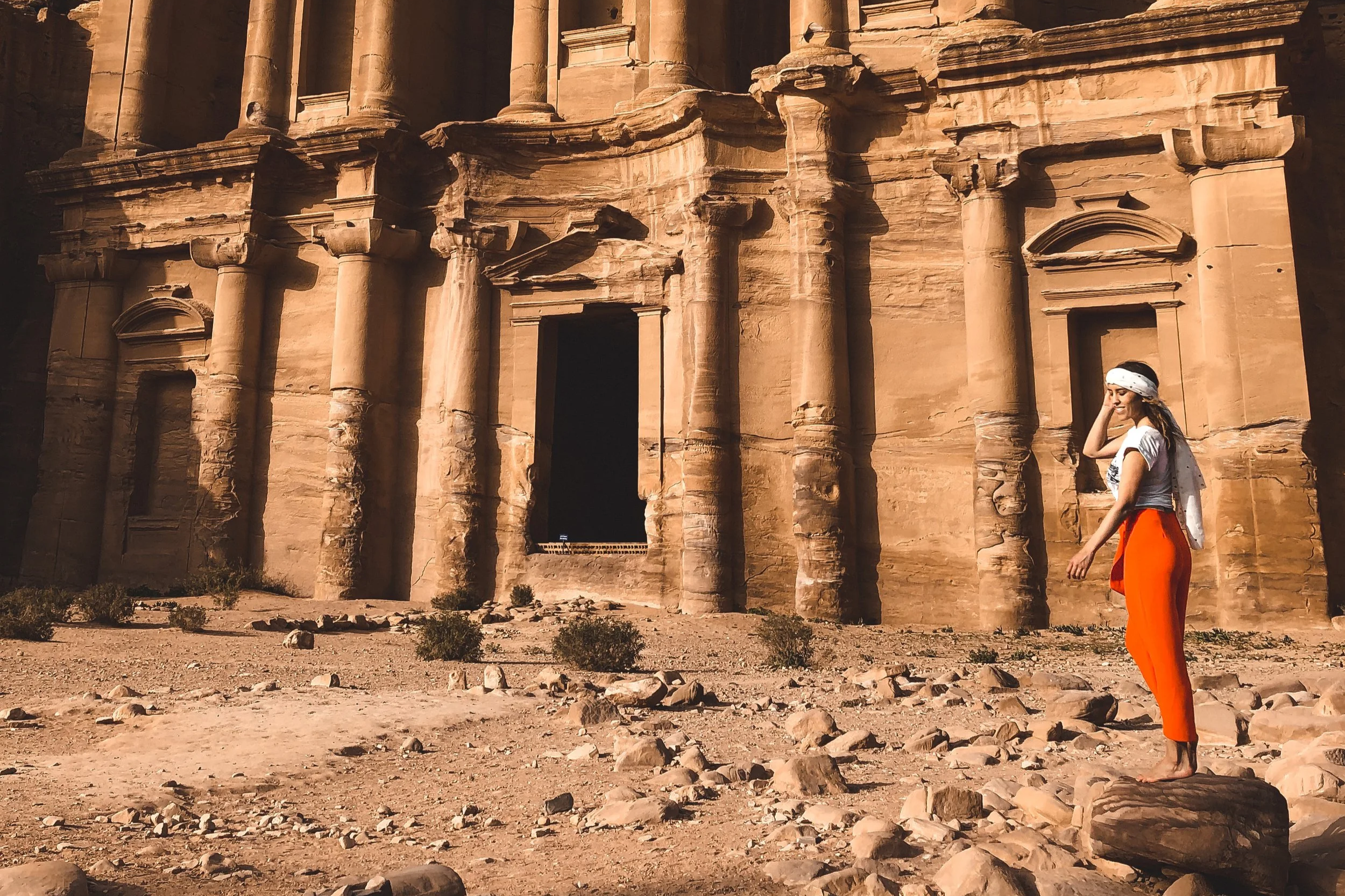
The Monastery is a bit more of a hike, but absolutely worth it.
What You Need to Know Before Visiting Petra
Petra Is Way Bigger Than You Think
From the main gates, it’s about 1 kilometre just to reach the first major site - the iconic Treasury.
From there, it’s roughly 5-6 kilometres (one way) to reach the Monastery.
There’s climbing. There’s scrambling. There’s heat. And there’s very little shade in the middle of the day.
Come prepared… physically and mentally.
Petra Gets Hot. Really Hot.
Depending on the time of year, Petra can be scorching. Sun protection, breathable clothing, layers for early mornings, and lots of water are non-negotiable.
Early mornings and late afternoons are cooler, quieter, and offer the best light, which leads me to…
How to Actually Experience Petra (Without the Crowds)
Day One: Explore, Acclimatise, Don’t Rush
We arrived around 11am… peak time… with a small group tour. Petra was packed. Hundreds… if not thousands… of people.
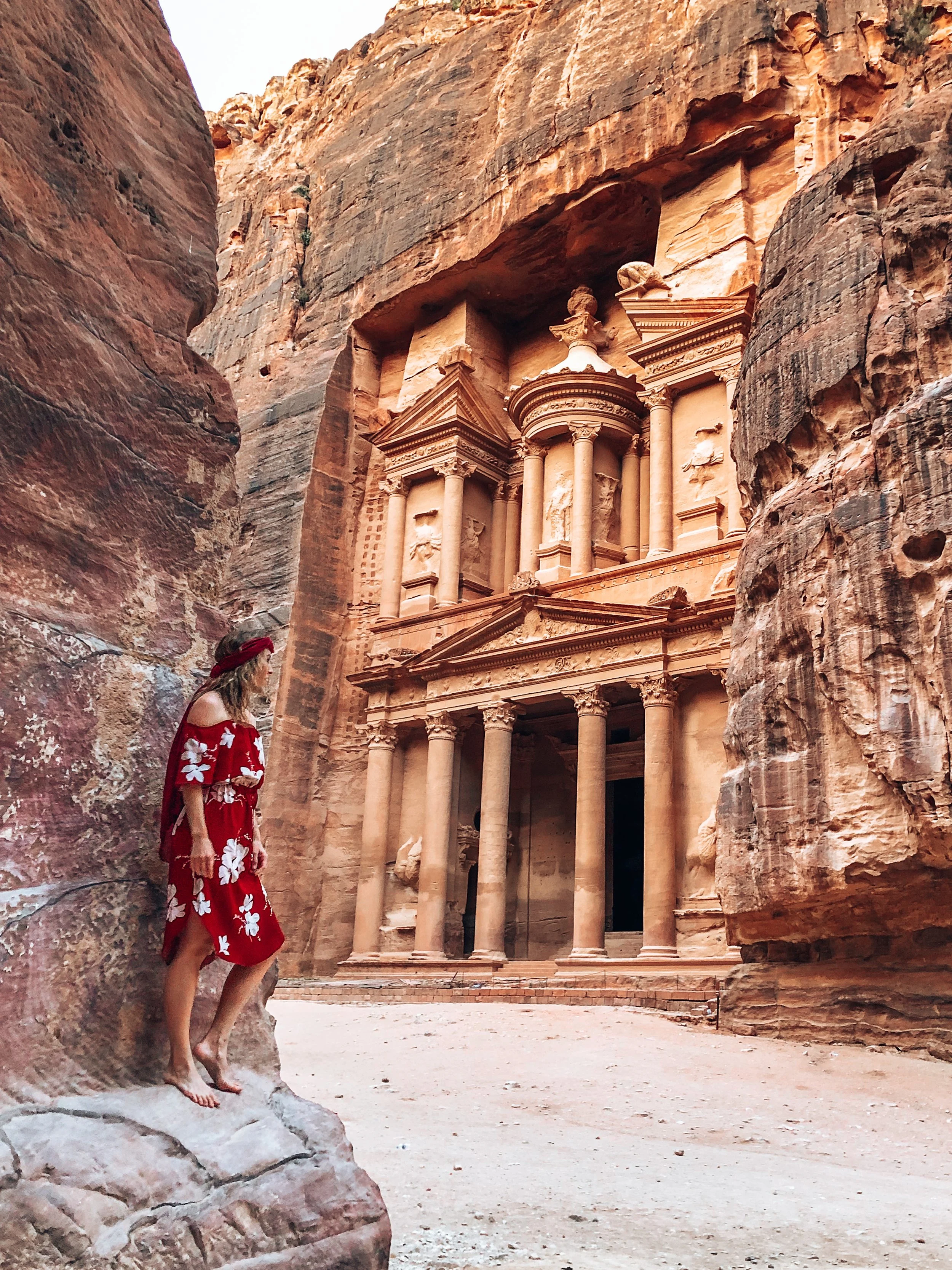
And yet, the walk through the Siq (the narrow rock gorge leading to the Treasury) still gave me goosebumps. When the Treasury finally revealed itself through the crack in the rock?
Jaw. On. The. Floor.
Yes, it was crowded. Yes, it was hot. And yes, it was still absolutely mesmerising.
Top tip: Use the busiest part of the day to explore:
Royal Tombs
Nabataean Theatre
Shaded caves and carved tombs
Save the long hikes for later.
The Monastery: Quieter, Wilder, Worth Every Step
The Monastery was one of my favourite places in Petra, possibly because fewer people make the effort to get there.
Even during peak hours, it felt calmer. More spacious. More magical.
And the reward? Photos with no one else in them… something you’ll almost never get at the Treasury.
Stay Until Closing (Then Do This Instead of Petra by Night)
As Petra closes, alarms sound to guide visitors out. Most people leave immediately.
We didn’t.
We stayed until the last possible minute, which meant:
Fewer people
Better light
A completely different energy
Petra by Night?
There’s a night time experience in Petra. Honestly… it wasn’t worth it for us. The lantern-lit walk in is pretty, but the experience felt underwhelming after two huge days of walking. If you’re exhausted, skip it and save your energy for the next morning.
The Ultimate Petra Hack: Beat Everyone to the Treasury
This was hands down the best decision we made.
Instead of paying locals to access Petra after hours, we:
Arrived before sunrise
Lined up early
Power-walked (okay… ran) the entire kilometre
Result? We were the very first people at the Treasury.
We had 5-10 minutes completely alone. No crowds. No noise. Just us… and this ancient wonder.
If you do one thing in Petra, do this.
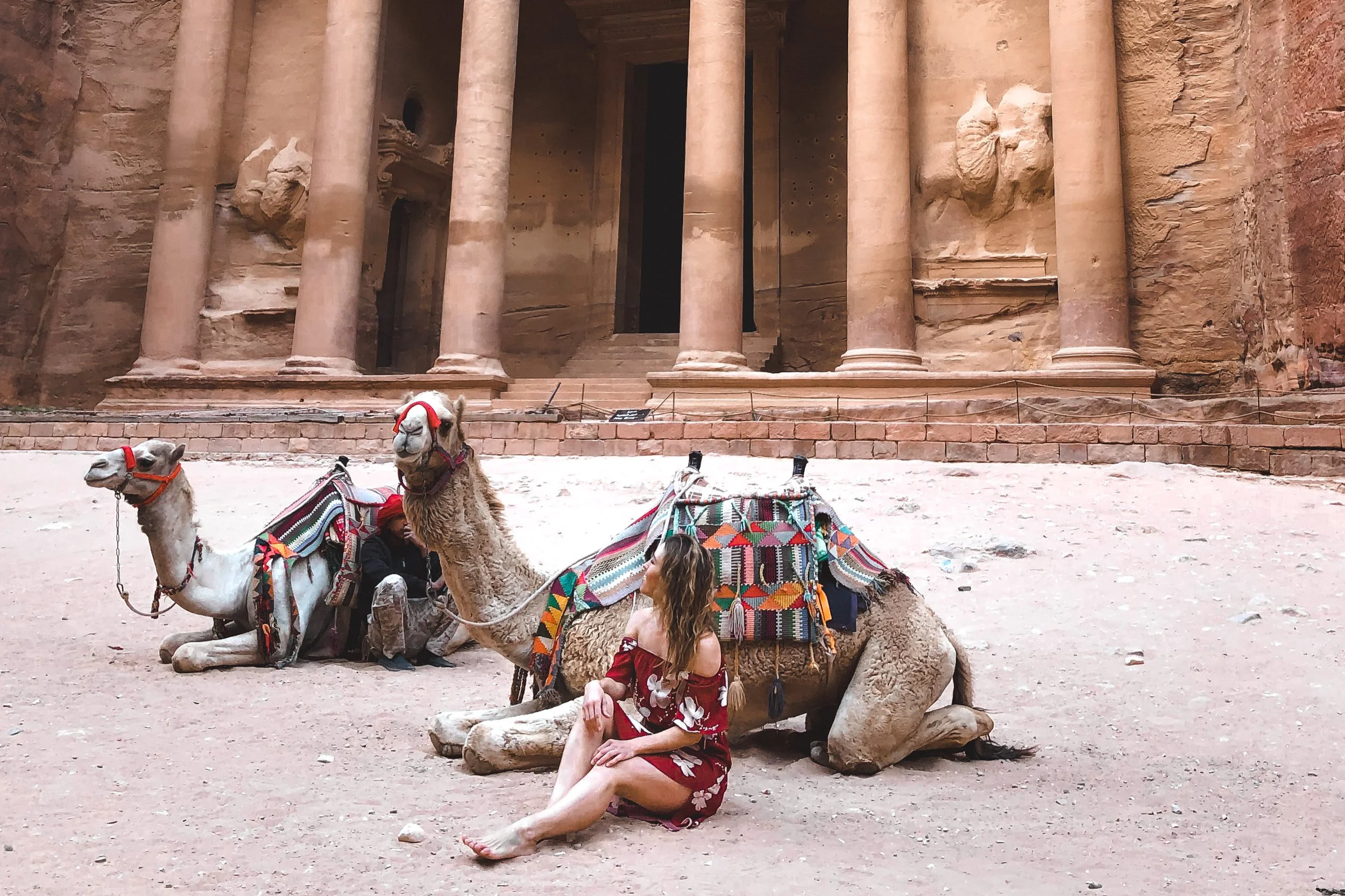
Camels are beautiful. Love the animals, but don’t support animal tourism.
Photography Tips for Petra
The rock colour changes throughout the day - from rose to orange to deep red
Early morning = soft light + fewer people
Late afternoon = dramatic shadows + warmer tones
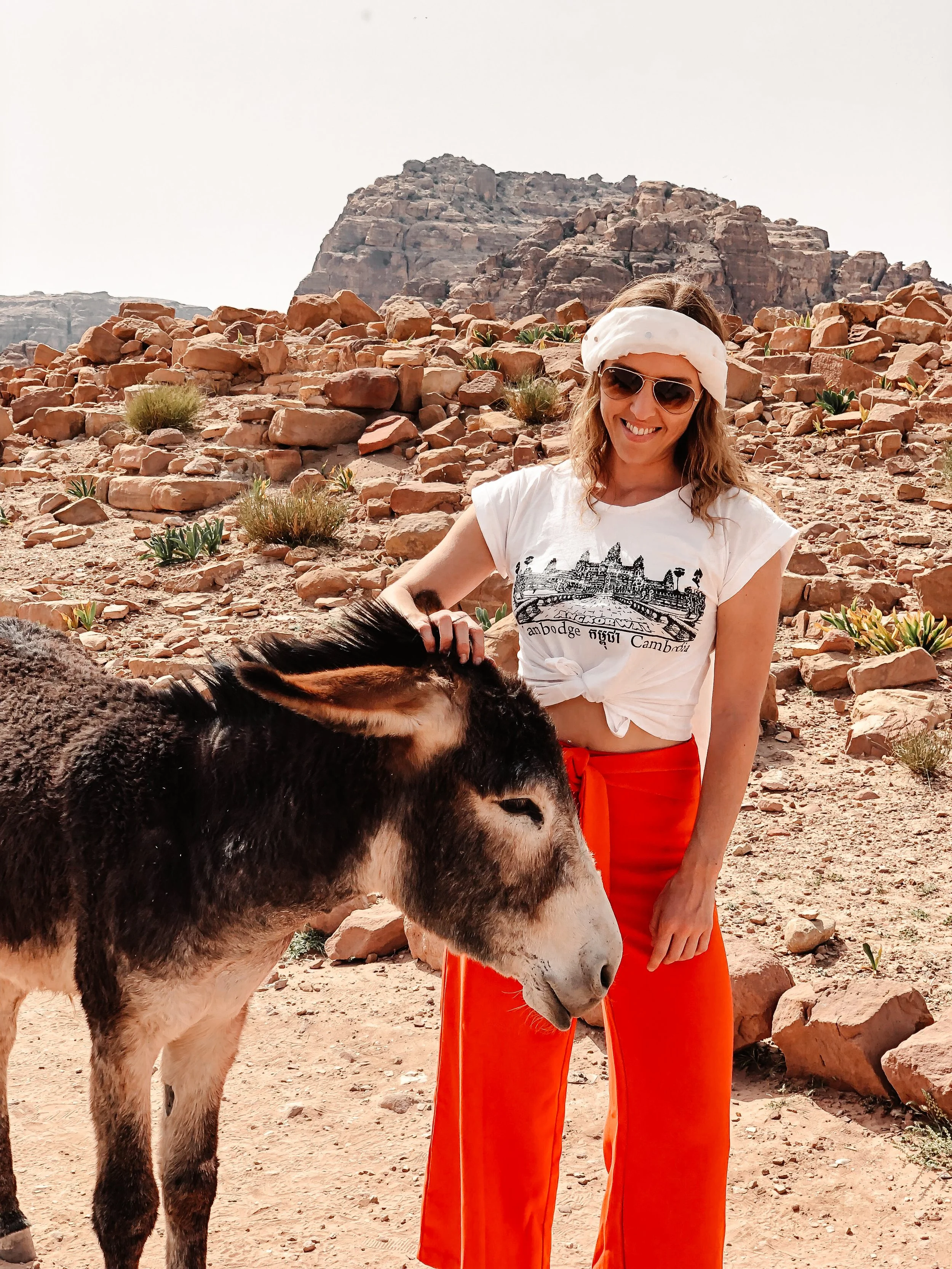
Wear runners for walking, then slip them off for photos (yes, barefoot works beautifully)
Important Ethical & Safety Notes
Please Don’t Support Animal Tourism
There are donkeys and horses throughout Petra, and many are mistreated. Do not ride them. Do not pay for photos. Loving animals also means not funding their exploitation.
Bedouin Invitations: Proceed With Caution
You may be invited into Bedouin homes or offered “secret viewpoints.” Some travellers have incredible experiences. Others haven’t. As a woman, especially solo, trust your instincts and prioritise safety.
Flash Flooding Is Real
Petra can become extremely dangerous in wet weather. Flash floods have tragically taken lives. Always check conditions and follow official guidance.
What to Wear & Bring to Petra
Comfortable runners (you’ll walk A LOT)
Layers for early mornings and evenings
Scarf for sun + modesty
Sunscreen + hat
Plenty of water
Offline map downloaded (and grab a paper map at entry)
Where to Stay Near Petra
Stay in Wadi Musa, close to the entrance so you can get there early.
Recommended accommodation styles:
Boutique hotels near the gate (best for early starts)
Mid-range hotels with breakfast included
Local guesthouses for a quieter, more authentic stay
Recommended stays:
Mövenpick Resort Petra - Located directly opposite the Petra Visitor Centre, this is one of the most convenient places to stay. A comfortable, upscale option ideal for early starts and easy returns after long days exploring.
Crowne Plaza Resort Petra by IHG - Set high above the valley with sweeping views, this resort-style hotel offers spacious rooms and a relaxed atmosphere, perfect for unwinding after a big day in Petra.
Petra Moon Luxury Hotel - A great mid-range choice within walking distance of the Petra entrance, with modern rooms and a generous breakfast… practical, comfortable, and great value.
Petra Guest House - Right next to the Petra gates, this charming hotel offers a more intimate, traditional stay and unbeatable proximity for sunrise and sunset visits.
Book well in advance, Petra accommodation fills fast.
FAQs About Visiting Petra
Is Petra safe for women?
Yes, Petra is generally safe, especially during the day and within the main tourist areas. That said, solo women should exercise caution with invitations off official paths and avoid isolated situations.
When is the best time to visit Petra?
Spring (March-May) and Autumn (September-November) offer the best balance of weather and crowd levels. Summer is extremely hot. Winter can be cold and wet.
How many days do you need in Petra?
At least 2 full days if you want to explore properly without rushing.
Can you go inside the Treasury or Monastery?
No, both are sealed to protect them. Entry is only permitted during emergency evacuations (like flash floods).
Is Petra Worth It?
Absolutely. Without question. One hundred times yes.
Petra is physically demanding, emotionally powerful, and visually overwhelming… in the best possible way. It’s not an easy destination, but it’s an unforgettable one.
If you plan it right, respect the place, and move with intention… Petra will leave its mark on you long after the dust has washed from your shoes.
Continue planning your Jordan itinerary:
Disclosure: This blog includes affiliate links. I will be paid a commission if you use these links to make a purchase.