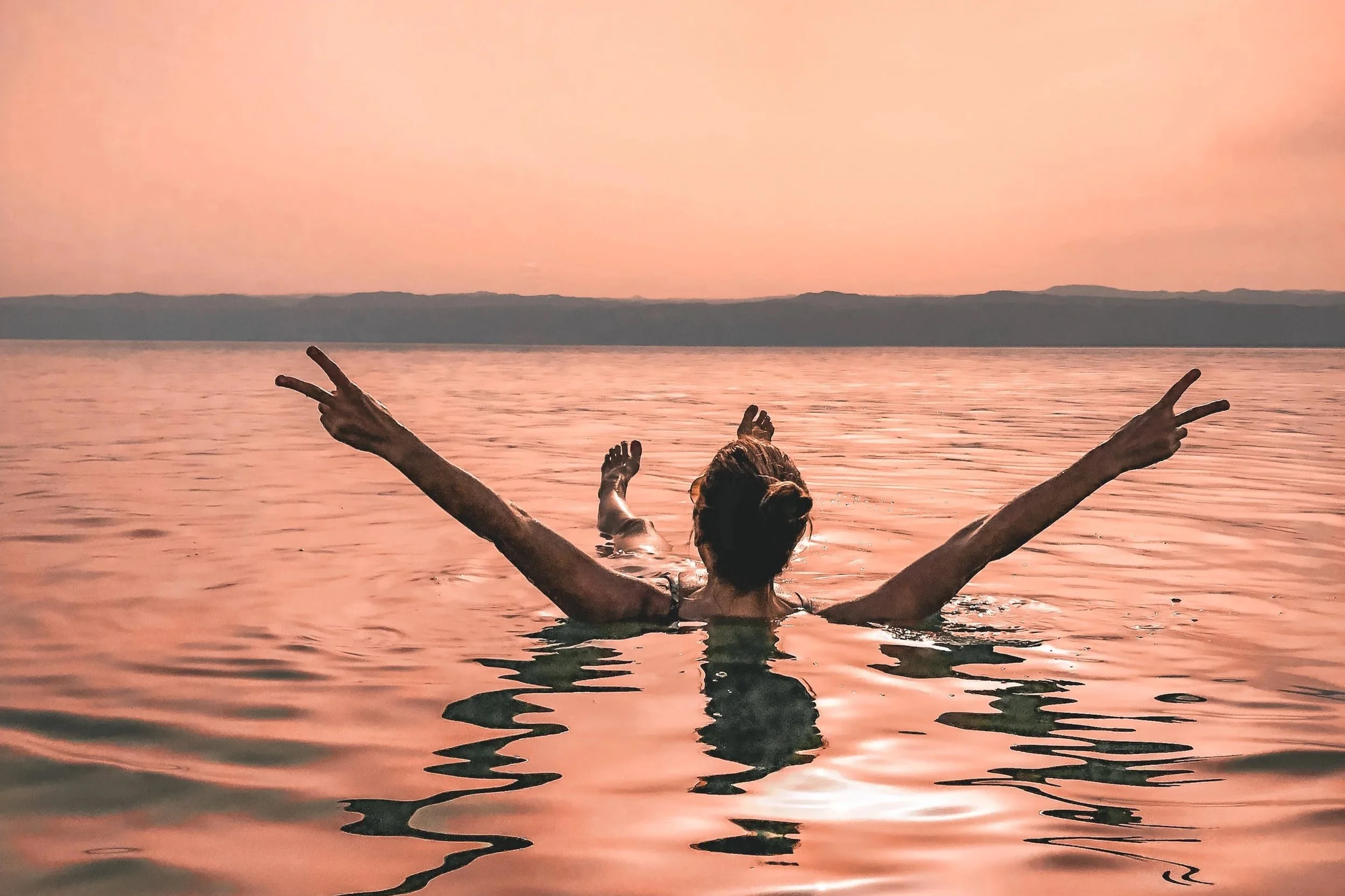
The unique feeling of floating on the Dead Sea in Jordan, with Israel on the horizon.
There are places you visit because they’re jaw-droppingly beautiful… and then there are places you visit because the experience is so wildly unique, it feels like you’ve stepped onto another planet.
The Dead Sea is very much the latter.
I visited the Dead Sea while travelling through Jordan, and even before getting in the water, I knew this wasn’t going to be your average swim. The air feels heavier, the landscape is stark and dramatic, and the water itself looks… a little murky. Not exactly inviting.
But then you step in, and everything you think you know about water gets flipped upside down.
Where Is the Dead Sea?
The Dead Sea sits in the Middle East, bordered by Jordan to the east and Israel to the west. It’s also the lowest point on Earth, sitting more than 430 metres below sea level.
When I was floating there, the Israeli shoreline felt so close it was surreal, like you could almost swim across (spoiler: you absolutely should not).
Traveller Tip: The Dead Sea is perfectly paired with 1 or 2 nights near Petra. Learn more about How to Visit Petra, Jordan.
Why Is It Called the Dead Sea?
Despite the name, the Dead Sea isn’t technically a sea… it’s a salt lake. And it’s salty. We’re talking around 10 times saltier than the ocean.
That extreme salt content means most plants, animals, and microorganisms simply can’t survive here… hence the name Dead Sea. But for humans? That salt creates one of the strangest sensations you’ll ever experience in water.
Why the Dead Sea Belongs on Your Bucket List
You don’t go to the Dead Sea because it’s beautiful. You go because there is nowhere else on Earth like it.
Here’s why it’s worth the stop:
You can float effortlessly without trying
It’s the lowest place on the planet
The mineral-rich water and mud are famous worldwide
It’s equal parts hilarious, humbling, and unforgettable
Floating on your back, legs popping out of the water like corks, laughing uncontrollably with your travel mates? That alone makes it bucket-list worthy.
What It’s Really Like to Float in the Dead Sea
Walking into the water is easy enough. The edges are lined with sharp salt crystals, so water shoes help, but once you’re in… no dramas.
The real challenge starts when you lift your feet off the ground.
Your body immediately floats. Not gently. Not slowly. It’s like the water refuses to let you sink. Trying to roll over, adjust your position, or stand back up again becomes a full-body comedy routine.
Your feet want to float. You want to stand. The water wins.
We laughed so much we cried… mostly at each other, flailing around like confused turtles.
The Famous Dead Sea Photo (Yes, That One)
You’ve seen it everywhere… Someone floating effortlessly on their back, legs crossed, calmly reading a newspaper.
Classic. Iconic. Completely staged.
We didn’t even bring a newspaper (rookie error), so we ended up borrowing one from another traveller. Getting into position? Way harder than Instagram makes it look. Staying there without tipping sideways? Even harder.
Still worth it.
VERY Important Things to Know Before You Get In
Please learn from my pain.
1. Cuts + Salt = Absolute Chaos
If you have any cuts, grazes, or cracked skin, you’ll feel it. Immediately. Intensely.
I had dry, cracked hands at the time and they lit up like I’d dunked them in fire.
You will also discover cuts you didn’t even know existed.
2. Do NOT Put Your Head Underwater
Ever. Not even a little bit.
Salt in your eyes here is next-level agony. I watched people ignore warnings, rinse mud off their faces with sea water, and instantly scream in pain. Locals eventually came over with fresh water… but only after a brief “we told you so” moment.
3. Don’t Stay In Too Long
You’ll feel like you could float for hours, but between the stinging and the salt drying your skin, short sessions are best.
The Dead Sea Mud Experience
Another popular thing to do is slather yourself in thick, black Dead Sea mud, said to have healing and beauty benefits thanks to its mineral content.
We personally skipped it, but if you do try it:
Avoid your face and eyes
Rinse off with fresh water only
Follow the rules (seriously)
Watching people ignore this advice was… memorable.
What Happens When You Get Out
This is when the salt situation really hits home.
As the water evaporates, salt literally cakes onto your skin. Your legs and arms start to look flaky, almost like fish scales. It’s wild, and slightly unsettling.
A proper shower afterwards isn’t optional. It’s essential.
Best Time to Visit the Dead Sea
Spring (March-May) and Autumn (September-November) are ideal
Summer can be brutally hot, especially at such a low elevation
Winter is cooler but still comfortable for floating
Early morning or late afternoon is best to avoid crowds and intense heat.
Where to Stay at the Dead Sea (Jordan Side)
If you can, stay at a resort with private Dead Sea access. It makes the experience calmer, cleaner, and far more enjoyable.
Most resorts include:
Direct access to the water
Freshwater showers nearby
Mud stations
Sun loungers and shade
Where I’d stay if I visited again:
Kempinski Hotel Ishtar Dead Sea - A luxurious beachfront resort with private Dead Sea access, multiple pools, and elegant rooms overlooking the water.
Mövenpick Resort & Spa Dead Sea - A beautiful village-style resort featuring lush gardens, a private beach, a world-class spa, and stunning Dead Sea views.
Hilton Dead Sea Resort & Spa - A modern beachfront resort offering private Dead Sea access, stylish rooms, multiple pools, and exceptional dining options.
Perfect if you want to float, laugh, rinse, repeat.
Is the Dead Sea Worth It?
Absolutely. Not because it’s beautiful, but because it’s unlike anything else you’ll ever experience.
It’s awkward. It’s hilarious. It’s slightly painful. And it’s completely unforgettable.
If you’re building a bucket list filled with experiences that feel otherworldly, strange, and unforgettable… floating in the Dead Sea absolutely deserves a spot.
Continue planning your Jordan itinerary:
Disclosure: This blog includes affiliate links. I will be paid a commission if you use these links to make a purchase.