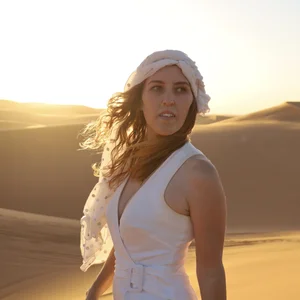
The Ultimate Travel Guide to Jordan: Everything You Need to Know Before You Go
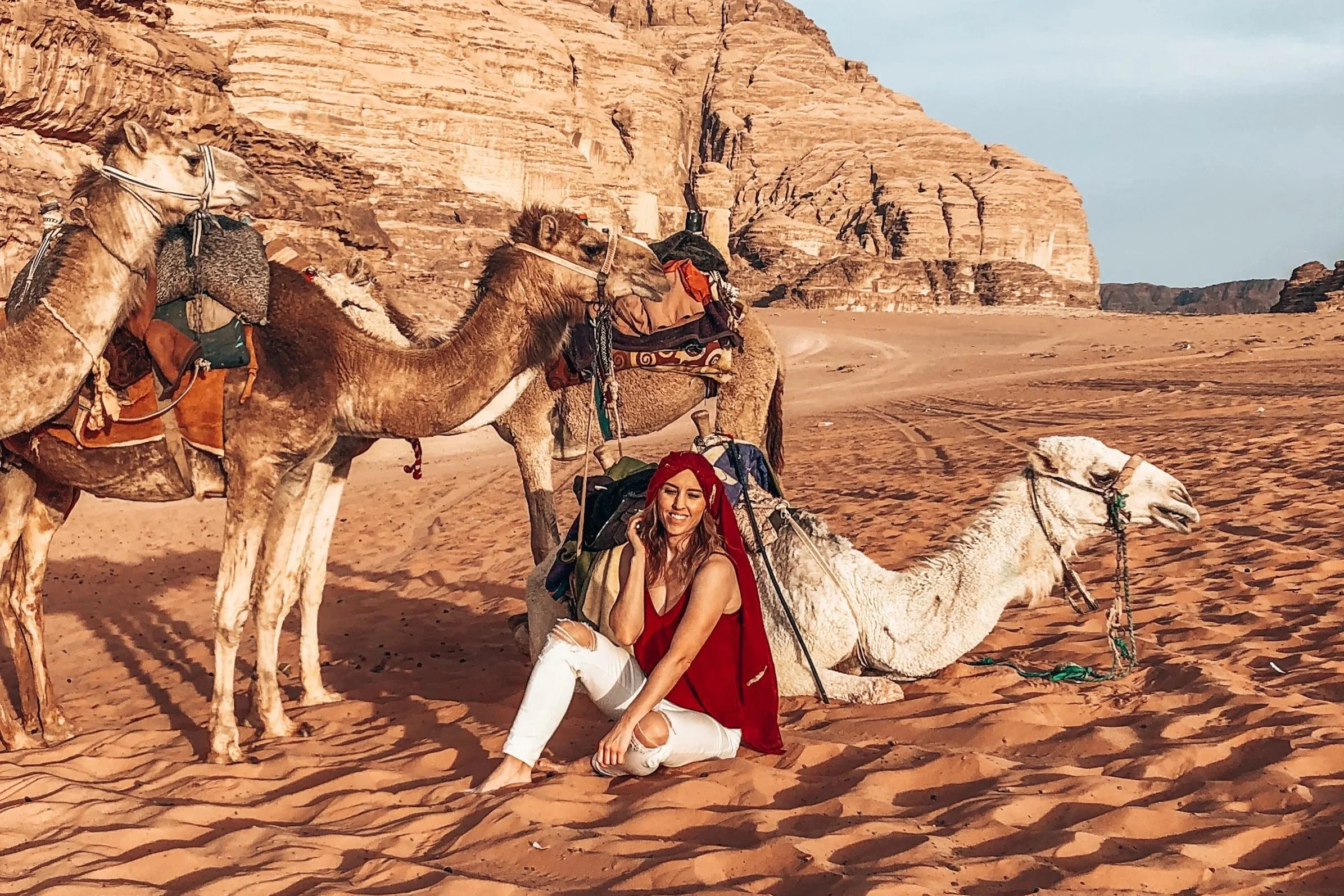
The Wadi Rum desert feels like another world.
Sometimes you explore destinations that continue to surprise you at every turn. Jordan was one of those places for me.
Before visiting, I imagined Petra would be the highlight. Like most travellers, I'd seen the iconic photos of the Treasury carved into rose-red sandstone and assumed that was the reason everyone travelled here.
I couldn't have been more wrong.
Yes, Petra is every bit as breathtaking as you've heard. But Jordan is so much more than a single wonder.
It's wandering in the silence of Wadi Rum at sunrise as camels wander across the red sand dunes. It's laughing uncontrollably while trying (and failing) to stand up in the Dead Sea. It's sharing mint tea with Bedouins beneath desert cliffs. It's wandering Roman ruins with barely another tourist in sight. It's discovering a country that somehow combines thousands of years of history with some of the warmest hospitality you'll ever experience.
Jordan exceeded all of my expectations.
It quickly became one of my favourite countries I've ever travelled to… and one I recommend to anyone looking for an adventure that's rich in history, culture and unforgettable landscapes.
If you're planning your first trip, this guide will walk you through everything you need to know before you go.
Where Is Jordan?
Jordan is located in the heart of the Middle East.
Although relatively small, it shares borders with:
Saudi Arabia
Iraq
Syria
Israel
Palestine
It also has a small stretch of coastline on the Red Sea through the city of Aqaba.
Despite its location in a region that many travellers perceive as unsafe, Jordan has established itself as one of the most welcoming and stable countries in the Middle East, attracting millions of international visitors every year.
Its location also makes it an excellent addition to longer Middle East itineraries, particularly when combined with Egypt, Türkiye, Oman or the United Arab Emirates.
Jordan at a Glance
Capital: Amman
Language: Arabic
Currency: Jordanian Dinar (JOD)
Population: Approximately 11 million
Religion: Islam (predominantly Sunni)
Time Zone: GMT+3
Drive on: the right-hand side
Plug type: C, D, F, G and J (bring a universal adapter)
Why Visit Jordan?
Jordan offers something surprisingly rare. It manages to be adventurous without feeling overwhelming.
Within a single week (or two) you can:
Explore one of the Seven New Wonders of the World
Sleep beneath some of the clearest night skies you'll ever see
Float in the lowest place on Earth
Wander Roman cities older than many European capitals
Experience genuine Bedouin hospitality
Taste incredible Middle Eastern cuisine
Hike through dramatic desert canyons
Visit biblical landmarks
Watch sunrise over landscapes that feel more like Mars than Earth
Few countries pack this much variety into such a compact area.
Driving between destinations rarely takes more than a few hours, making Jordan perfect for travellers who want maximum experiences without constantly packing and unpacking.
Is Jordan Worth Visiting?
Absolutely.
In fact, I'd argue Jordan is one of the world's most underrated bucket-list destinations. Many people think Jordan begins and ends with Petra. In reality, Petra is just one chapter of the story.
The moments I remember most weren't necessarily the famous ones.
They were:
watching the colours change across Wadi Rum at sunrise
hearing absolute silence in the desert
sharing conversations with local Bedouin guides
seeing the stars without any light pollution
laughing while floating in the Dead Sea
discovering ancient ruins with almost nobody else around
Jordan offers those magical travel moments that stay with you long after you've returned home.
Is Jordan Safe?
This is one of the most common questions I get whenever I mention travelling to Jordan.
The short answer? Yes.
Jordan is widely regarded as one of the safest countries in the Middle East for international travellers.
While I felt nervous when I initially landed (this was my very first Middle Eastern country)… during my visit I felt comfortable throughout the country, including while walking around Petra, staying overnight in Wadi Rum and exploring Amman.
Like travelling anywhere, common sense goes a long way.
General Safety Tips
Stay aware of your surroundings
Dress respectfully
Avoid political demonstrations
Take note of local advice
Keep valuables secure
Carry travel insurance
Stay hydrated in the desert
Is Jordan Safe for Solo Female Travellers?
Jordan is generally considered one of the safest destinations in the Middle East for women travelling alone.
That said, cultural expectations differ from many Western countries.
I recommend:
dressing modestly
politely declining unwanted attention
avoiding isolated areas after dark
trusting your instincts
One thing I loved was how welcoming local people were. Hospitality is deeply ingrained within Jordanian culture, and many locals genuinely enjoy helping visitors experience their country.
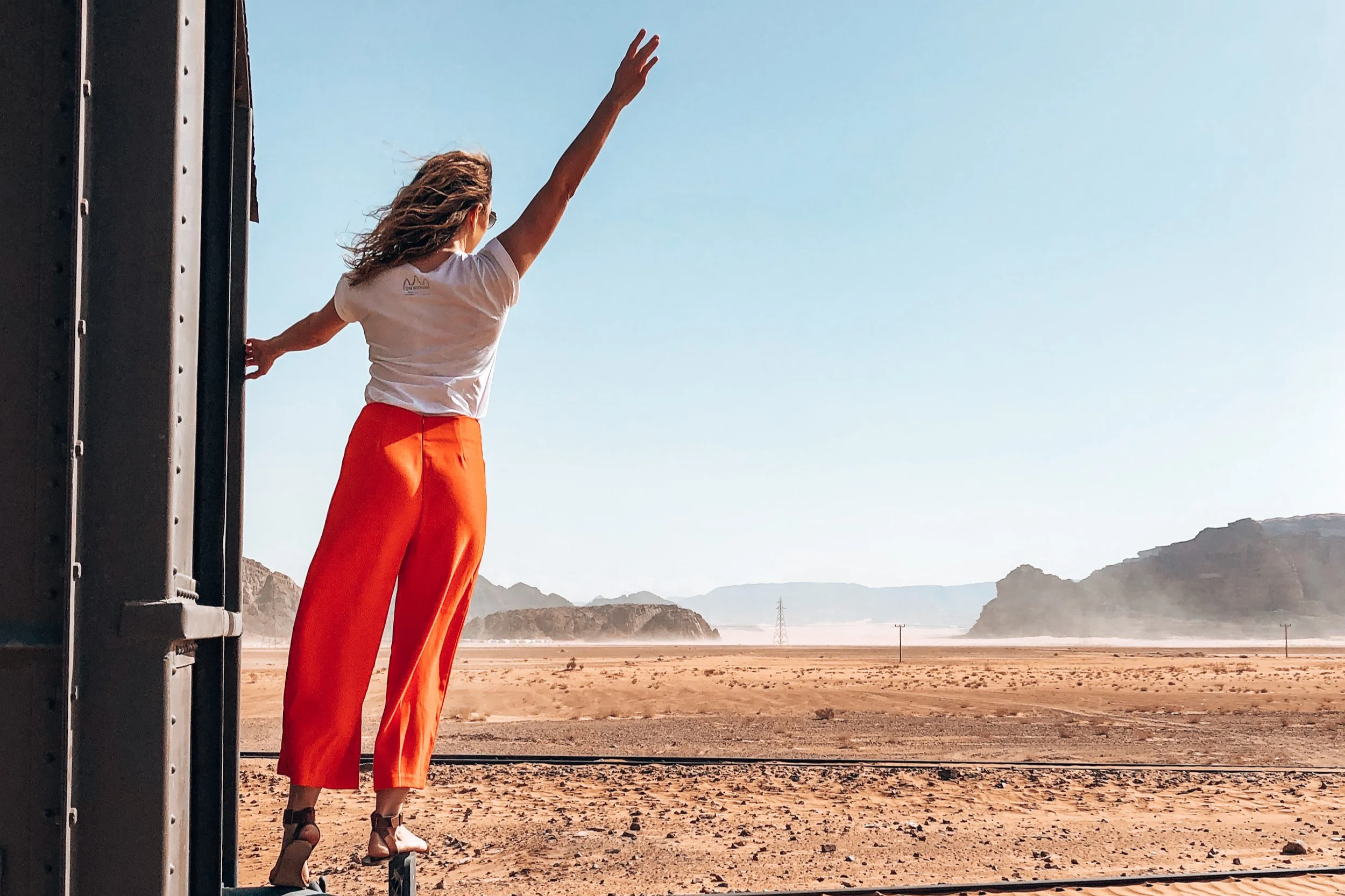
Mirages and dust sweeping through the Wadi Rum desert.
When Is the Best Time to Visit Jordan?
Jordan is a year-round destination, but some seasons are far more comfortable than others.
Spring (March to May)
This is my favourite time to visit.
You'll experience:
pleasant temperatures
green landscapes
wildflowers
comfortable hiking weather
excellent conditions for Petra and Wadi Rum
Average temperatures range between 20-28°C depending on where you are.
Traveller tip: Keep in mind, temperatures can change fast. We experienced 7 degrees C in Amman in late April… and we were not prepared for that kind of cold.
Autumn (September to November)
Another fantastic season.
Expect:
warm days
cooler evenings
fewer crowds
beautiful desert sunsets
Summer (June to August)
Summer can be extremely hot.
Petra regularly exceeds 35°C.
Wadi Rum becomes intensely hot during the middle of the day.
Sightseeing is still possible, but you'll need early starts and plenty of water.
Winter (December to February)
Jordan experiences surprisingly cold winters.
Amman occasionally receives snow.
Petra can become wet.
Wadi Rum nights can drop close to freezing.
However, you'll also encounter:
fewer tourists
beautiful soft light
lower accommodation prices
Read more about the Best Time to Visit Jordan.
How Many Days Do You Need in Jordan?
You could spend months exploring Jordan.
But for most travellers:
5 days
See some of the highlights.
7 days
Perfect for first-time visitors.
10 days
Ideal if you want a slower pace.
14 days
Excellent for adding hiking, diving, nature reserves and hidden gems.
Personally, I think seven to ten days offers the ideal balance between seeing Jordan's iconic attractions and allowing enough time to truly experience them.
Do You Need a Visa for Jordan?
Many nationalities require a visa to enter Jordan, but the process is generally straightforward.
The easiest option for most travellers is purchasing the Jordan Pass, which combines your tourist visa (when eligible) with entry to many of Jordan's top attractions.
Always check the latest visa requirements before travelling, as they can change depending on your nationality.
The Jordan Pass: One of the Best Travel Investments You'll Make
If you're planning to visit Petra… and let's be honest, you probably are… the Jordan Pass is almost always worth buying.
It includes entry to more than 40 attractions, including:
Petra
Jerash
Wadi Rum
Amman Citadel
Roman Theatre
many museums and archaeological sites
For eligible travellers staying at least three nights in Jordan, it also waives the tourist visa fee, making it excellent value.
One of the things I appreciated most was how simple it made the trip. Instead of buying separate tickets at every attraction, I simply scanned my Jordan Pass and kept exploring.
It's one of those small planning decisions that makes travelling feel effortless.
Read more about my Jordan Pass Review: Is the Jordan Pass Worth It?
How to Get to Jordan
The main international gateway is Queen Alia International Airport (AMM), located around 35 kilometres south of Amman.
Direct flights are available from many cities across Europe, the Middle East and parts of Asia.
From Australia, most travellers connect through hubs such as Doha, Dubai or Abu Dhabi before continuing to Amman.
If you're combining Jordan with nearby countries, you can also enter overland via selected border crossings, although border regulations can change, so it's worth checking official advice before you travel.
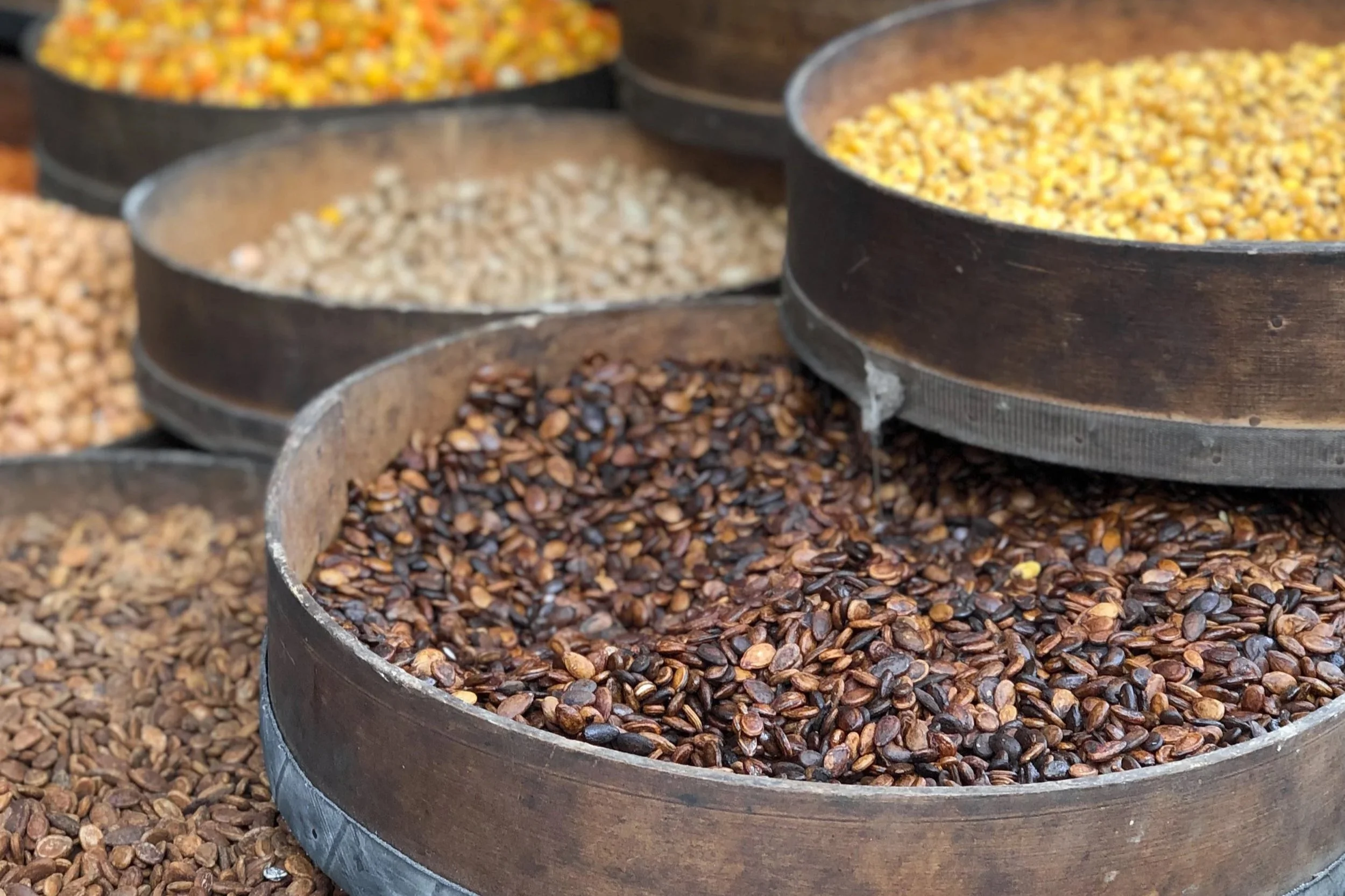
Experience the flavours and smells of Jordan in the markets in Amman.
Getting Around Jordan
One of the biggest surprises for me was just how easy Jordan was to explore.
Driving distances between major attractions are relatively short, roads are generally in good condition, and many of the country's highlights sit conveniently along the famous King's Highway or Desert Highway.
For most travellers, there are three main ways to get around.
Hire a Car
Hiring a car gives you the most flexibility and is my preferred option if you're comfortable driving overseas.
The roads between Amman, Petra, Wadi Rum and the Dead Sea are straightforward, and having your own vehicle allows you to stop at viewpoints, local cafés and lesser-known attractions along the way.
If you're driving, remember that traffic in Amman can be busy and Jordanians often drive more assertively. Once you're outside the capital, however, driving becomes much more relaxed.
Join a Guided Tour
If you'd rather not drive, organised tours are an excellent option. Multi-day tours cover the country's highlights with transport, accommodation and guides included, making planning simple.
Use Private Drivers and Taxis
Private transfers are widely available between major destinations and are a comfortable option if you're travelling as a couple or small group. Ride-sharing apps also operate in Amman, while taxis are easy to find throughout the country.
The Best Places to Visit in Jordan: A Complete Destination Guide
Jordan may be a small country, but it is packed with experiences that feel much bigger than its size.
One of the things I loved most about travelling through Jordan was how quickly the landscape transformed. One moment you’re wandering through ancient Roman ruins. The next, you’re floating in mineral-rich waters hundreds of metres below sea level. Then suddenly you’re standing beneath towering sandstone cliffs in a desert that looks like it belongs on another planet.
Jordan isn’t a destination where you tick off sights and move on. It’s a country that rewards slowing down.
These are the places that deserve a spot on your Jordan itinerary.
Amman: Jordan’s Vibrant Capital City
Most travellers begin their Jordan adventure in Amman, the country’s bustling capital.
At first glance, Amman can feel chaotic. The city sprawls across seven hills, with white limestone buildings covering the landscape, busy streets, and a constant hum of daily life.
But give it time. Behind the chaos is a city filled with incredible history, welcoming locals, delicious food and a fascinating blend of ancient and modern Jordan.
Amman is not necessarily a city that overwhelms you with postcard moments. Instead, it’s a gateway to begin understanding the Jordinian culture.
Wander the streets, visit the markets, drink sweet mint tea, watch locals gather around cafés… and get lost in the rhythm of everyday Jordanian life.
Top Things to Do in Amman
Amman Citadel
The Amman Citadel is one of the city's most important historical sites.
Sitting high on Jabal Al-Qala’a hill, this ancient site has been continuously inhabited for thousands of years. From the top, you’ll have panoramic views across Amman’s white buildings stretching into the distance.
The site includes remains from several civilisations, including:
Roman
Byzantine
Umayyad
The most impressive structure is the Umayyad Palace, built during the 8th century.
Roman Theatre
Located in the heart of downtown Amman, the Roman Theatre is one of the city’s most recognisable landmarks.
Built during the Roman period around the 2nd century AD, this enormous amphitheatre once seated around 6,000 spectators. Today, visitors can climb the steep stone steps for views across the city.
A tip from me: Don’t rush through. Sit for a few minutes… and imagine thousands of people gathering here nearly 2,000 years ago.
That’s when places like this truly come alive.
A personal moment: Something you may not know about me… I used to be a professional dancer. While stage shows, music videos, and back-up dancing are all behind me now, I took the opportunity to jump onto the empty stage at the Roman Theatre to dance for a couple of minutes… imagining what it might have been like to perform on the stage thousands of years ago.
Rainbow Street
For a more modern side of Amman, head to Rainbow Street.
This lively area is filled with:
cafés
restaurants
boutique shops
street art
rooftop terraces
It’s a great place to experience Amman after dark.
Where to Eat in Amman
Jordanian food is one of the highlights of visiting the country.
Don’t leave without trying:
Mansaf
Jordan’s national dish. Traditionally made with lamb cooked in a fermented yoghurt sauce and served with rice.
Falafel
A Middle Eastern classic and an excellent vegan-friendly option.
Hummus
Fresh hummus in Jordan is next level. Creamy, rich and usually served with warm bread.
Kunafa
A sweet cheese pastry topped with syrup and pistachios. Even if you’re not usually a dessert person, it’s worth trying.
Jerash: One of the Best-Preserved Roman Cities Outside Italy
If there is one destination in Jordan that surprised me the most, it was Jerash.
Many travellers arrive in Jordan focused on Petra… and understandably so… but Jerash deserves far more attention.
Located approximately one hour north of Amman, Jerash is one of the largest and best-preserved Roman archaeological sites in the world. Walking through Jerash feels like stepping into another era. The scale is incredible.
You’ll find:
towering columns
ancient temples
grand plazas
theatres
streets lined with Roman architecture
Unlike many archaeological sites where you’re looking at fragments, Jerash allows you to imagine what life was actually like in a thriving Roman city.
Highlights of Jerash
Hadrian’s Arch
Built in honour of Emperor Hadrian’s visit in 129 AD, this impressive gateway was intended to become the southern entrance of the city.
Oval Plaza
One of Jerash’s most photographed locations. The enormous open space surrounded by columns would have been the centre of public life.
Temple of Artemis
Dedicated to the goddess Artemis, this temple sits on elevated ground overlooking the city.
How Long Do You Need at Jerash?
Allow at least 2-3 hours. The site is much larger than many visitors expect. Wear comfortable shoes, bring water, and avoid visiting in the middle of the day during summer.
Madaba: The City of Mosaics
Located just 30 minutes from Amman, Madaba is a small city with a fascinating history.
It is best known for one incredible treasure: The Madaba Map.
The Madaba Map
Inside St George’s Greek Orthodox Church sits the oldest surviving map of the Holy Land.
Created in the 6th century, this Byzantine mosaic depicts Jerusalem and surrounding regions using more than two million pieces of coloured stone.
It is an extraordinary example of ancient craftsmanship.
Why Visit Madaba?
Madaba is worth adding to your itinerary because it offers something different from Jordan’s dramatic landscapes.
Here you’ll discover:
local markets
churches
traditional crafts
incredible mosaics
a slower pace of life
It’s also an ideal base for visiting Mount Nebo.
Mount Nebo: Standing Where Moses Looked Upon the Promised Land
Just outside Madaba is Mount Nebo, one of Jordan’s most significant biblical sites.
According to tradition, this is where Moses stood and viewed the Promised Land before his death.
The viewpoint is spectacular. On a clear day, you can see across the Jordan Valley towards Israel and Palestine, including the Dead Sea.
Even if you’re not travelling for religious reasons, the significance of this location is powerful. Thousands of years of history are connected to this landscape.
The Dead Sea: The Lowest Place on Earth
The Dead Sea is one of those places that sounds almost too strange to be real.
A body of water so salty that you effortlessly float. A landscape sitting more than 430 metres below sea level. A place where desert mountains meet the water…. and you can see Israel just across the sea.
My Dead Sea experience was exactly what I hoped it would be… and also completely different from what I expected.
It’s not necessarily the most beautiful place in Jordan. It’s the uniqueness that makes it unforgettable.
Explore my guide to Visiting the Dead Sea.
Things to Do at the Dead Sea
Float in the Water
This is the bucket-list experience.
You don’t swim… you float.
The salt concentration naturally lifts your body, creating one of the strangest sensations you’ll ever experience.
Traveller tip: With the high salt concentration, any cuts or grazes will sting significantly. Keep this in mind before entering the Dead Sea.
Try Dead Sea Mud (On Your Skin)
Many resorts offer mineral-rich mud experiences.
If you try it:
avoid your eyes
don’t apply it to cuts
rinse thoroughly afterwards
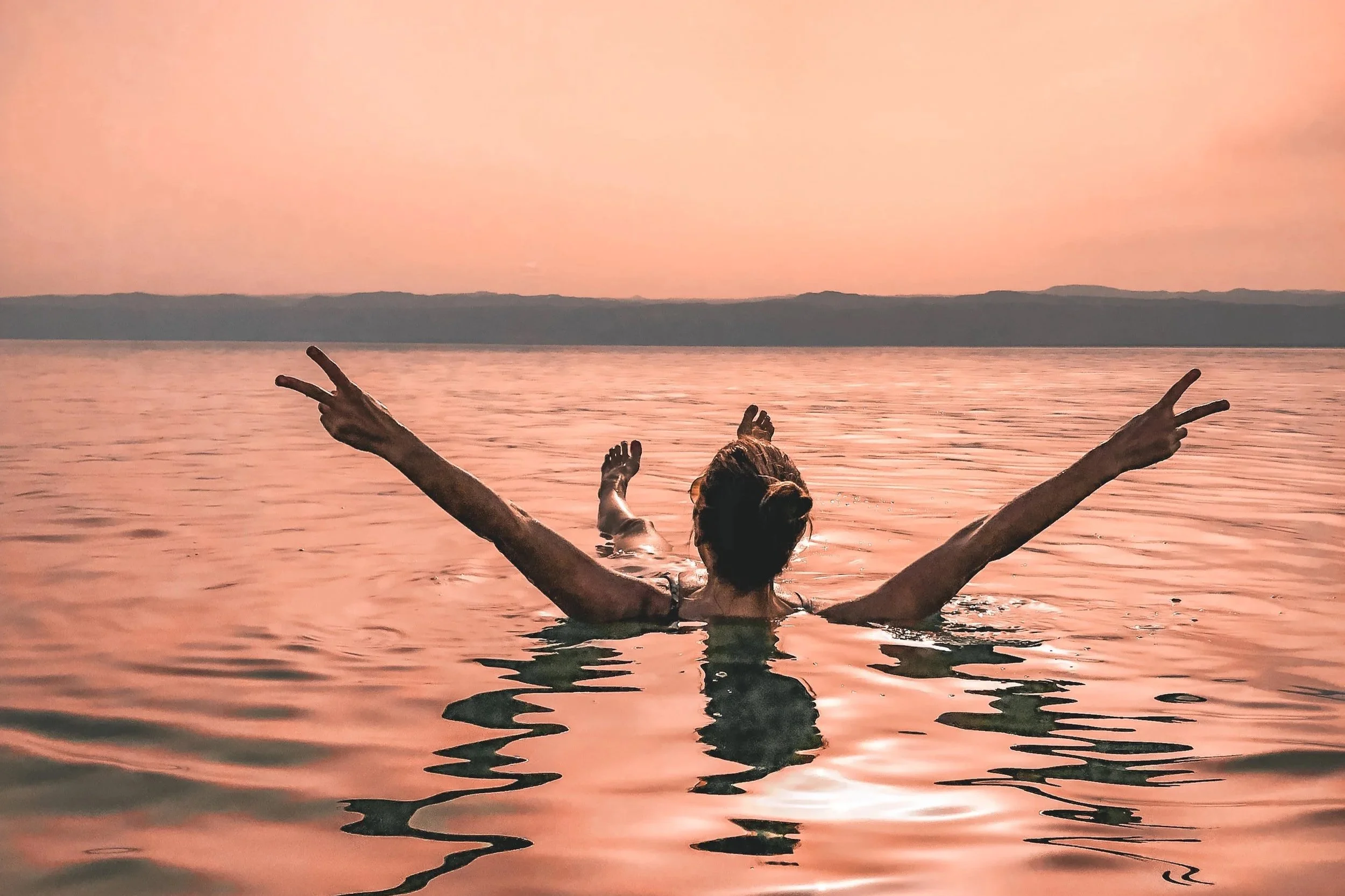
Bucket list moment floating in the Dead Sea.
Petra: Jordan’s Ancient Wonder
Petra is the place most travellers dream about visiting… and for good reason.
Walking through the narrow Siq and seeing the Treasury appear through the sandstone walls is one of those travel moments you never forget.
But Petra is not just one building… it is an entire ancient city, and most of it is still uncovered.
The Nabataeans carved temples, tombs, homes and monuments directly into the rock more than 2,000 years ago.
Why Petra Is So Special
Petra is:
a UNESCO World Heritage Site
one of the New Seven Wonders of the World
one of the most impressive archaeological sites on Earth
But beyond the facts, Petra feels alive.
You’re not walking through a museum… you’re walking through a landscape where people lived, traded and built a civilisation… a place where Bedouins still live today.
Explore more with my guide on How to Visit Petra.
How Long Should You Spend in Petra?
My recommendation:
Minimum: 1 full day
Ideal: 2 full days
Petra is enormous. During my visit, we walked around 26 kilometres over two days and still felt like we hadn’t seen everything.
Petra Highlights
Don’t miss:
The Treasury
The Siq
The Monastery
Royal Tombs
The High Place of Sacrifice
Colonnaded Street
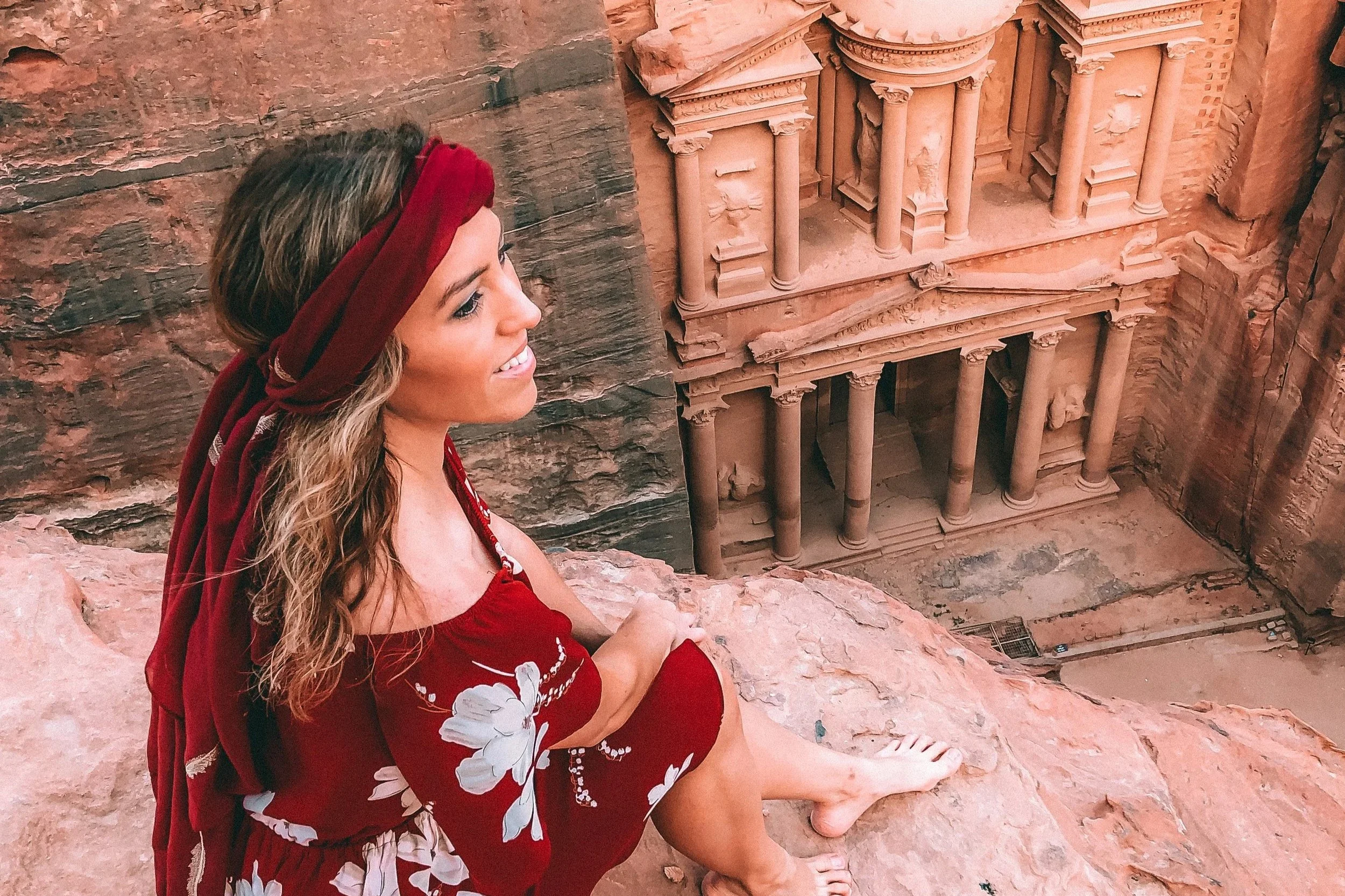
We were first in the gate and had The Treasury in Petra all to ourselves.
Wadi Rum: The Valley of the Moon
If Petra was the place I expected to love, Wadi Rum was the place that truly stole my heart.
This desert doesn’t feel real… it feels like another planet.
Towering sandstone mountains rise from the endless red sand. The silence feels almost impossible, and at night, the stars stretch endlessly above you.
It’s easy to understand why Wadi Rum has been used as a filming location for movies including The Martian and Lawrence of Arabia.
Plan your Wadi Rum adventure with my Wadi Rum Guide.
Things to Do in Wadi Rum
Jeep safari
Sunrise experiences
Sunset viewpoints
Stargazing
Bedouin cultural experiences
Hiking
Sandboarding
My Biggest Wadi Rum Tip
Stay overnight.
A day trip will show you the landscape… an overnight stay allows you to feel it.
Watching sunrise over Wadi Rum with nobody else around was one of my favourite travel memories from Jordan.
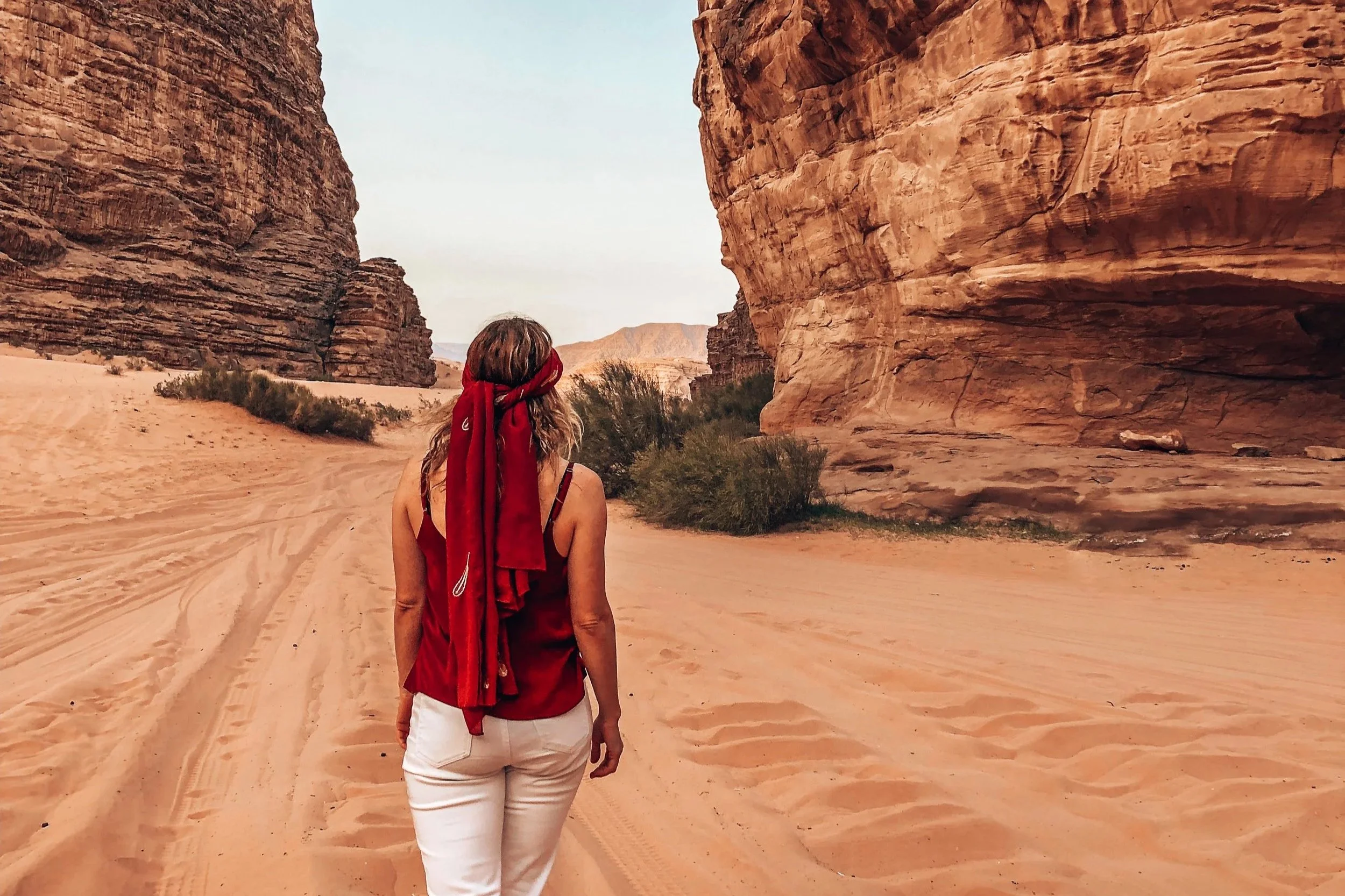
Wandering through the Wadi Rum desert.
Aqaba: Jordan’s Red Sea Escape
Located in southern Jordan, Aqaba offers a completely different side of the country.
After deserts and ancient ruins, Aqaba is where you slow down.
The city sits on the Red Sea and is known for:
snorkelling
diving
beaches
seafood
relaxed resorts
The coral reefs around Aqaba are considered some of the healthiest in the region.
Dana Biosphere Reserve: Jordan’s Hidden Adventure
For travellers looking beyond the classic route, Dana Biosphere Reserve is a hidden gem.
It is Jordan’s largest nature reserve and offers incredible hiking opportunities.
You’ll discover:
dramatic valleys
sandstone cliffs
rare wildlife
traditional villages
If you enjoy hiking, nature and getting away from crowds, Dana is absolutely worth considering.
Jordan’s Hidden Gems
If you have extra time, consider adding:
Al-Karak Castle
A dramatic Crusader castle overlooking the surrounding valleys.
Ajloun Castle
A medieval Islamic fortress surrounded by green hills.
Baptism Site of Jesus (Bethany Beyond the Jordan)
A significant religious site near the Jordan River.
Desert Castles
A collection of historic castles east of Amman showcasing Jordan’s fascinating Islamic history.
The Best of Jordan
Jordan is a destination that delivers far beyond expectations.
Yes, visit Petra. Yes, float in the Dead Sea. Yes, sleep beneath the stars in Wadi Rum. But also leave room for the unexpected… the conversations, the landscapes between destinations, the quiet moments, and the experiences you didn’t plan for.
Because that’s where the magic of Jordan really happens.
Where to Stay in Jordan: Accommodation Guide
One of the things I loved about travelling through Jordan was that accommodation options suited almost every style of traveller.
You can sleep beneath desert stars in a Bedouin camp, stay in luxury resorts overlooking the Dead Sea, choose a boutique hotel steps from Petra, or experience local hospitality in family-run guesthouses.
My biggest accommodation tip? Choose locations that make your itinerary easier.
Jordan’s highlights are spread across the country, and staying in the right place can mean the difference between rushing and actually enjoying the experience.
Where to Stay in Amman
Amman is the usual starting point for international travellers and works well as a base for exploring northern Jordan.
I recommend staying in central areas close to restaurants, cafés and attractions.
Best areas:
Downtown Amman
Best for:
first-time visitors
walking access to historic sites
experiencing local life
Rainbow Street / Jabal Amman
Best for:
cafés
restaurants
a more modern atmosphere
Abdali
Best for:
luxury hotels
shopping
business travellers
Recommended Amman Accommodation
The House Boutique Suites
A stylish boutique hotel combining modern comfort with local design. A great choice for travellers wanting something more personal than a large chain hotel.
InterContinental Jordan
A luxury option with excellent city views, multiple dining options and a convenient location.
Amman Marriott Hotel
A comfortable international hotel option with reliable service and facilities.
Where to Stay Near Petra (Wadi Musa)
This is one place where location really matters.
Petra is enormous, and after a full day of walking, the last thing you want is a long journey back to your hotel.
Stay in Wadi Musa, the town directly beside Petra.
Recommended Petra Accommodation
Mövenpick Resort Petra
One of the most convenient choices, located directly opposite the Petra Visitor Centre.
Perfect for:
sunrise visits
easy access
relaxing after long walking days
Petra Moon Luxury Hotel
A popular mid-range option with comfortable rooms, a rooftop terrace and excellent location.
Petra Guest House Hotel
One of the closest hotels to Petra’s entrance, ideal for travellers prioritising convenience.
Where to Stay in Wadi Rum
This is where accommodation becomes part of the experience.
A Wadi Rum stay isn’t just somewhere to sleep. It’s part of the adventure.
Options range from simple Bedouin camps to luxury bubble tents.
Recommended Wadi Rum Camps
Sand Rose Camp Wadi Rum
This is where I stayed during my visit.
A comfortable Bedouin-style camp offering traditional meals, warm hospitality and easy access to desert experiences.
Wild Oryx Camp
A luxury desert experience featuring panoramic bubble tents and incredible views.
Palmera Camp Wadi Rum
A comfortable option combining traditional desert hospitality with modern comforts.
Where to Stay at the Dead Sea
For the Dead Sea, I highly recommend staying at a resort with private beach access.
Public beaches can be busy and less comfortable, while resorts make the experience much easier.
The ability to:
float
rinse off immediately
relax by the pool
return whenever you want
makes a huge difference.
Recommended Dead Sea Accommodation
Kempinski Hotel Ishtar Dead Sea
A luxury resort featuring private Dead Sea access, multiple pools and a beautiful spa setting.
Mövenpick Resort & Spa Dead Sea
A large resort with gardens, spa facilities and direct access to the Dead Sea.
Hilton Dead Sea Resort & Spa
A modern beachfront resort with comfortable rooms and excellent facilities.
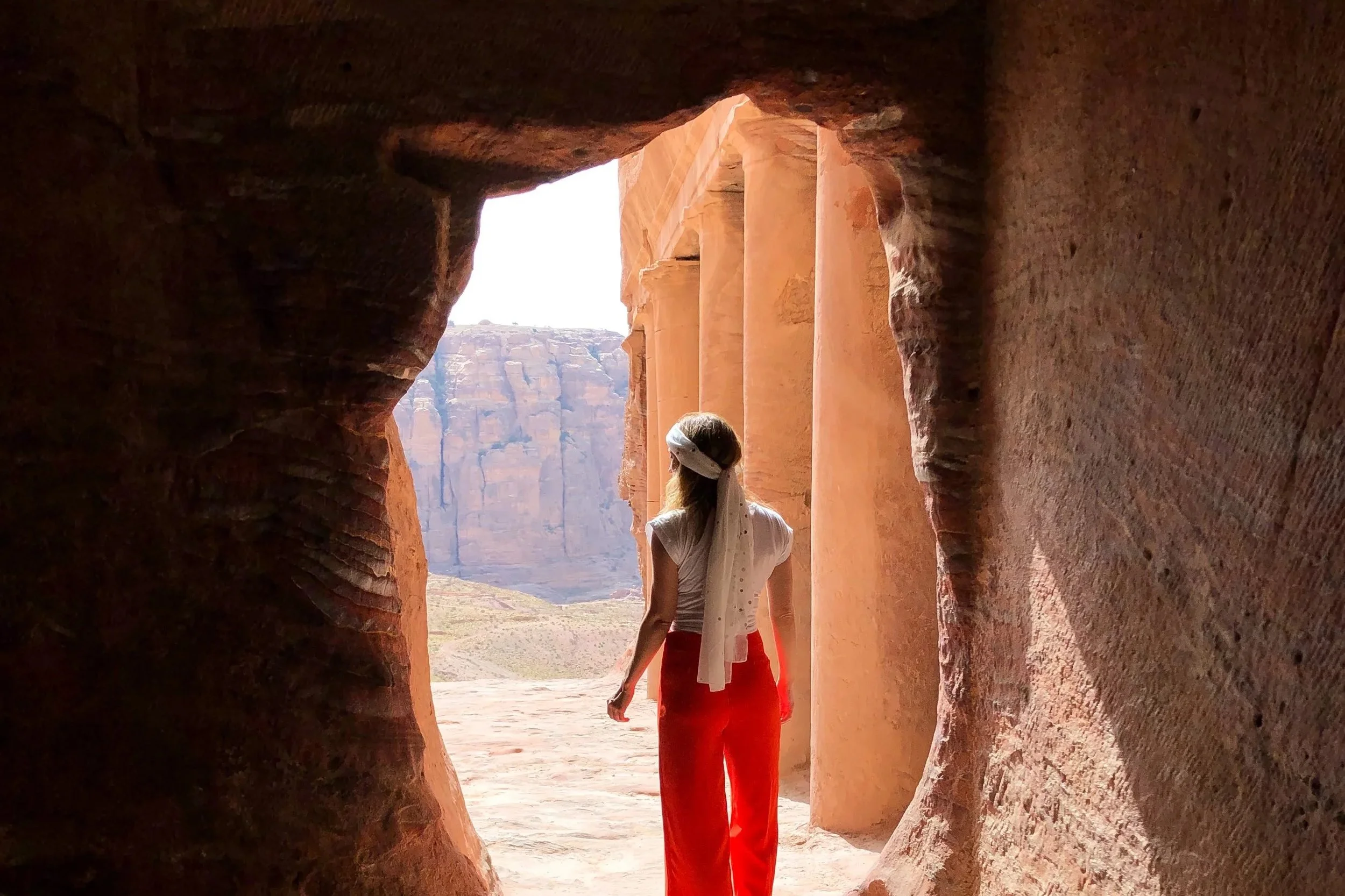
Petra is one of those places that takes your breath away.
Is Jordan Expensive?
The biggest costs are usually:
Petra entry
Accommodation
Transport
Guided experiences
The Jordan Pass can significantly reduce attraction costs if you plan to visit multiple sites.
What to Pack for Jordan
Jordan requires packing for variety.
You could experience:
hot desert days
cold desert nights
cooler mountain regions
resort temperatures at the Dead Sea
Layers are your best friend.
Jordan Packing List
Clothing
Lightweight breathable clothing
Comfortable walking shoes
Warm jacket or fleece
Scarf or shawl
Long pants or skirts for cultural respect
Swimwear
Sunglasses
Hat
Petra & Wadi Rum Essentials
Good walking shoes
Sunscreen
Reusable water bottle
Portable charger
Small backpack
Camera gear
Desert Essentials
The desert surprises many travellers.
During the day it can feel scorching. At night it can feel freezing.
Pack:
thermal layers
warm socks
windproof jacket
Especially if staying overnight in Wadi Rum.
What Should Women Wear in Jordan?
Jordan is a relatively moderate Middle Eastern country, but dressing respectfully will make your experience more comfortable.
Women do not need to cover their hair unless visiting religious sites where it is required.
Recommended:
shoulders covered in towns
knees covered where practical
loose, breathable clothing
At resorts and tourist areas, swimwear is completely normal.
Jordan Photography Tips
Jordan is a photographer’s dream. The landscapes change dramatically throughout the day, and timing makes all the difference.
Petra Photography Tips
Best times:
Sunrise
The ultimate time for the Treasury.
Benefits:
fewer crowds
softer light
cooler temperatures
This was one of my favourite moments in Jordan. Standing there before everyone arrived made the entire experience feel surreal.
Late Afternoon
Golden light transforms the sandstone into deep reds and oranges.
Wadi Rum Photography Tips
The desert is all about light.
Best moments:
sunrise
sunset
blue hour
nighttime astrophotography
Bring:
tripod if photographing stars
extra batteries
lens cloth (sand gets everywhere!)
Dead Sea Photography Tips
The iconic floating photo is harder than it looks.
Tips:
keep your camera above water
use waterproof protection
photograph during golden hour
avoid crowded areas
Responsible Travel in Jordan
One of the things I appreciated most about Jordan was the opportunity to experience authentic culture and landscapes.
But responsible travel matters.
Avoid Animal Tourism
Throughout Jordan, you’ll see opportunities for:
camel rides
donkey rides
horse carriages
While animals are part of the traditional landscape, many tourism animals experience poor conditions.
During my travels, I chose not to ride animals and instead appreciated them from a distance.
You can support local communities without supporting animal exploitation.
Respect Local Culture
Jordan is a welcoming country, but cultural differences matter.
Remember:
ask before photographing people
dress respectfully
learn basic Arabic greetings
remove shoes when entering some homes or religious spaces
accept hospitality graciously
Protect the Environment
Jordan’s landscapes are fragile.
Help protect them by:
carrying reusable bottles
avoiding single-use plastics
staying on marked paths
taking rubbish with you
respecting archaeological sites
Jordan Travel FAQs
How many days do you need in Jordan?
Seven days is ideal for first-time visitors.
This allows you to experience:
Amman
Petra
Wadi Rum
Dead Sea
without feeling constantly rushed.
Is Jordan safe for Australian travellers?
Yes, Jordan is generally considered a safe destination for Australian travellers. Always check current government travel advice before departure.
What is the best month to visit Jordan?
March-May and September-November offer the best weather conditions.
Do you need the Jordan Pass?
For most travellers visiting Petra, yes. It usually provides excellent value.
Can you drink alcohol in Jordan?
Yes, alcohol is available in many hotels, restaurants and tourist areas. However, availability varies, and public drinking is not appropriate.
Is Jordan vegan-friendly?
Yes.
Jordanian cuisine has many naturally vegan dishes including:
hummus
falafel
tabbouleh
moutabal
salads
vegetable mezze
As a vegan traveller, I found it relatively easy to find delicious options.
Why Jordan Belongs on Your Bucket List
Jordan is the kind of destination that reminds you why travel matters.
It’s not just about seeing famous places, it’s about moments… the first glimpse of Petra through the Siq, the silence of Wadi Rum before sunrise, the ridiculous laughter of trying to float in the Dead Sea, the kindness of strangers sharing stories over sweet tea.
Jordan offers history, adventure, culture and landscapes unlike anywhere else on Earth.
If you’re searching for a destination that feels genuinely unforgettable, Jordan deserves a place near the top of your bucket list.
Pack your curiosity. Leave room for the unexpected. And prepare to be amazed.
Continue planning your Jordan adventure:
Disclosure: This blog includes affiliate links. I will be paid a commission if you use these links to make a purchase.