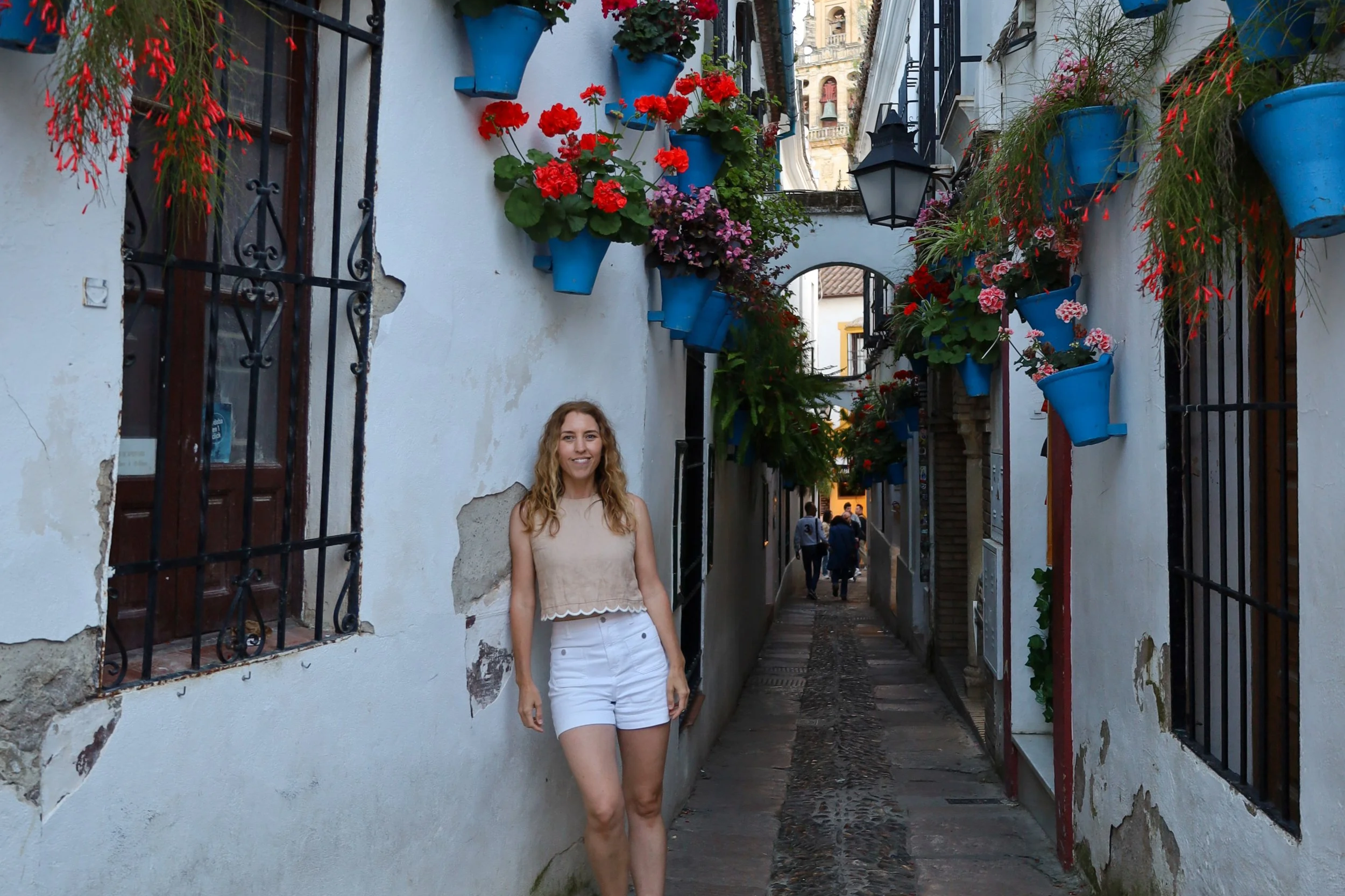
Wandering the flower filled streets of Cordoba, one of the prettiest towns in Spain.
I'd heard plenty about Cordoba’s famous Mezquita-Cathedral and its beautiful flower-filled courtyards, but it was the atmosphere of Cordoba that really won me over. I was travelling through Andalusia with my sister, and we happened to visit around the time of the famous Cordoba Patios Festival. The city was in full swing, the streets were buzzing and everywhere we turned there seemed to be another beautiful courtyard, historic building or little laneway waiting to be explored.
But one of my favourite memories wasn't even a major sightseeing experience.
It was buying a cheap €2 bottle of wine from the supermarket, picking up a few empanadas from the bakery across the road and heading up to the private rooftop terrace of our accommodation. We grabbed a blanket, found a spot overlooking the city and watched the sun set over Cordoba, with the Mezquita's bell tower rising above the rooftops.
No expensive restaurant reservation. Just good food, a little wine, my sister and a view that was hard to beat.
That's the thing I loved about Cordoba. It's a city with an incredible history and some genuinely extraordinary architecture, but you don't need to spend every minute ticking off attractions to enjoy it.
If you're planning a trip through southern Spain, I highly recommend adding Cordoba to your itinerary. Here's everything you need to know, including the best things to do, where to wander, what to eat, where to stay and how long to spend in this beautiful Andalusian city.
Is Cordoba, Spain worth visiting?
Absolutely.
Cordoba is one of the most fascinating cities in Andalusia, known for its mix of Roman, Islamic, Jewish and Christian heritage, beautiful courtyards and atmospheric old town.
Its historic centre is a UNESCO World Heritage Site, and the city is home to some remarkable landmarks, including the Mezquita-Cathedral, the Alcázar de los Reyes Cristianos, the Roman Bridge and the archaeological remains of Medina Azahara just outside the city.
But there's more to Cordoba than its history. The city is incredibly walkable, with narrow streets, whitewashed buildings, flower-covered balconies, little squares and traditional tapas bars. It's the sort of place where you can set off with a loose plan and spend an afternoon discovering places you hadn't even intended to visit.
I particularly loved wandering around the old town. Early mornings were especially lovely, before the day-trippers arrived and the narrow streets became busy with visitors.
If you're travelling around Andalusia, Cordoba is an excellent addition to a route that includes Seville, Granada, Malaga or Ronda.
My recommendation: Allow one to two nights in Cordoba. One night gives you enough time to experience the main attractions and enjoy the atmosphere after the day-trippers leave. Two nights is even better if you want to visit Medina Azahara, explore the patios properly and enjoy the city without rushing.
Best things to do in Cordoba, Spain
From exploring one of Europe's most extraordinary religious buildings to discovering hidden courtyards and wandering historic neighbourhoods, these are the experiences I'd prioritise when visiting Cordoba.
1. Visit the Mezquita-Cathedral of Cordoba
If there's one attraction you absolutely cannot miss in Cordoba, it's the Mezquita-Cathedral of Cordoba.
Also known as the Mosque-Cathedral, this extraordinary building is one of the most unique religious monuments in Europe. It's also the landmark that makes Cordoba instantly recognisable. And honestly, photos don't quite prepare you for it.
The moment you step inside, you're greeted by what seems like an endless forest of columns and distinctive red-and-white striped arches. The architecture is unlike anything I'd seen before, and the sheer scale and detail make it difficult to know where to look first.
What makes the Mezquita particularly fascinating is its history. The site began as a Visigothic Christian church before being transformed into a major mosque during the Islamic period. In 1236, it was converted into a cathedral. Rather than demolishing the existing structure, successive generations added to and adapted the building, creating the extraordinary architectural combination we see today.
The result is a blend of Islamic and Christian architecture, with Islamic arches and decorative details sitting alongside chapels, altars and an enormous Renaissance-style cathedral built within the former mosque.
It's unusual, beautiful and worth taking your time to explore.
What to look out for:
The forest of columns and distinctive double-tiered red-and-white arches.
The Mihrab, an incredibly detailed prayer niche from the mosque's Islamic period.
The Cathedral nave, which rises dramatically from the centre of the mosque.
The intricate ceilings, decorative details and beautiful chapels.
The Patio de los Naranjos, or Orange Tree Courtyard, outside the main building.
Allow at least 1-1.5 hours for your visit, although history and architecture enthusiasts could easily spend longer.
Climb the Mezquita bell tower
Don't just admire the bell tower from the streets below. If you have time, I'd recommend adding the bell tower visit to your ticket.
Originally associated with the former minaret, the tower has been transformed over the centuries and now offers a view over the Mosque-Cathedral and the surrounding historic centre. The views across Cordoba's rooftops are particularly beautiful, and it's a fantastic opportunity to appreciate just how closely packed the old town's streets and buildings are.
Access is timed, and there are stairs to climb, so book a suitable time and check the access requirements before visiting.
Practical tips for visiting the Mezquita-Cathedral:
Book your entrance ticket online in advance, particularly during spring and the Patios Festival
Check the official website for religious services and special opening arrangements
Dress respectfully, as this remains an active religious building
Official website: https://mezquita-catedraldecordoba.es/
2. Wander down Calleja de las Flores
Calleja de las Flores is one of the most photographed streets in Cordoba, and it's easy to see why. This tiny, narrow laneway is lined with whitewashed walls, colourful flower pots and balconies, with a beautiful view of the Mezquita bell tower at the end. It's one of those little corners of the city that feels almost too pretty to be real.
The street is short, so you won't need long to visit, but I'd recommend making the effort to see it early in the morning. By the middle of the day, it can become incredibly busy, particularly during spring and the Patio Festival. If you're hoping to take photographs without a crowd of people in the background, arrive early and be patient.
Photography tip: Stand towards the end of the laneway and frame the bell tower between the buildings and flower pots. It's one of Cordoba's classic photographs.
And while you're there, don't just turn around and leave. Some of the most enjoyable parts of the Jewish Quarter are found by taking a few random turns down the surrounding streets.
3. Explore the Jewish Quarter (La Judería)
One of my favourite things to do in Cordoba was simply wandering around the old town, and the Jewish Quarter is the perfect place to do exactly that.
Known locally as La Judería, this historic neighbourhood is a maze of narrow streets, whitewashed buildings, little squares, traditional courtyards and flower-filled balconies.
It's easy to get distracted here. You'll turn down one street to find a pretty doorway, another to discover a little courtyard and another because you can hear music coming from somewhere around the corner. The neighbourhood has a fascinating history, reflecting the Jewish community that lived in Cordoba during the city's medieval period. Alongside the Islamic and Christian heritage, it forms part of the city's remarkable cultural story.
A few places worth looking out for include:
Córdoba Synagogue: A small but historically significant medieval synagogue dating from the 14th century. It's one of the few surviving medieval synagogues in Spain and well worth visiting if you're interested in the city's Jewish history.
Maimonides Statue: A statue dedicated to the famous Jewish philosopher, physician and scholar Moses Maimonides, who was born in Cordoba in the 12th century.
Casa de Sefarad: A museum exploring Sephardic Jewish culture and history.
Zoco Municipal: A traditional courtyard-style market where you can browse local crafts and souvenirs.
My advice? Don't over-plan this part of your visit. Give yourself time to wander and see where the streets take you. It's particularly beautiful early in the morning, when the streets are quieter and you can appreciate the details without constantly navigating around other visitors.
4. Discover the Cordoba Patios
If there's one thing that gives Cordoba its personality, it's the patios. These traditional Andalusian courtyards are tucked behind the doors of homes and buildings throughout the city. Step through an entrance and you'll often discover an entirely different world, with colourful flower pots, climbing plants, fountains, tiled floors and little seating areas.
They're beautiful, but they're also an important part of local life and the city's architectural heritage. Traditionally, houses in Cordoba were built around internal courtyards, providing shade, ventilation and a cooler space to escape the intense Andalusian heat. Over time, these practical spaces became places of beauty and community, with residents taking enormous pride in decorating and maintaining them.
And during May, the city celebrates this tradition with the famous Festival de los Patios Cordobeses, or Cordoba Patios Festival.
The Cordoba Patios Festival
The festival is one of the city's biggest annual events and a wonderful reason to visit in spring.
During the festival, residents open their private courtyards to the public, allowing visitors to explore spaces that would normally be hidden behind closed doors. The patios are decorated with colourful flowers, often displayed in rows of pots attached to whitewashed walls. There is also a competition, with participating patios judged across different categories.
I was lucky enough to visit Cordoba around the time of the festival, and the city was absolutely buzzing. It was lovely seeing how much care and attention had gone into these spaces, and how much pride residents took in sharing them. The atmosphere was a real highlight of our visit.
When is the Cordoba Patios Festival?
The festival is traditionally held in May, although the exact dates change each year. For 2026, the competition ran from 4-17 May. During the competition, participating patios were open during designated daytime and evening visiting hours. Entry to the competition patios is generally free, and advance reservations are not normally required. However, queues can form at the most popular locations.
If you're planning a trip around the festival, check the official programme and map before arriving:
https://patios.cordoba.es/en/welcome/
Can you visit Cordoba's patios outside the festival?
Yes! Although May is the best-known time to experience the patios, you don't need to visit during the festival to appreciate this part of Cordoba. Some courtyards are open to visitors throughout the year, including those at Palacio de Viana and selected public or participating patios. Just remember that many of the most beautiful courtyards are private homes, so always respect opening times and residents' privacy.
5. Visit Palacio de Viana
If you love architecture, gardens and beautiful courtyards, Palacio de Viana deserves a place on your Cordoba itinerary. This historic palace is particularly famous for its twelve traditional patios and gardens, each with its own character and design.
Unlike the smaller residential courtyards dotted around the city, Palacio de Viana offers a more extensive experience, allowing you to wander through a collection of beautifully maintained outdoor spaces. You'll discover everything from leafy courtyards filled with plants and fountains to more formal gardens and decorative architectural features.
Each patio has its own personality, and together they offer a wonderful insight into the evolution of traditional Cordoban courtyard design. The palace itself also has a fascinating history, having been home to several aristocratic families over the centuries.
If you have time, consider booking the combined visit, which includes the courtyards and a guided tour of the palace interiors.
Why visit?
Even if you aren't particularly interested in museums, the patios alone make this worthwhile. It's also a lovely way to experience Cordoba's courtyard culture outside the May festival. Allow around 1-1.5 hours, depending on whether you visit the palace interiors.
Official website: https://www.palaciodeviana.com/
6. Explore the Alcázar de los Reyes Cristianos and its gardens
Another of Cordoba's most important historic landmarks is the Alcázar de los Reyes Cristianos, also known as the Alcázar of the Christian Monarchs. This medieval fortress and palace was built in the 14th century and later became an important royal residence. It has played a significant role in Spanish history, including during the reign of the Catholic Monarchs, Ferdinand and Isabella.
The building itself is an interesting combination of fortress architecture, towers, courtyards and historic rooms. But one of the biggest highlights is the surrounding gardens.
Jardines del Alcázar de los Reyes Cristianos
The gardens are a beautiful contrast to the fortress walls, with long pathways, fountains, water features, neatly maintained hedges, palm trees and colourful flowers. They're perfect for a leisurely wander, and the combination of Moorish-inspired water features and formal gardens makes this a very photogenic part of the city. The gardens also offer some beautiful views back towards the historic buildings.
I'd recommend allowing around 1-1.5 hours to explore the fortress and gardens together.
Travel tip: Check current access and opening arrangements before visiting, as restoration work and maintenance can affect which areas are accessible. Don't assume that the entire complex will be open just because you can visit the surrounding area.
7. Discover the Baños del Alcázar Califal
If you enjoy discovering the lesser-known historical attractions of a destination, add the Baños del Alcázar Califal to your list. These historic Caliphal Baths date back to the 10th century and were part of the bathing culture associated with Islamic Cordoba.
The baths were originally connected to the Umayyad palace complex and were an important part of daily life. Public and royal bathing spaces served practical, social and ritual purposes, with different rooms used for different stages of bathing.
Today, you can explore the archaeological remains of the baths and learn more about how they operated. One of the most interesting features is the surviving architecture, including vaulted ceilings and star-shaped openings that allowed light to filter into the rooms.
The site isn't particularly large, so you won't need hours to visit, but it's a worthwhile addition if you're interested in the Islamic history of the city. It's also a good opportunity to discover a part of Cordoba's heritage that is less visually obvious than the Mezquita.
8. Visit the Royal Stables of Cordoba (Caballerizas Reales)
The Royal Stables, or Caballerizas Reales, are another interesting historic attraction close to the Alcázar. Established in 1570 by King Philip II, the stables were created to breed and develop horses that would eventually contribute to the Spanish Andalusian horse breed.
The building is interesting for its traditional architecture, with vaulted ceilings, stone arches and a central layout designed around the horses. The Spanish horse has a long association with Andalusia, and the Royal Stables offer an insight into the region's equestrian heritage. Depending on the current programme, visitors may also be able to attend equestrian performances featuring Andalusian horses. If you're interested in horses, history or traditional Spanish culture, it's worth checking what's on during your visit.
Tip: Performance schedules and general visiting arrangements can vary, so check the official information before planning your day.
While the Royal Stables may be an interesting experience, we gave this one a miss, as I often avoid animal tourism experiences.
9. Walk across the Roman Bridge of Cordoba
The Roman Bridge is one of the most recognisable landmarks in Cordoba and a lovely place to visit, particularly around sunset.
Crossing the Guadalquivir River, the bridge dates back to Roman times, although it has undergone numerous modifications and restorations over the centuries. It originally formed part of an important Roman route connecting different parts of the region. Today, it's a pedestrian bridge and one of the best places to appreciate the city's historic skyline. From here, you can see the Mezquita-Cathedral, the river, the historic city walls and the surrounding architecture.
I'd recommend crossing the bridge and exploring the area on the opposite riverbank, where you can look back towards the old town.
Best time to visit: Early morning or around sunset.
At sunset, the warm light across the river and historic buildings creates a beautiful backdrop for photos.
10. Explore Medina Azahara (Madinat al-Zahra)
If you have a little extra time in Cordoba and enjoy history, Medina Azahara is one of the most worthwhile excursions outside the city centre.
Located around 8 kilometres from Cordoba, this archaeological site was once a palace city built during the 10th century. The city was an extraordinary architectural achievement, with palaces, administrative buildings, residential areas, gardens, roads and sophisticated water infrastructure.
However, it had a relatively short life. Following the civil war that brought an end to the Caliphate in the early 11th century, the city was destroyed and eventually abandoned. Its remains were largely forgotten for centuries before being rediscovered in the early 20th century.
Today, the archaeological complex provides a glimpse into the history of Al-Andalus and the extraordinary civilisation that once flourished here.
What can you see at Medina Azahara?
The site includes the archaeological remains of the former palace city, with sections of walls, buildings, decorative stonework, courtyards and terraces. One of the most interesting parts is the combination of architecture and landscape, with the city built into the hillside overlooking the surrounding countryside.
I'd also recommend visiting the interpretation centre and museum before exploring the archaeological site. It helps put everything into context and makes it easier to understand what you're looking at.
How do you get to Medina Azahara?
The archaeological site is outside the city, so you'll need to organise transport.
Options include:
An organised guided tour from Cordoba.
The official visitor shuttle service, where operating, between the interpretation centre and archaeological site.
A taxi or private transfer.
A hire car.
Allow at least half a day for the excursion, including travel and time to explore the museum and archaeological remains.
Is Medina Azahara worth visiting?
If you enjoy history, archaeology or discovering places beyond the main tourist attractions, absolutely. It's also a UNESCO World Heritage Site.
Official visitor information: https://www.medinaazahara.org/en/
11. Visit Plaza de la Corredera
For a change of scenery, head to Plaza de la Corredera. Unlike the narrow streets of the Jewish Quarter, this is a large, open rectangular square surrounded by traditional buildings with colourful façades and balconies. It's one of Cordoba's most distinctive public spaces and has a long history as a gathering place. Over the centuries, it has hosted markets, public celebrations and other events.
Today, it's a lovely place to stop for a drink, grab something to eat or simply watch the world go by. If you've spent most of your day exploring historic buildings and winding streets, it's a nice spot to slow down for a while.
12. Discover the Roman Temple of Cordoba
Another interesting stop for history lovers is the Roman Temple of Cordoba. Located near the city's modern centre, these impressive remains date back to the 1st century AD and offer another glimpse into the city's Roman past.
The temple was discovered during archaeological excavations in the 1950s, and its surviving columns are now one of the city's most recognisable Roman landmarks. You can admire the remains from the surrounding public space, making this an easy attraction to add to a walking route.
It doesn't require a huge amount of time, but it's worth stopping to appreciate another layer of Cordoba's fascinating history.
13. Wander along the Guadalquivir River
One of the simplest ways to enjoy Cordoba is to take a walk along the Guadalquivir River.
The river runs through the city, separating the historic centre from the southern riverbank. There are several lovely viewpoints along the water, particularly around the Roman Bridge and the nearby Calahorra Tower.
It's a nice place to escape the busier streets and enjoy a different perspective of the city. If you have time, visit the Calahorra Tower, which sits at the southern end of the Roman Bridge. The tower houses a museum exploring the history of Cordoba and the cultural influences that shaped the city.
The surrounding area is particularly beautiful in the late afternoon when the light starts to soften.
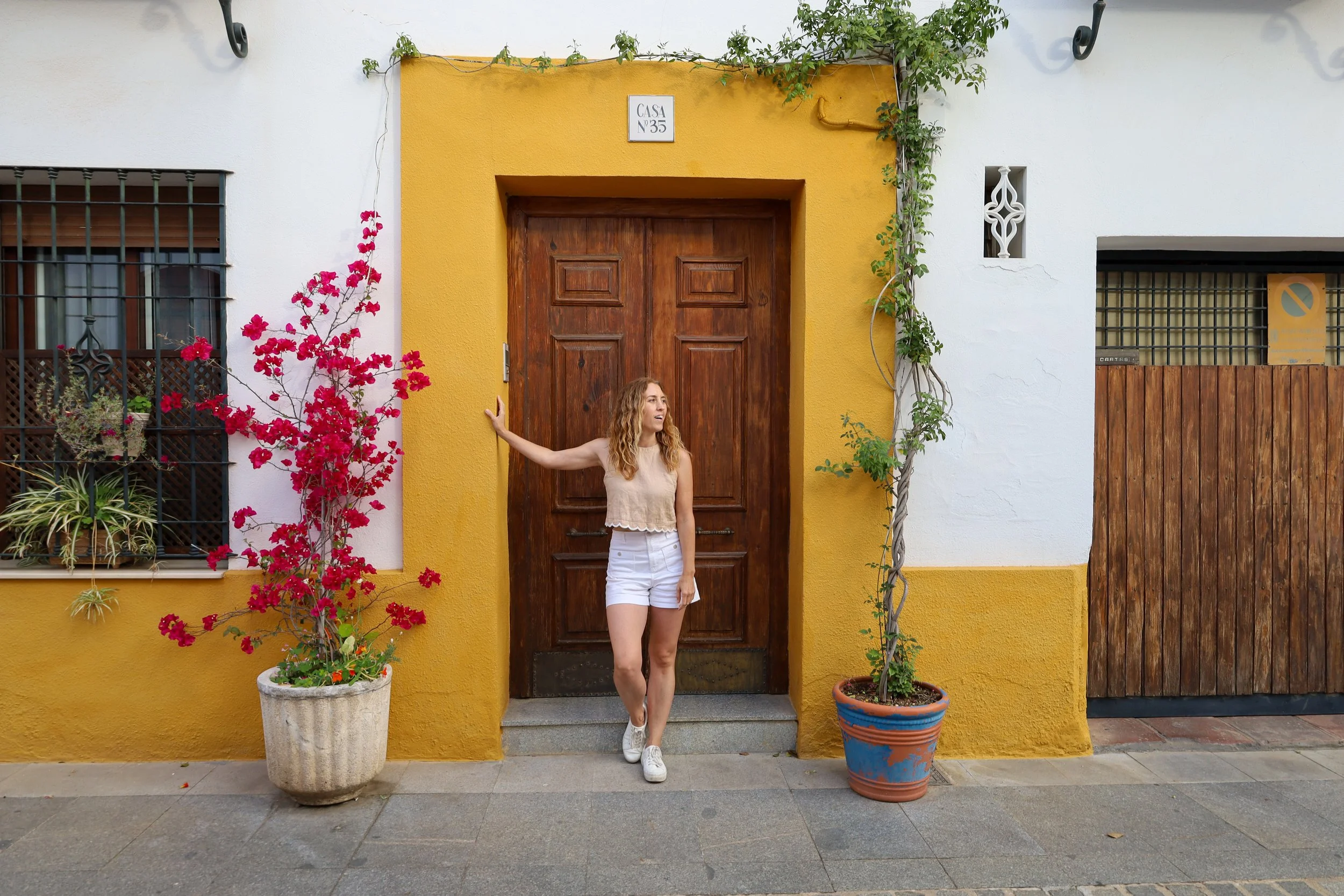
The endless flowers really bring the city to life.
Don't underestimate the joy of simply wandering around Cordoba
I know I've included plenty of attractions in this guide, but if there's one thing I'd encourage you to do in Cordoba, it's leave some time in your itinerary to explore without a plan. Some of my favourite moments in the city came from simply walking around.
The historic centre is full of little surprises. You might find a beautiful courtyard hidden behind an open doorway, stumble across a quiet plaza or discover a bakery selling something that looks too good to walk past. The streets around the Mezquita, the Jewish Quarter and San Basilio are particularly lovely.
One thing I noticed was just how different the city felt throughout the day. Early in the morning, the streets were peaceful, with very few people around. It was the perfect time to wander, take photographs and appreciate the architecture. By the middle of the day, things had changed considerably. The narrow streets were much busier, restaurants were filling up and queues were forming outside some of the popular places to eat. If you're visiting during the busy spring season, I would absolutely recommend getting out early.
It's worth experiencing Cordoba at both ends of the day. The atmosphere changes, and once the day-trippers start leaving, you get to see a much quieter and more relaxed side of the city.
What to eat in Cordoba, Spain
One thing I was pleasantly surprised by during our visit was the food. We ate really well in Cordoba, and there were plenty of tempting bakeries, restaurants and little places to stop for a bite. Like much of Andalusia, Cordoba has a strong food culture, with traditional tapas, local ingredients and regional specialities.
Book restaurants in advance
One practical tip from my visit: book your lunch in advance.
During the day, particularly around the Patios Festival, Cordoba's popular restaurants can get very busy with day-trippers. We noticed long queues outside some places, and if you're hoping to eat somewhere specific, I'd recommend making a reservation rather than leaving it until you're hungry.
For dinner, the city also comes alive later in the evening. My advice is to plan your main meals around your sightseeing rather than assuming you'll be able to walk straight into a popular restaurant.
Where to stay in Cordoba, Spain
If you're only spending one or two nights in Cordoba, location is important. I'd recommend staying in or close to the historic centre, particularly around the Jewish Quarter or the area near the Mezquita-Cathedral. This makes it easy to explore the main attractions on foot, return to your accommodation during the hottest part of the day and enjoy the city in the evening after the day-trippers have left.
Where we stayed: Estudio 2 by MezquitaSuites
We stayed at Estudio 2 by MezquitaSuites, and it was perfect for our visit.
The location was excellent, with the main attractions within easy walking distance. The accommodation also had multiple private outdoor spaces, which made it particularly special.
But the highlight was the private rooftop.
One evening, my sister and I headed to the supermarket and picked up a cheap €2 bottle of wine. We grabbed some empanadas from the local bakery across the road, took a blanket upstairs and settled in to watch the sunset. From the rooftop, we had views across the city, including the Mezquita bell tower. It was one of those simple travel experiences that ends up becoming a favourite memory.
We could have spent considerably more on a fancy restaurant or booked an expensive experience, but honestly, I wouldn't have traded that evening for anything.
If you're looking for somewhere central with outdoor space and beautiful city views, I'd recommend looking into this accommodation. My tip is to look for accommodation with a terrace or rooftop when booking in Cordoba. Having somewhere to sit outside and enjoy the city after a day of exploring is a lovely bonus.
How many days do you need in Cordoba?
I recommend spending one to two nights in Cordoba. It's a relatively compact city, and many of the main attractions are within walking distance of one another. However, the time you need will depend on whether you want to visit Medina Azahara and how much time you like to spend exploring.
One night in Cordoba
One night is enough to see the major highlights if you arrive early and leave the following afternoon.
I'd prioritise:
Mezquita-Cathedral and bell tower
Calleja de las Flores
Jewish Quarter
Cordoba's traditional patios
Roman Bridge
Alcázar and its gardens
An evening exploring the old town
Two nights in Cordoba
Two nights is my preferred option. It gives you more time to explore without rushing and allows you to add Palacio de Viana, the Caliphal Baths, the Royal Stables and potentially Medina Azahara. You'll also have more opportunity to enjoy the city in the early morning and evening, which I think is when Cordoba is at its best.
Suggested Cordoba itinerary
If you're trying to fit the best of Cordoba into a short visit, here's how I'd organise your time.
Day 1: Historic Cordoba
Morning
Start early with a visit to the Mezquita-Cathedral
Climb the bell tower for views across the city
Explore the Orange Tree Courtyard
Wander through Calleja de las Flores
Spend some time exploring the Jewish Quarter
Lunch
Book a restaurant in advance and enjoy a leisurely Andalusian lunch.
Afternoon
Visit the Alcázar de los Reyes Cristianos and its gardens
Explore the Baños del Alcázar Califal
Visit the Royal Stables if time permits
Walk across the Roman Bridge
Enjoy the river views
Evening
Head back into the old town, find somewhere for dinner and enjoy wandering the streets once the crowds have started to disappear.
Day 2: Patios, palaces and the wider city
Morning
Explore Palacio de Viana and its twelve patios
Wander through the city's traditional neighbourhoods
Visit Plaza de la Corredera
Stop at the Roman Temple
Afternoon
If you're interested in history, make the trip to Medina Azahara.
Alternatively, spend a slower afternoon exploring the city's patios, enjoying a long lunch or discovering some of the places you missed on your first day.
Evening
Find a rooftop terrace, enjoy a drink and watch the sun set over Cordoba.
If you visit during the Patios Festival, I'd leave plenty of time to explore the participating courtyards and enjoy the atmosphere.
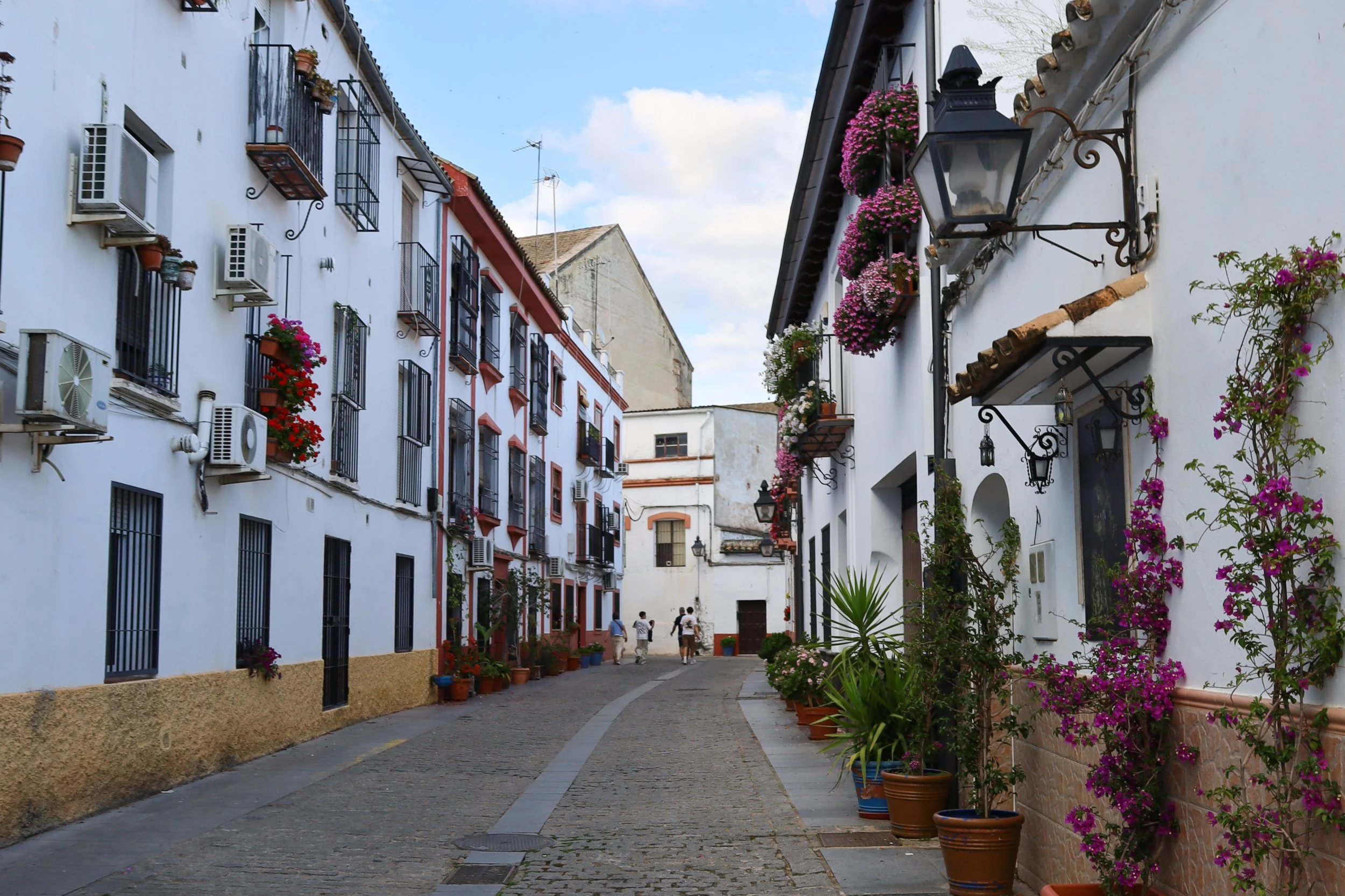
Wandering the streets of Cordoba was one of my fave ways to experience this city.
Best time to visit Cordoba, Spain
The best time to visit Cordoba is generally spring (March to May) and autumn (September to October). These months offer more comfortable temperatures for walking around the historic centre and exploring the city's outdoor attractions.
Spring (March to May)
Spring is arguably the most beautiful time to visit. The orange trees are flowering, the courtyards are filled with colourful blooms and the city has a wonderful atmosphere. May is particularly special because of the Cordoba Patios Festival and other traditional celebrations. However, it's also one of the busiest times to visit, so book accommodation and popular attractions in advance.
Summer (June to August)
Summer in Cordoba can be extremely hot. Temperatures regularly climb above 35°C, and July and August can experience temperatures exceeding 40°C. If you're visiting during summer, plan outdoor sightseeing for early morning and late afternoon, avoid the hottest part of the day and stay hydrated.
Autumn (September to October)
Autumn is another lovely time to visit. Temperatures are generally more comfortable, the city is still lively and you'll often find fewer visitors than during the spring festival period.
Winter (November to February)
Winter is a quieter time to explore Cordoba. You won't experience the famous flower-filled patios in their springtime glory, but the historic centre is still beautiful, and you can enjoy the major attractions without the same level of crowds.
Practical travel tips for visiting Cordoba
A little planning can make a big difference to your experience, particularly if you're visiting during spring.
Get out early. The historic streets are at their quietest in the morning. It's also a great time for photography.
Book the Mezquita-Cathedral in advance. It's Cordoba's most popular attraction, and booking ahead helps you secure your preferred time.
Book the bell tower separately. Check availability and timed entry when organising your visit.
Reserve restaurants for lunch. Popular places can have long queues, especially during the Patios Festival.
Wear comfortable walking shoes. The old town has cobblestones, narrow lanes and plenty of walking.
Stay centrally. If you're only visiting for one or two nights, accommodation near the historic centre will save you time.
Carry water. The Andalusian sun can be intense, particularly from late spring onwards.
Don't over-schedule. Cordoba is a city best enjoyed with a little flexibility. Leave time to wander.
Check opening days. Some attractions close on Mondays or have seasonal opening hours.
Visit the patios respectfully. Many are private residential courtyards, and residents generously open their homes to visitors during the festival.
Getting to Cordoba
Cordoba is well connected to other major destinations in Andalusia and makes an easy addition to a southern Spain itinerary.
Travelling to Cordoba by train
The high-speed AVE train is one of the easiest ways to reach Cordoba. There are direct services connecting Cordoba with major Spanish cities, including Madrid, Seville and Malaga.
Approximate journey times vary by service:
Seville to Cordoba: around 45 minutes
Malaga to Cordoba: around 1 hour
Madrid to Cordoba: around 1 hour 45 minutes to 2 hours
These are indicative journey times rather than guaranteed schedules, so check the timetable for your travel date. Cordoba's train station is outside the historic centre, but it's possible to reach the old town by taxi or local transport.
Travelling to Cordoba by car
If you're hiring a car to explore Andalusia, Cordoba can also be reached by road. However, I'd recommend leaving your car parked once you arrive. The historic centre has narrow streets, pedestrian areas and restricted traffic zones, so driving around the old town isn't particularly practical. Check whether your accommodation offers parking or has arrangements with a nearby car park before arriving.
Is Cordoba worth adding to your Andalusia itinerary?
Without a doubt. Cordoba might not always get as much attention as Seville or Granada, but it's a destination I'd encourage you not to overlook.
It's a city where history feels woven into everyday life. You can explore extraordinary architecture in the morning, wander through flower-filled courtyards in the afternoon and finish the day watching the sun disappear behind the rooftops.
I loved the combination of famous attractions and those simple, unplanned moments that make travelling so enjoyable. And if you happen to visit during the Patios Festival, you'll get to experience the city at one of its most vibrant times of year. If you're planning a trip through Andalusia, give Cordoba at least one night, preferably two. Explore the famous landmarks, try the local food, get lost in the streets and leave enough time to enjoy the city without a schedule.
You never know. Your favourite memory might end up being a €2 bottle of wine, a few bakery empanadas and a rooftop sunset. And sometimes, those are the travel experiences you remember long after you've returned home.
Frequently asked questions about visiting Cordoba, Spain
Is one day enough to visit Cordoba?
Yes, you can see many of Cordoba's major attractions in one day, including the Mezquita-Cathedral, Jewish Quarter, Calleja de las Flores, Alcázar and Roman Bridge. However, I'd recommend staying at least one night so you can experience the city after the day-trippers leave.
Is Cordoba a walkable city?
Yes. Cordoba's historic centre is very walkable, and many of the main attractions are within easy walking distance of one another. Comfortable shoes are essential because of the cobblestone streets and uneven surfaces.
What is Cordoba most famous for?
Cordoba is best known for its extraordinary Mezquita-Cathedral, historic Jewish Quarter, traditional flower-filled patios and its fascinating Roman, Islamic and Christian heritage.
When is the Cordoba Patios Festival?
The Cordoba Patios Festival is traditionally held in May. Exact dates change each year, so check the official festival website before planning your trip.
Are the Cordoba patios free to visit?
Many patios participating in the official festival offer free entry. Some courtyards outside the festival, including those at Palacio de Viana, require an admission ticket. Always check individual opening arrangements.
Is Medina Azahara worth visiting?
Yes, particularly if you're interested in history, architecture and archaeology. The archaeological remains offer a fascinating insight into the former Caliphate of Cordoba. Allow around half a day for the excursion.
Can you visit Cordoba as a day trip from Seville?
Absolutely. The train journey from Seville takes around 45 minutes on many services, making Cordoba an easy day trip. However, staying overnight is a much better option if you want to experience the quieter streets in the evening and early morning.
Where is the best place to stay in Cordoba?
I'd recommend staying in or around the Jewish Quarter, near the Mezquita-Cathedral, or in the San Basilio neighbourhood. These areas offer convenient access to the main attractions and plenty of character.
Is Cordoba safe for tourists?
Cordoba is generally considered a straightforward city for visitors to explore. As with any popular destination, take normal precautions with your belongings, particularly in crowded tourist areas, and be mindful of your surroundings when walking at night.
How far is Medina Azahara from Cordoba?
Medina Azahara is approximately 8 kilometres from Cordoba's historic centre. You can reach it by organised tour, taxi, car or the official visitor transport arrangements when operating.
Planning a trip through Andalusia?
Cordoba is an excellent addition to a southern Spain adventure, particularly if you're travelling between Seville, Granada and Malaga.
If you're planning your own Andalusia itinerary, you might also enjoy these guides:
Ready to start planning your next adventure? Explore more in The Ultimate South of Spain Travel Guide, and start turning your travel bucket list into a reality.