Best Time to Visit Jordan: When to Go for Weather, Crowds & Prices
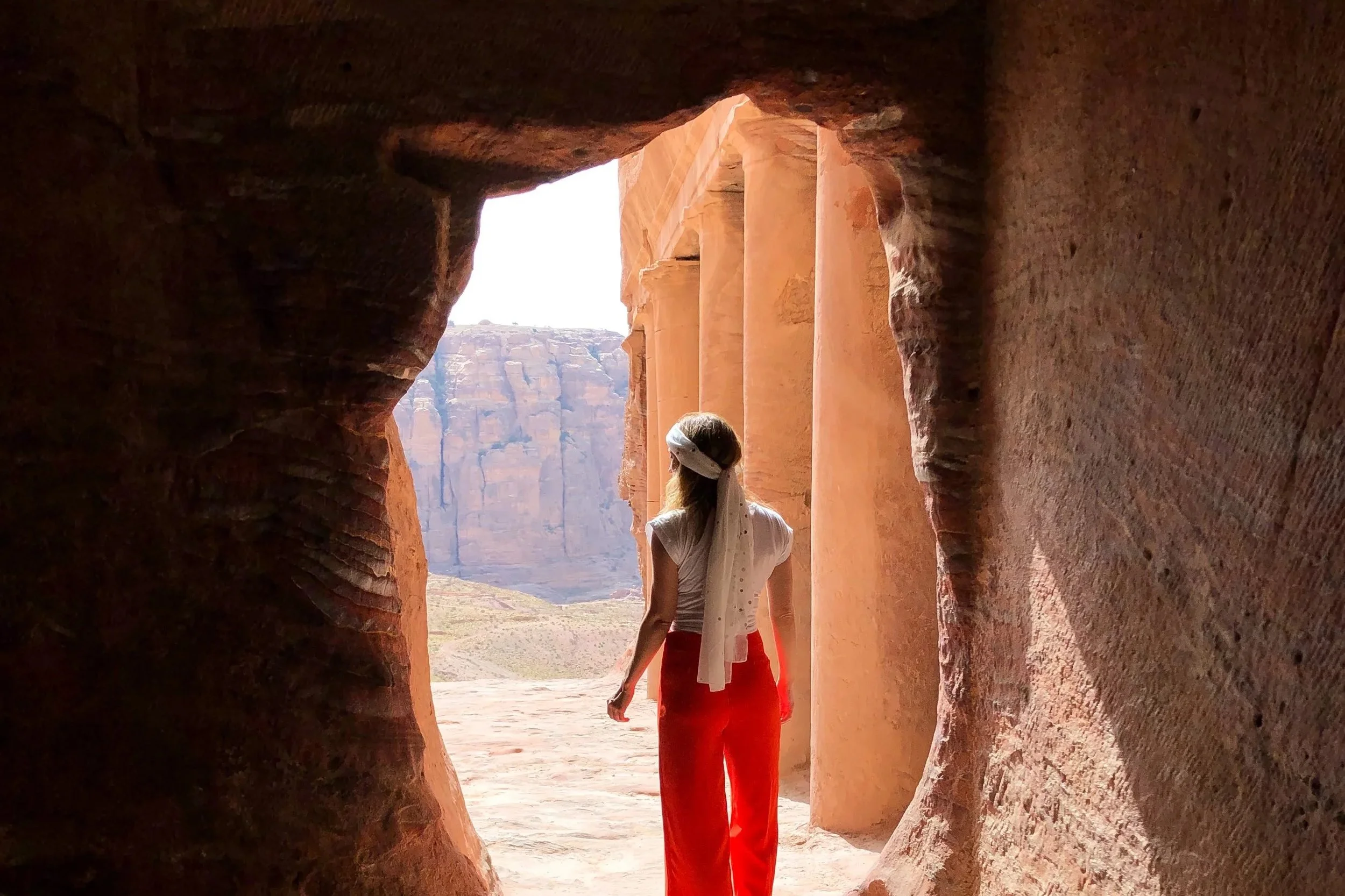
I was in awe of Petra, and its sheer size.
There I was, standing in the middle of Wadi Rum, watching the sun sink behind the rock formations. The desert was glowing, and the air was warm but comfortable. It felt like a perfect bucket list moment.
This was one of those travel moments I look back on and realise timing matters.
Whether you’re walking through Petra, hiking through desert landscapes, climbing to se ancient ruins, or floating in the Dead Sea… exploring Jordan means spending hours outside in the middle of the day.
And suddenly the question of when you visit becomes just as important as where you go.
So, when is the best time to visit Jordan?
The short answer
March to May and September to November are generally the best months to visit Jordan for comfortable weather, sightseeing and outdoor activities.
But that doesn't mean they're automatically the best months for you.
Spring and autumn are also popular periods, so you'll generally encounter more travellers and potentially higher accommodation prices. Summer can be very hot but quieter and sometimes cheaper, while winter brings cooler temperatures, fewer visitors and the possibility of rain and colder nights.
And if you're anything like me, the perfect trip isn't necessarily about finding the "best" month. It's about finding the best compromise between weather, crowds, cost and the experiences you actually want.
Here's everything you need to know before choosing when to travel to Jordan.
The best time to visit Jordan at a glance
Spring (March-May): Mild & pleasant, one of the best times to visit. Expect higher prices and more travellers.
Summer (June-August): Very hot, and not ideal for destinations such as Wadi Rum and Petra. Expect lower prices and fewer crowds.
Autumn (September-November): Mild & pleasant, one of the best times to visit. Expect higher prices and more travellers.
Winter (December-February): Cool/cold. Expect lower prices and fewer crowds.
My pick?
April or October.
If I were planning a first trip to Jordan and could choose almost any month, I'd seriously consider April or October.
You get comfortable conditions for exploring Petra and travelling around the country without the intense heat of summer, while Wadi Rum is still very much a desert experience.
But there's a catch… April and October are popular.
So if you're travelling during the shoulder seasons, don't expect to have Petra completely to yourself.
If avoiding crowds is more important than having perfect weather, winter might actually be the better choice.

Floating in the Dead Sea was even more fun than I’d imagined.
Jordan weather by season
Jordan's climate varies considerably depending on where you are.
Amman sits at a much higher elevation than the Dead Sea, while Petra is also elevated and Wadi Rum is a desert environment.
That means you can experience noticeably different temperatures on the same trip.
You could be wearing a jacket in the morning, floating in the Dead Sea in the afternoon and sitting around a desert campfire that night. Which is why packing layers is always a good idea.
I experienced dramatic temperature differences in April, and boy was I unprepared. From my research, I was expecting warm and pleasant weather. When I landed in Amman, I learned that Jordan was going through an unexpected cold snap. The temperature outside was a chilly 11 degrees Celcius. After a few cold days, we were then desperate to find shade while wandering around Petra in the midday heat.
Visiting Jordan in spring: March to May
My rating: 5/5
Spring is one of the most popular times to visit Jordan… and it's easy to understand why.
The weather is generally comfortable for sightseeing, hiking and exploring outdoor attractions.
The Jordan Tourism Board identifies March to May as one of the country's ideal periods for sightseeing and hiking.
And Petra can be particularly beautiful in spring. The surrounding landscape can take on a little more colour, and you're not battling the extreme heat that can make long days of walking much harder later in the year.
Why visit Jordan in spring?
Comfortable sightseeing temperatures
Great conditions for Petra
Good hiking weather
Pleasant desert conditions
Beautiful landscapes
Excellent for road trips
The downside?
Crowds.
Spring is one of the busiest periods for Jordan, particularly around the most popular attractions.
That means accommodation can book up earlier and you'll need to be more organised if you're travelling around Easter or during other popular holiday periods.
My spring tip
If you're visiting Petra in spring, start early.
Even when the weather is comfortable, Petra is enormous and you'll appreciate having the cooler morning hours for the longest walks and climbs.
And if you're hoping for those quieter photographs, arriving early makes a huge difference.
Read my Guide to Visiting Petra, Jordan: How to Experience the Rose City Without the Crowds for my tips on seeing the Rose City without simply following the crowds.
Visiting Jordan in summer: June to August
My rating: 3/5
Let's be honest. Jordan in summer is hot… very hot.
For travellers who don't tolerate heat well, I'd probably avoid planning a Jordan sightseeing trip in the middle of summer.
But here's the thing… Summer isn't necessarily a terrible time to visit Jordan. You just need to understand what you're signing up for.
The official Jordan Tourism Board notes that summer brings fewer crowds and lower prices, although the heat can make outdoor sightseeing more challenging. That creates an interesting trade-off.
Why visit Jordan in summer?
Fewer tourists
Potentially lower accommodation prices
Longer daylight hours
Quieter attractions
Good time for resort time in Aqaba
Early mornings can be surprisingly pleasant
The downside?
The heat.
Petra involves a lot of walking, often with limited shade. Wadi Rum is also a desert. The Dead Sea can be extremely hot during the middle of the day.
How I'd approach a summer trip
If summer is your only option, don't try to travel exactly as you would in spring or autumn.
Instead… Start early.
Explore Petra in the morning. Take a break during the hottest part of the day, then head out again later. Drink plenty of water, wear sun protection, and don't underestimate how much heat can affect your energy levels.
The official Jordan Tourism Board similarly recommends the summer period for travellers who are comfortable with the heat and want fewer crowds and potentially lower prices.
My summer tip
Make Aqaba part of your itinerary.
If you're travelling during the hottest months, having some time beside the Red Sea can be a welcome change from archaeological sites and desert landscapes.
Visiting Jordan in autumn: September to November
My rating: 5/5
If spring is Jordan's classic season, autumn is its equally appealing counterpart.
September can still feel quite warm, particularly during the afternoon, but conditions generally become more comfortable as you move into October and November.
The official Jordan Tourism Board includes September to November among the best periods for sightseeing and hiking.
Why visit Jordan in autumn?
Comfortable temperatures
Excellent conditions for Petra
Great hiking weather
Beautiful desert light
Good conditions for road trips
More comfortable days in Wadi Rum
And if you're a photographer, autumn can be particularly appealing.
Jordan's sandstone landscapes are spectacular in almost any light, but the softer morning and afternoon conditions can make outdoor photography much more enjoyable.
The downside?
Again… Everyone else knows it's a great time to visit too.
September and October can be busy. So book popular accommodation ahead of time and don't expect Petra's Treasury to magically be empty at midday.
My autumn tip
If you can choose your dates, late November can be an interesting compromise.
You may trade some warmth for fewer crowds. Just remember that weather becomes less predictable as winter approaches.
Visiting Jordan in winter: December to February
My rating: 4/5
Winter is the season people often overlook when planning Jordan… and I think that's a mistake.
If you're someone who would rather wear a jacket than spend the day sweating your way around Petra, winter could be perfect.
The official Jordan Tourism Board describes winter as a good time to explore Petra, Amman and Jerash with minimal tourist traffic.
Why visit Jordan in winter?
Fewer tourists
Lower accommodation demand
Quieter Petra
Cooler conditions for walking
Great for history and cultural sightseeing
Imagine walking through the Siq with far fewer people around. That's a pretty compelling reason to consider winter.
But there's a catch.
It can be cold.
Particularly at night. And Jordan does experience winter rain.
In Petra, heavy rain can also create flash-flood risks, and site closures may occur when conditions are unsafe. Wadi Rum can be surprisingly cold after sunset too. You're in a desert after all. And deserts don't hold onto heat particularly well overnight.
My winter tip
Pack layers.
Don't make the classic mistake of thinking… "I'm going to the Middle East, so I'll only need summer clothes." You might be very glad you packed that jumper when you're sitting outside your desert camp after sunset.
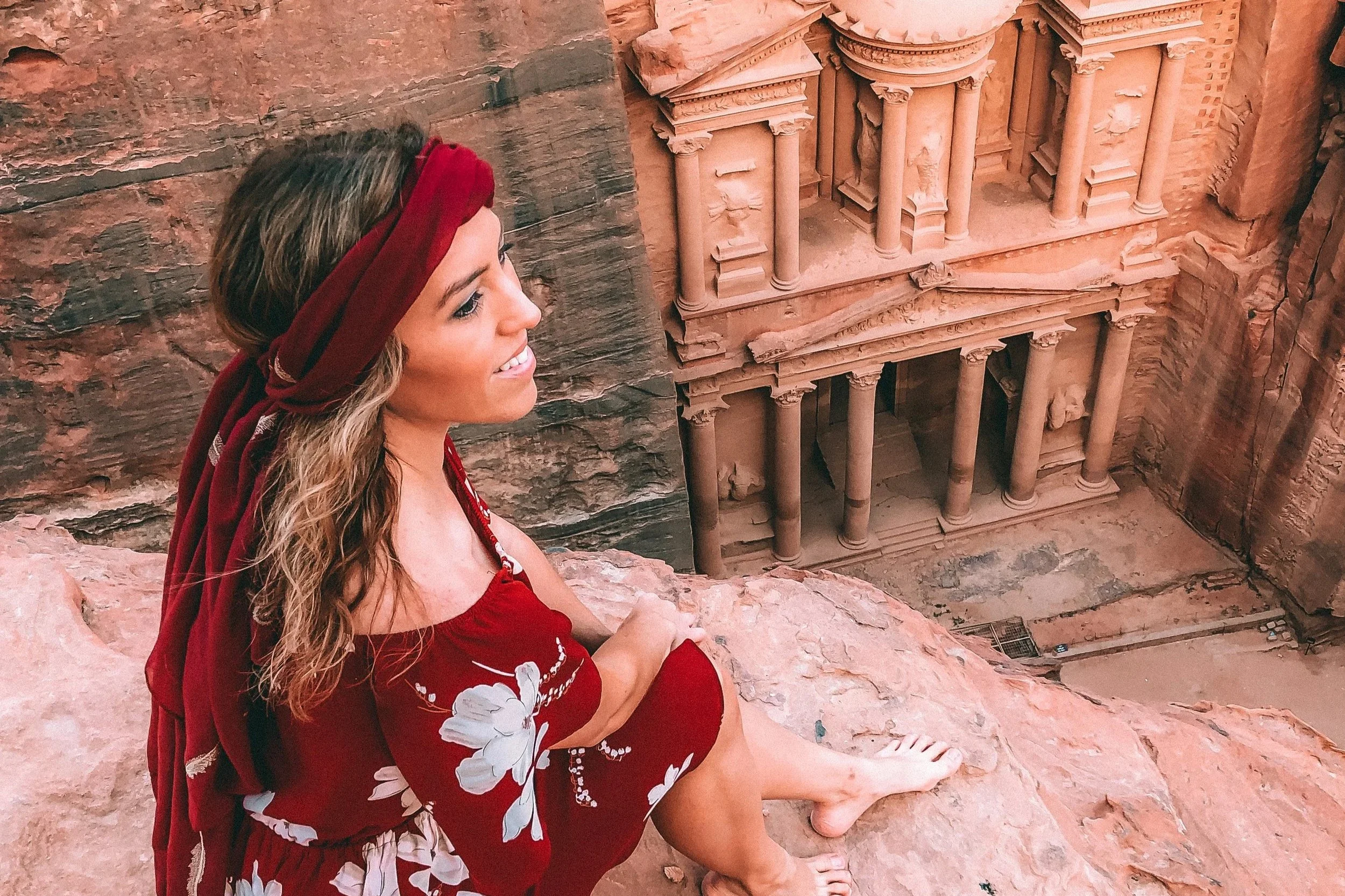
The Treasury in Petra was the biggest highlight of my trip.
Jordan weather by month
If you're deciding between specific months, here's the quick guide.
January
Weather: Cool/cold
Crowds: Low
Prices: Lower
Best for: Petra, Amman, Jerash and travellers who don't mind cooler weather
January can be a peaceful time to explore Jordan. But pack warm layers and check weather conditions before heading into outdoor sites.
February
Weather: Cool, beginning to warm
Crowds: Low to moderate
Prices: Lower
Best for: Quiet sightseeing
February can be a good option if you're prioritising fewer tourists.
March
Weather: Mild and increasingly pleasant
Crowds: Increasing
Prices: Rising
Best for: Sightseeing and hiking
March marks the beginning of one of Jordan's most appealing travel periods.
April
Weather: Mild and comfortable
Crowds: High
Prices: Higher
Best for: First-time visitors
April is an excellent month for a classic Jordan itinerary. The downside? It's popular.
May
Weather: Warm
Crowds: High/moderate
Prices: Moderate-high
Best for: Outdoor adventures
May can be a great shoulder-season option before the intense summer heat arrives.
June
Weather: Hot
Crowds: Lower
Prices: Lower
Best for: Early-morning sightseeing and travellers comfortable with heat
Start your days early.
July
Weather: Very hot
Crowds: Low
Prices: Lower
Best for: Travellers who prioritise price and fewer crowds
Not my first choice for a sightseeing-heavy itinerary.
August
Weather: Very hot
Crowds: Low
Prices: Lower
Best for: Aqaba, resort time and heat-tolerant travellers
Again, plan your sightseeing around the heat.
September
Weather: Hot, becoming more comfortable
Crowds: Increasing
Prices: Moderate-high
Best for: Travellers who want to avoid winter but don't mind warmth
Early September can still feel very summery.
October
Weather: Comfortable
Crowds: High
Prices: Higher
Best for: First-time visitors, Petra and Wadi Rum
My pick for the best all-round month.
April & October
Weather: Mild and comfortable
Crowds: High
Prices: Higher
Best for: First-time visitors
April and October provide the most pleasant overall weather.
(I’m a sucker for good weather)
When is the cheapest time to visit Jordan?
If keeping your travel budget down is a priority, summer and winter are generally the seasons I'd investigate first.
The Jordan Tourism Board specifically notes lower prices during summer, while winter is also a quieter period. But remember that your total trip cost isn't determined by hotel prices alone.
Consider:
Flights
Accommodation
Tours
Transport
Food
Attractions
Travel insurance
Jordan Pass
Activities
And sometimes paying a little more for a better travel experience is worth it.
If you save $200 on accommodation but spend the entire trip hiding from 40°C heat, have you actually saved money?
That's the sort of calculation I make when planning my own trips.
When is Jordan most crowded?
The busiest periods tend to coincide with the most comfortable weather.
That means:
Spring
March-May
Autumn
September-November
These periods are popular because the weather is generally better suited to walking, hiking and sightseeing.
But there's another factor you need to consider… school holidays and major international holiday periods. If you're travelling around Easter, Christmas or other major holidays, check accommodation availability early.
When is the best time to visit Petra?
If Petra is the main reason you're travelling to Jordan, I'd prioritise March-May and October-November for comfortable walking conditions.
But here's a secret… the best time of day can matter almost as much as the best time of year.
The official Jordan Tourism Board recommends early starts, and its current Petra guidance identifies the first hours after opening as particularly good for cooler conditions and softer light.
That means you can make a busy season feel considerably more manageable by arriving early.
For me, that is one of the best ways to experience Petra without feeling like you're simply following a queue of tourists.
You can read more in my Guide to Visiting Petra, Jordan: How to Experience the Rose City Without the Crowds.
When is the best time to visit Wadi Rum?
For Wadi Rum, I'd lean towards spring and autumn.
The temperatures are generally more comfortable for exploring the desert during the day, while the nights can still have that wonderfully crisp desert feeling.
But here's something many first-time visitors don't realise… Wadi Rum can get cold at night. Even if you've spent the afternoon feeling hot.
So regardless of when you visit, pack something warm for your overnight stay.
When I visited Wadi Rum in the warmer months, the temperature still dropped dramatically overnight, and I remember getting into bed freezing cold. I can only imagine how cold it would become during the winter months.
And if you can, stay overnight.
Wadi Rum isn't just about driving around the desert for a few hours. The magic happens when the tour vehicles disappear, the sun goes down and the stars come out. That was one of my favourite parts of travelling through Jordan.
Read my Wadi Rum, Jordan: A Desert That Feels Like Another Planet for my full experience.

Climbing sand dunes was worth it for this view over Wadi Rum.
When is the best time to visit the Dead Sea?
The Dead Sea is one of the more flexible experiences to add to a Jordan itinerary.
Because you can combine floating in the Dead Sea with time at a resort, it doesn't require quite as much physical sightseeing as Petra.
That makes it particularly appealing during warmer months.
But again, the middle of a scorching summer afternoon isn't necessarily when I'd choose to be outside for hours. If you're visiting in summer, aim for earlier or later in the day where possible.
I've shared exactly what I thought about the experience in Visiting the Dead Sea in Jordan (What It's Really Like).
What about Ramadan?
This is something you should check before booking your trip.
Ramadan moves through the calendar each year, so it doesn't fall in the same months every year. During Ramadan, Muslims fast from dawn until sunset.
That can affect:
Restaurant opening hours
Meal times
Attractions
Working hours
Local routines
Public behaviour
Transport schedules
But that doesn't mean you shouldn't visit Jordan during Ramadan. Quite the opposite.
For travellers who are interested in experiencing Jordan beyond the tourist trail, it can offer a fascinating cultural perspective. You simply need to be respectful. Avoid eating, drinking or smoking openly in public during daylight hours where appropriate, and be aware that some businesses may operate different hours.
My tip
Don't treat Ramadan as an inconvenience. Treat it as part of understanding the country you're visiting. But check the exact dates for the year you're travelling because they change annually.
What about Easter and other religious holidays?
Jordan is a destination where religious and cultural events can have a noticeable impact on travel.
If you're travelling around:
Easter
Ramadan
Eid
Christmas
New Year
Other major holidays
check accommodation availability, attraction hours and transport arrangements before you go. This is particularly important if you have a tightly planned itinerary.
What's the best time to visit Jordan for hiking?
If hiking is a major reason you're visiting Jordan, I'd prioritise:
March-May
and
September-November
These generally offer more comfortable conditions for outdoor activities than the hottest summer months. The Jordan Tourism Board specifically identifies these periods as ideal for sightseeing and hiking.
Jordan has some incredible hiking opportunities beyond Petra, including the Jordan Trail and areas around Dana and Wadi Mujib.
If you're planning an active trip, don't simply look at average temperatures.
Think about:
How much time you'll spend outdoors
Elevation
Shade
Water availability
Trail conditions
Your own heat tolerance
Whether the route is seasonal

Dust and mirages in the distance on the outskirts of Wadi Rum.
When should you avoid visiting Jordan?
I don't think there's one season I'd categorically say… "Don't go." Jordan is a year-round destination.
But I'd reconsider a summer trip if:
You don't cope well with heat
You're planning lots of hiking
Petra is your main focus
You want to spend long days outdoors
And I'd reconsider a winter trip if:
You're expecting guaranteed warm weather
You hate cold nights
You're camping in Wadi Rum
Your itinerary is heavily dependent on perfect weather
The right month depends on what you want from the trip.
My recommendation: When should YOU visit Jordan?
Here's the simple version.
Choose spring if...
You want comfortable weather and great conditions for sightseeing and hiking.
Best months: March-May
Choose summer if...
You want lower crowds and potentially lower prices and you're comfortable with extreme heat.
Best months: June-August
Choose autumn if...
You want some of the best all-round conditions for a classic Jordan trip.
Best months: September-November
Choose winter if...
You want fewer tourists, cooler sightseeing conditions and potentially lower prices.
Best months: December-February
So, what is the absolute best time to visit Jordan?
If you forced me to choose just one answer:
October.
It offers a great balance of comfortable weather, outdoor adventure and the classic Jordan experiences most first-time visitors want.
But if you're asking me for the best value, I'd look closely at the quieter months. If you're asking me for the fewest crowds, I'd consider winter. If you're asking me for the lowest prices, I'd investigate summer and winter.
And if you're asking me when I'd personally plan another Jordan trip? I'd happily return during the shoulder seasons.
Because the best travel experiences happen when you're comfortable enough to forget about the weather and simply enjoy where you are.
Like standing in Wadi Rum as the sandstone turns orange… walking through the Siq towards the Treasury… floating in the Dead Sea… or sitting beneath a sky full of stars in the middle of the desert.
That's the Jordan I want you to experience. Not just the Jordan on a bucket list… the Jordan you actually remember.
Ready to plan your Jordan adventure?
You might also enjoy:
Planning your own bucket-list adventure?
Join the Tourist to Traveller community for practical travel tips, destination inspiration and advice designed to help you travel smarter — and experience more.
Important information
Weather patterns, attraction opening hours, prices, crowd levels and travel conditions can change. Seasonal recommendations in this guide are based on typical conditions and current destination information, but they shouldn't be treated as a guarantee of what you'll experience on specific dates.
Always check current conditions, attraction information and official travel advice before travelling.